Outdoor Apparel Industry Trends 2026: What Brands and Buyers Need to Know
The outdoor apparel industry in 2026 sits at the intersection of three powerful currents: consumer demand for authentic performance, regulatory pressure on chemistry and supply chains, and the mainstreaming of outdoor aesthetics into everyday fashion. This trend report maps what's changing, what's noise, and what brand buyers should act on this year.
For strategic planning context, see our procurement calendar and manufacturing guide.
Market Size, Sustainability, and the Gorpcore Shift
The global outdoor apparel market continues to grow at a healthy compound rate, with regional dynamics diverging. Asia-Pacific leads on growth as middle-class outdoor participation rises; North America remains the largest single market; Europe drives sustainability regulation that reshapes the whole industry. For brand buyers, the market is large enough to support niche positioning but competitive enough that undifferentiated product struggles.
Sustainability has moved from optional to mandatory in 2026. Three forces converge: EU PFAS restrictions that force fluorine-free DWR adoption (our PFAS-free guide covers the timeline), Extended Producer Responsibility (EPR) laws that make brands responsible for end-of-life, and consumer expectations that sustainability claims be verifiable rather than decorative. Recycled materials with GRS certification have become baseline, not premium.
Gorpcore - the fashion adoption of technical outdoor aesthetics for urban wear - continues to drive growth outside traditional outdoor channels. For manufacturers, this means demand for technically-styled but lifestyle-weighted product: lighter constructions, refined color palettes (see our 2026 color trend report), and designs that work from trail to street. The category blurs into workwear crossover - utility fashion pulls from both worlds.
Add photo here: urban outdoor gorpcore fashion - people wearing technical jackets in city settings
DTC, Customization, and Supply Chain Evolution
Direct-to-consumer continues to reshape distribution. Brands that once relied entirely on retail now run their own digital channels, building community and capturing margin. For manufacturers, this means smaller, more frequent orders from more brands - and demand for low-MOQ flexibility that traditional large-batch factories cannot serve. UniOuter's 300-500 piece MOQ program exists for exactly this shift.
Customization and personalization deepen: made-to-order, small-batch drops, and brand collaborations all require manufacturers who can switch quickly between styles and finishes. The OEM vs ODM distinction blurs as brands want modified-ODM speed with OEM-level customization.
Supply chains are evolving in two directions. Nearshoring gets attention as risk diversification, but China remains dominant on capability, cost, and infrastructure for technical apparel. The practical trend is risk-managed diversification: China for technical complexity, supplementary sourcing elsewhere for resilience. AEO-certified manufacturers reduce the customs friction that makes China sourcing slower.
Smart Textiles and Fabric Innovation
Smart textiles move from novelty toward commercial reality in 2026. Heated apparel (carbon-fiber elements with battery systems) has mainstreamed for cold-environment workwear; embedded sensors for temperature and heart-rate monitoring are in pilot phases; GPS integration serves both adventure safety and lone-worker applications. For brand buyers, the 2026 reality is that smart textile products require specialized manufacturing partners - not every factory can integrate electronics with apparel.
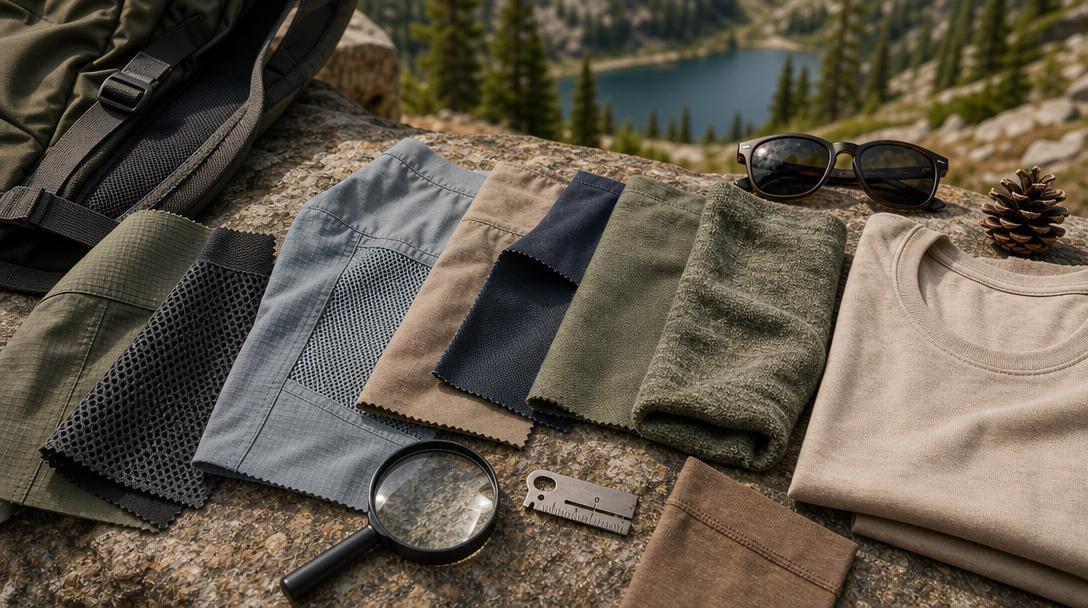
Fabric innovation focuses on bio-based membranes, recycled insulation, and plant-based water repellents - the sustainability direction confirmed by regulation and consumer demand. UniOuter's in-house fabric R&D and 2,000+ style library position us at this intersection; explore our fabric development capability or browse the product catalog.
Add photo here: trade show exhibition hall at an outdoor apparel industry event with manufacturer booths
Manufacturing Technology and Trade Show Landscape
Manufacturing technology adoption accelerates: laser cutting (precision and efficiency - our manufacturing guide covers applications), automated sewing on repetitive operations, 3D body scanning for custom fit, and digital prototyping that shortens sample cycles. These technologies matter to buyers because they compress timelines and improve consistency - a factory investing in equipment is investing in your program's competitiveness.
The trade show calendar anchors the industry's buying rhythm: Canton Fair (our sourcing guide covers it in depth), Intertextile Shanghai for fabrics, ISPO Munich for brand showcase and trend forecasting, and Performance Days for functional fabric innovation. UniOuter exhibits at Canton Fair - meet us there or pre-book a factory visit through the contact page.
Implications for Brand Buyers in 2026
- Verify sustainability claims. PFAS-free, recycled content, and ethical manufacturing claims must be backed by certificates - greenwashing is a legal and reputational risk. See our certifications guide.
- Choose manufacturers for flexibility. Low-MOQ, fast sampling, and multi-style capability matter more than raw scale for most brands. UniOuter's MOQ approach and 24-hour response fit this need.
- Plan for PFAS compliance now. EU restrictions are active; US state bans accelerate. Specify fluorine-free DWR in new development, not as a retrofit.
- Build digital channel capability. DTC growth rewards brands with strong content, community, and digital operations - not just good product.
- Diversify supply thoughtfully. China's capability is unmatched for technical apparel; risk-manage with an AEO-certified, documentation-strong partner rather than chasing geographic diversification that sacrifices quality.
UniOuter is positioned across these trends: 20+ years of manufacturing experience, in-house fabric R&D, complete certification portfolio (OEKO-TEX, ISO, BSCI, GRS, AEO), low-MOQ startup programs, and Canton Fair presence. Start with the about page, explore the catalog, or send an inquiry to discuss your 2026 program. The purchasing guide covers commercial terms.
Shop Outdoor Apparel


Frequently Asked Questions
Yes. The market continues to grow at a healthy compound rate, driven by Asia-Pacific participation growth, gorpcore fashion adoption, and workwear crossover. Growth rates vary by region and category, but outdoor apparel remains one of the stronger apparel segments - large enough for niche brands to thrive, competitive enough to demand differentiation.
EU PFAS restrictions are active and tightening; several US states (California, New York, others) have banned PFAS in apparel with staggered effective dates. The practical implication: specify fluorine-free DWR in all new product development now, not as a future retrofit. Our PFAS-free guide covers the regulatory timeline.
Gorpcore shows sustained momentum rather than a short cycle. The crossover of technical outdoor aesthetics into everyday fashion has structural drivers: remote work's casualization, urban outdoor participation, and the comfort-performance crossover. For brands, this means demand for technically-styled lifestyle product is a real category, not a passing mood.
Thoughtful diversification makes sense for resilience, but China remains dominant for technical apparel on capability, cost, and infrastructure. The practical approach: keep China for technical complexity with a strong AEO-certified partner, and add supplementary sourcing for resilience where the quality trade-off is acceptable. Chasing geographic diversification that sacrifices quality is a false economy.
AEO certification reduces customs friction - fewer inspections, faster clearance, mutual recognition benefits. In a year of supply chain volatility, this means more predictable lead times and fewer disruptions. Read our AEO article for the concrete benefits.