OEM vs ODM Outdoor Clothing: Which Manufacturing Model Is Right for Your Brand?
OEM and ODM are the two manufacturing models that define how a brand and a factory divide the work of creating outdoor clothing. Choosing the wrong model wastes time and money: OEM startups drown in design work they cannot finish, while ODM buyers lose differentiation they needed. This guide explains both models and gives a framework to choose.
For the broader manufacturing context, see our custom outdoor clothing manufacturing guide and custom design capabilities.
Understanding OEM & ODM
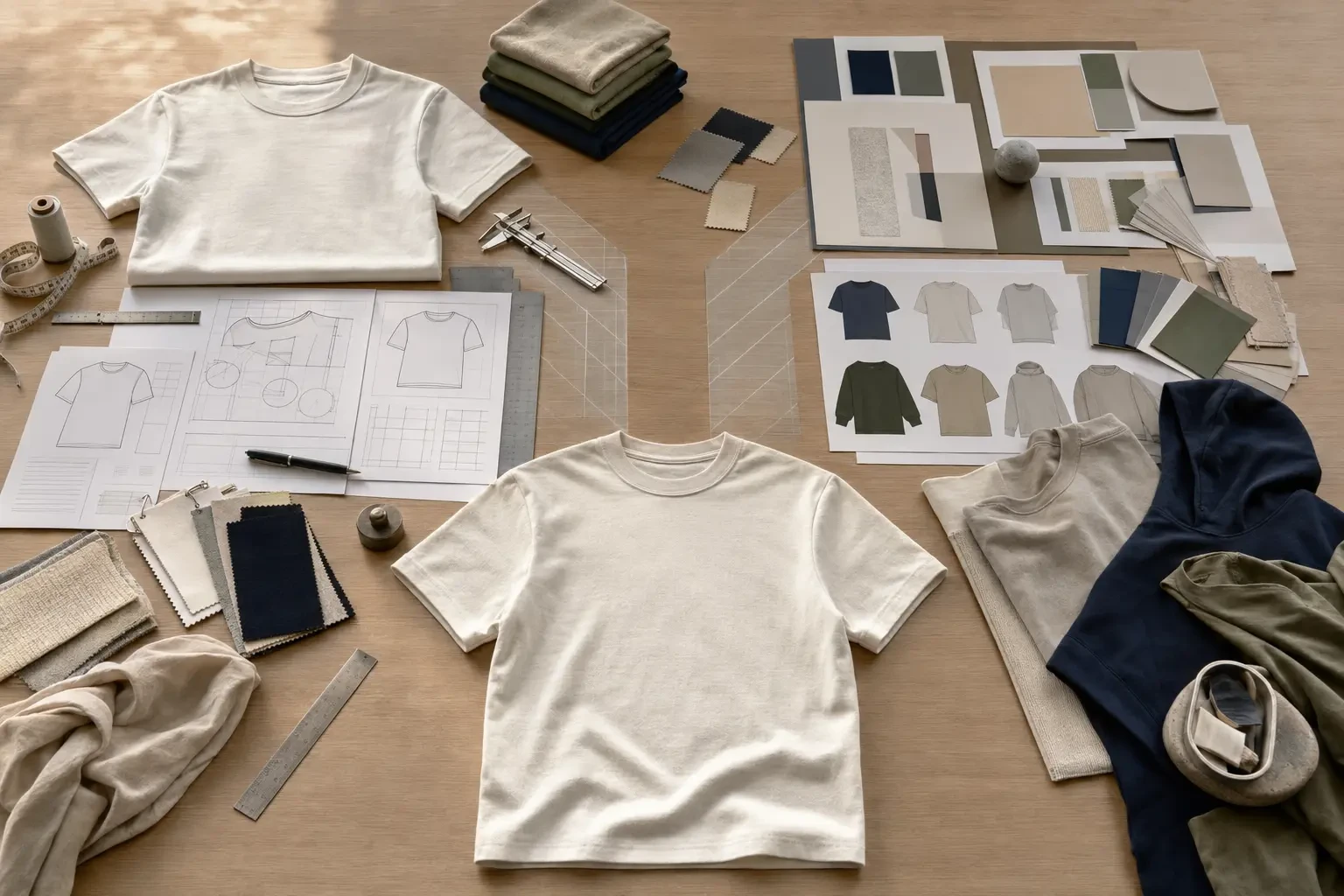
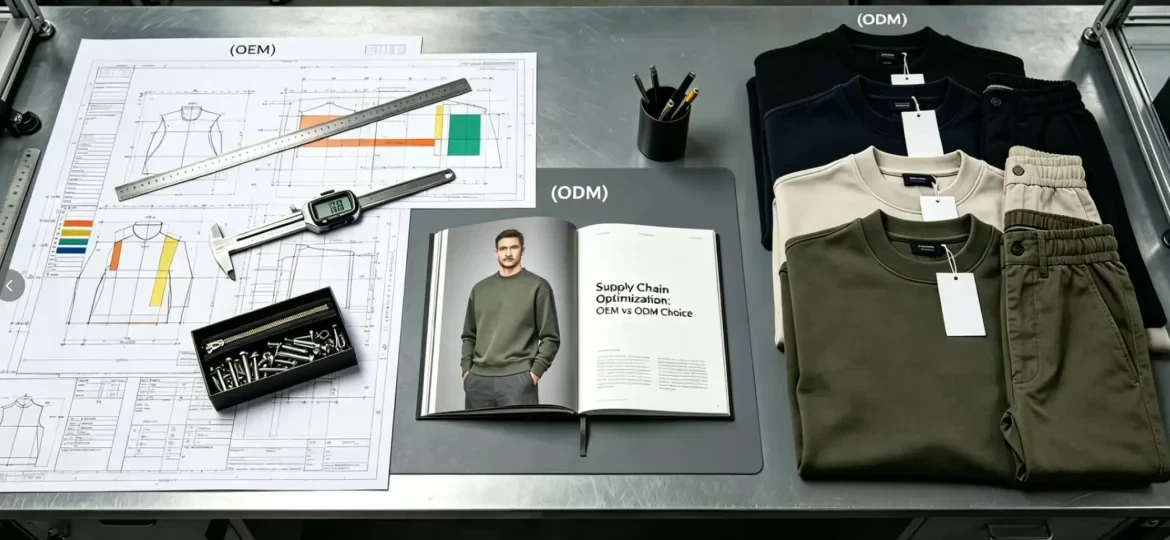
OEM (Original Equipment Manufacturing) means you provide the design, tech pack, and specifications, and the factory produces exactly what you specified. You own the design and control every detail. ODM (Original Design Manufacturing) means the factory designs the product from its existing style library, and you apply your brand. The factory owns the base design; you own the brand and the modifications.
Cost & Timeline Comparison
OEM carries design and development costs: tech pack creation, pattern making, and multiple sampling rounds. ODM skips most of this because the design exists. Timeline reflects this: OEM sampling runs longer due to design iteration; ODM can reach production faster because the style is proven.
| Factor | OEM | ODM |
|---|---|---|
| Design cost | Higher (you design) | Lower (factory design) |
| Sampling rounds | More (design iteration) | Fewer (style exists) |
| Time to market | Longer | Faster |
| Unit price | Can be lower at volume | Includes design amortization |
| Differentiation | Full uniqueness | Limited to branding/mods |
For how pricing is built transparently regardless of model, see our cost calculator.
IP, Customization Levels & Hybrid Approaches
IP ownership is the legal dimension. In OEM, you own the design, so an NDA and confidentiality agreement protect your patterns and tech packs. In ODM, the factory owns the base design, which means competitors can buy the same base style, your protection is limited to your branded modifications.
Customization levels run on a spectrum: fully custom OEM (you design from scratch), modified ODM (factory base style with your fabric, color, and logo changes), and white-label (factory style, your brand only). A hybrid approach, ODM base with OEM customization, is common for startups who want speed plus some uniqueness. Our brand startup guide covers this in detail.
Best Use Cases for OEM
OEM suits established brands with design teams who need unique functional products. If you have a proprietary feature (a novel pocket system, a custom membrane laminate, a specific fit), OEM is the only way to protect it. OEM also suits brands whose competitive edge is design, not price. The cost is design effort and a longer timeline, which established brands can absorb. For an example of OEM-grade construction, see our 3-layer hardshell craft breakdown.
Best Use Cases for ODM
ODM suits startups, e-commerce sellers, and brands entering a new category quickly with limited design resources. If you need to test market fit before investing in custom design, ODM lets you launch with a proven style. The tradeoff is differentiation: you compete on brand and service, not unique product. Many successful brands start ODM and migrate to OEM once volume justifies custom design. See how UniOuter supports startups in our low-MOQ startup solution.
Decision Framework & UniOuter's Capability
Use five questions to choose: Do you have a design team? Is unique product your competitive edge? What is your timeline? What is your design budget? Do you need IP protection? If you answered yes to design team, uniqueness, and IP, choose OEM. If you answered speed and low design cost, choose ODM. If you want a middle path, choose modified ODM.
UniOuter supports both: an in-house design team with 2,000+ developed styles for ODM, and full OEM capability from sketch to production with NDA protection. Our purchasing guide explains how to brief either model, and you can send an inquiry to discuss your program. Learn more about UniOuter and browse the product catalog.
Shop Outdoor Jackets
Frequently Asked Questions
No. OEM is better when you need unique product and have design resources. ODM is better when you need speed and have limited design capacity. The right choice depends on your brand stage, competitive edge, and timeline, not on which model is inherently superior.
Yes, and many brands do. ODM lets you validate market fit with a proven style and lower upfront cost. Once volume justifies custom design, you migrate to OEM with the same factory, preserving the production relationship while upgrading to unique product.
The factory owns the base design. You own your branded modifications (logo, colors, packaging) and your brand. This means a competitor could buy the same base style from the same factory. If you need exclusivity, negotiate it explicitly or choose OEM.
A modified ODM takes a factory's existing base style and applies your changes: fabric, color, trims, logo, and sometimes functional add-ons. It is faster and cheaper than full OEM while giving more differentiation than white-label. It is the most common starting point for startups.