Factory verification guide
How to Verify a Chinese Outdoor Apparel Factory: A 5-Step Buyer Checklist
Most sourcing disasters are not production failures — they are verification failures. This page gives you the exact sequence to check a factory before you pay a deposit: five steps, the documents to request, the answers that should worry you, and the red flags that end a conversation.
Quick Answer: verify a Chinese outdoor apparel factory in five steps — 1) match the business licence to the legal name and scope, 2) take a live, unscripted video tour of the production floor, 3) order a paid sample carrying your own labels, 4) confirm the bank account name equals the company name, 5) sanity-check capacity against headcount and equipment. A direct factory can do all five in under two weeks; a trading company usually stalls at step two.
See the factory these checks apply to on our manufacturing capacity page, or jump to how UniOuter documents its own facility.
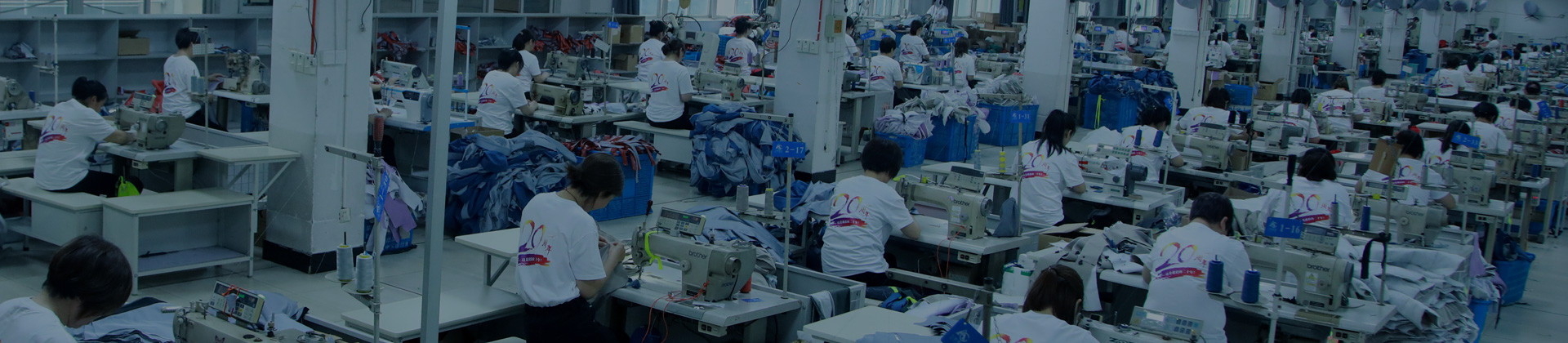
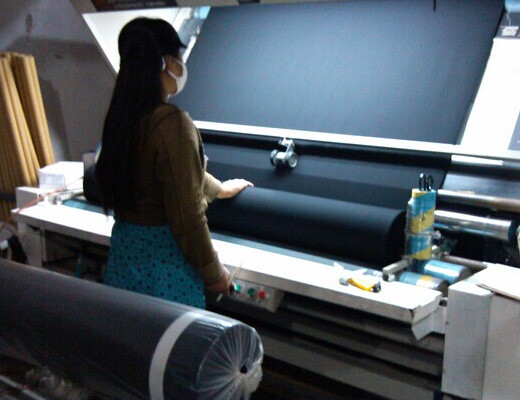
UniOuter's sewing floor, Hangzhou — the room a video audit should show you in full, not in close-up.
Why Most Factory Verification Fails
Buyers usually verify the wrong things. They collect a glossy catalogue, a certificate PDF and a price list — then discover three months later that the "factory" was a trading office, the certificate belonged to a fabric mill, and the sample was made by a subcontractor. The three failure modes repeat across almost every bad sourcing story:
The sample was made somewhere else
A perfect sample proves nothing if a separate sample room produced it. Ask who physically sewed it, and require your own woven label and care label in the sample — subcontractors rarely have your labels on hand.
The certificate belongs to someone else
OEKO-TEX, GRS and BSCI certificates carry a company name and a validity date on the document itself. A mill's certificate cannot cover a garment factory's process. Always read the holder name, not the logo.
The capacity numbers do not add up
A factory claiming 10,000 pieces a day with 60 workers and four sewing lines is describing a wish. Capacity is arithmetic: lines × operators × minutes per garment × shift hours. If the numbers fail that check, the delivery promise will fail too.
The 5-Step Verification Checklist
Run these in order. Each step is cheap, fast, and eliminates a specific category of risk — and each one produces a document you can keep in your supplier file.
Match the business licence to the company you are talking to
Ask for: the business licence as a scan, plus the exact registered legal name in Chinese and English.
Check: the legal name must appear identically on the quotation, the proforma invoice and the bank account. The registered business scope must include garment manufacturing, not only trading or import-export.
Good answer sounds like: "Our legal entity is Zhejiang Hualilai Imp & Exp Co., Ltd; the factory is our own plant in Hangzhou; the bank account is in the same name."
Bad answer sounds like: "We can use our partner's licence" or "the account is my personal one, it is faster."
Take a live, unscripted video tour
Ask for: a scheduled video call — not a pre-recorded video — walking from the loading gate through cutting, sewing, seam sealing, finishing and packing.
Check: the tour must be continuous. Ask the camera operator to pan across the whole floor, count sewing lines out loud, open a fabric roll and read the lot label, and show the finished-goods area with cartons labelled for other customers. Silence on worker numbers or a tour limited to one tidy room is a signal.
Good answer sounds like: "Let's do it at 3 pm our time; you can ask us to walk anywhere, including the fabric store and the reject cage."
Bad answer sounds like: "We will send you a video" — a recorded clip can be from any factory, any year.
Order a paid sample with your own labels inside it
Ask for: one sample in your spec, with your woven main label, care label and hangtag attached, plus the production sheet showing which line made it.
Check: labels force the sample through the real sampling workflow. Compare stitch density, seam tape width, bartack placement and measurement points against your tech pack — and ask which operator sewed it, then look for the same name in the video tour.
Good answer sounds like: "Sample fee is credited against your bulk order; 7 to 14 days; we will send photos of the labels before shipping."
Bad answer sounds like: "Free sample, no labels" or a sample that arrives with no spec sheet and no measurement report.
Confirm the bank account matches the company
Ask for: a company bank account in the exact legal entity name, and a proforma invoice issued by that entity.
Check: never pay a personal account, a "friend's" Hong Kong account, or a name that differs by even one character from the licence. A legitimate factory can issue a proforma invoice, receive a T/T or L/C, and provide export documentation under its own name.
Good answer sounds like: "Here is our proforma invoice with our company seal, our USD account details, and our customs registration number."
Bad answer sounds like: "Pay to this other company, it is our export agent" — acceptable only with a written tripartite agreement.
Sanity-check capacity against headcount and equipment
Ask for: number of sewing lines, operators per line, daily output per style, and the current order backlog by month.
Check: a jacket with 12 minutes of sewing time, 10 operators and 10 hours shifts yields roughly 500 pieces per line per day at 100% efficiency — in practice 60 to 70% of that. If the promised output exceeds the arithmetic, delivery will slip. Ask which month has spare capacity, not just whether they "can" take the order.
Good answer sounds like: "We run this style at 350 to 400 pieces a day per line; your 2,000-piece order occupies one line for about six days, and we have capacity in March."
Bad answer sounds like: "No problem, any quantity, any date" — a factory with no backlog is either new or not busy for a reason.
Direct Factory vs Trading Company: How to Tell Them Apart
Trading companies are not automatically a problem — some add real value in coordination and quality control. The problem is paying direct-factory prices for an intermediary, or discovering the intermediary after the deposit. This table takes five minutes to apply.
| Signal | Direct factory | Trading company |
|---|---|---|
| Who answers technical questions | A pattern maker, technician or QC lead replies with numbers and standard references | Sales answers, then "I will check with the factory" — repeatedly |
| Quotation format | Cost breakdown by fabric, trim, labour, printing, packing, inspection | One lump price with no line items |
| Sample room | In-house, visible on the video tour, same team as bulk | Outsourced, or "we will arrange a sample from our partner" |
| Audit access | Invites on-site visits and unannounced QC inspections | Postpones visits, offers a "showroom" instead of a plant |
| Certifications | Held in the factory's own name, with audit dates matching the plant | Borrowed from a mill or a partner factory |
| Change orders mid-production | Accepted with a written cost and schedule impact | Verbally accepted, then reappears as a delivery delay |
| MOQ behaviour | States a floor and explains the cost logic behind it | Accepts any MOQ, then subcontracts a small run |
Documents to Request Before You Pay a Deposit
Ask for all six at once, in a single email. A factory that answers within a day is organised; one that sends documents one at a time over two weeks is telling you something about production communication too.
Business licence
Proves the legal entity and business scope. Check the Chinese registered name, the scope line for garment manufacturing, and the registered capital.
Export / customs registration
Shows the company can export under its own name. AEO certification is a strong signal of customs compliance.
Quality and social certificates
ISO 9001, OEKO-TEX Standard 100, BSCI or Sedex, GRS where recycled claims are made. Read the holder name and expiry date.
Test reports
Hydrostatic head to ISO 811, breathability to JIS L 1099 or ISO 11092, colourfastness, and PFAS/PFHxA statements for EU-bound orders.
Capacity and equipment list
Number of lines, machines by type — sewing, overlock, seam-sealing, laser cutting, heat press — and monthly output per category.
Reference orders
Two or three past orders in your category, with destination market and volume. Details can be anonymised; the pattern of experience cannot be faked.
Red Flags That Should Stop an Order
If a quote undercuts every other factory by 30%, the difference is usually in the fabric weight, the DWR chemistry, or the labour behind it — all of which you will discover after the goods arrive.
A plant you cannot locate is a plant you cannot audit. Ask for the street address and cross-check it against the licence.
"Our quality is guaranteed, no need for samples" is the sentence that precedes most disputes. Sampling protects both sides.
Cropped logos, expired dates, or PDFs that cannot be verified on the issuing body's website are not certificates.
A factory that offers to reproduce a protected design for you will do the same to you. Ask how they handle IP and where your pattern files are stored.
Subcontracting is common in peak season. The difference between a managed and an unmanaged risk is whether the factory tells you before it happens.
How UniOuter Documents Its Own Factory
We publish the same evidence we would ask for as a buyer — because a verification page that cannot be verified is marketing, not proof.
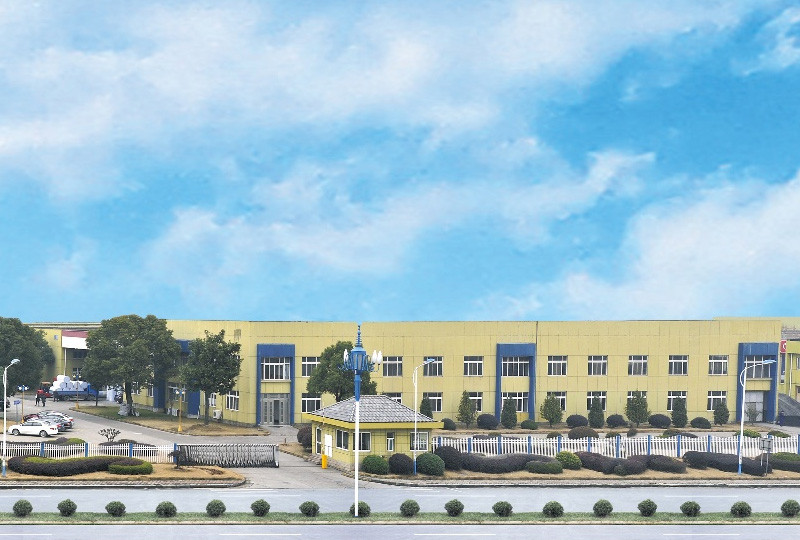
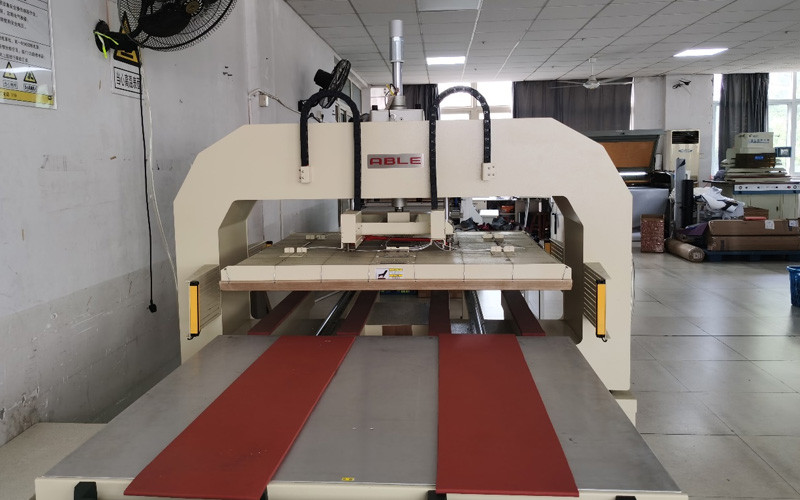
Our single self-operated plant in Hangzhou — the address on the business licence is the address on the gate.
- Legal entity: Zhejiang Hualilai Imp & Exp Co., Ltd — trading and manufacturing under one name since 2005
- Facility: one self-operated factory in Hangzhou, Zhejiang, with cutting, sewing, seam sealing, finishing and packing on site
- Workforce: 200+ skilled workers across production lines and in-house quality control
- Export record: 20+ markets, with the EU and North America as primary destinations
- In-house laboratory: GSM, hydrostatic head to ISO 811, breathability to JIS L 1099, colourfastness and dimensional stability
- Compliance: ISO 9001, OEKO-TEX Standard 100 materials, BSCI social audit, GRS for recycled programmes, AEO customs status
- Audit access: on-site visits and live video walkthroughs of the production floor on request, including the fabric store and reject cage
Before committing, you can request our licence, certificate copies, test reports, capacity data and two reference orders in your category. We also accept third-party inspection at any stage, including pre-production, during production and pre-shipment.
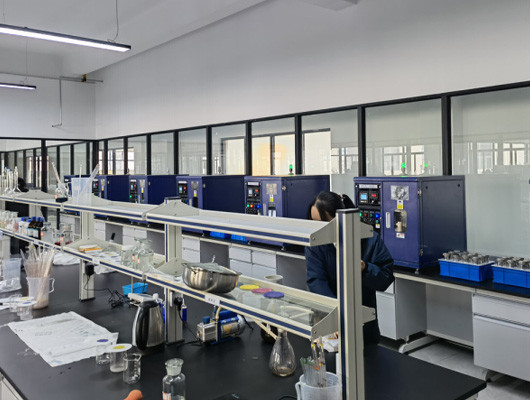
Next steps: read the procurement guide for MOQ, sampling and lead times, review manufacturing capacity, or browse custom hiking clothes and mountaineering apparel built in this plant.
Frequently Asked Questions
How do I verify a Chinese outdoor clothing factory without visiting?
Run the five-step checklist remotely: licence and legal name match, a scheduled live video tour of the whole floor, a paid sample with your own labels inside, a company bank account in the same legal name, and a capacity calculation against headcount. All five can be completed in two weeks without a flight. If any step stalls, treat it as information, not inconvenience.
What documents should a factory provide before I pay a deposit?
Business licence, export or customs registration, quality and social certificates in the factory's own name, test reports for the fabrics you are buying, a capacity and equipment list, and two or three reference orders in your category. Ask for all of them in one email — response speed and completeness tell you as much as the documents themselves.
How can I tell a trading company from a real factory?
Three fast tests: ask a technical question and see whether a technician answers with numbers; ask for a cost breakdown by material and process; ask for a continuous video walk from the gate to the packing area. Trading companies typically answer in sales language, quote a single lump price, and substitute a showroom or a recorded clip for a live tour.
What should a live video factory tour show?
A continuous, unscripted walk: entrance and signboard, cutting room, sewing lines with operators at work, seam-sealing or bonding stations if relevant to your product, in-line inspection, finishing and packing, plus the fabric store with lot labels. Ask the operator to pan across the full floor and count lines out loud. A tour limited to one tidy room is not a tour.
Which certifications should an outdoor apparel factory hold?
At minimum ISO 9001 for quality systems and OEKO-TEX Standard 100 for materials in contact with skin. EU-bound programmes increasingly require PFAS-free C0 DWR documentation, and recycled claims need GRS or equivalent chain-of-custody. Social compliance is usually BSCI or Sedex. Read the holder name and expiry date on every document — a mill's certificate does not cover a garment factory.
How long does factory verification take, and what does it cost?
Remote verification takes one to two weeks and costs only the sample fee, which most factories credit against bulk production. An on-site audit by a third party typically adds three to five working days and a few hundred US dollars, and is worth it above roughly 1,000 pieces or on a first order with a new supplier. UniOuter accepts both remote walkthroughs and third-party inspection at any production stage.
Request a verification pack for your next programme
Ask for the licence, certificates, test reports, capacity data and a live production-floor walkthrough in one request. We answer with documents, not adjectives.
Manufacturing capacityProcurement guideCustom hiking apparel


