High-Visibility Clothing Standards Explained: EN ISO 20471 and ANSI/ISEA 107
High-visibility clothing is the most regulated garment category on any work site - and the most commonly mis-specified. Buyers confuse the European and American systems, underestimate wash-cycle depletion, and discover too late that their "hi-vis" jackets never met any standard. This guide explains both systems in plain language and shows how to verify compliance before you order.
For adjacent safety categories, see our flame retardant workwear guide and the workwear manufacturing guide.
How Hi-Vis Works: Fluorescence Plus Retroreflection
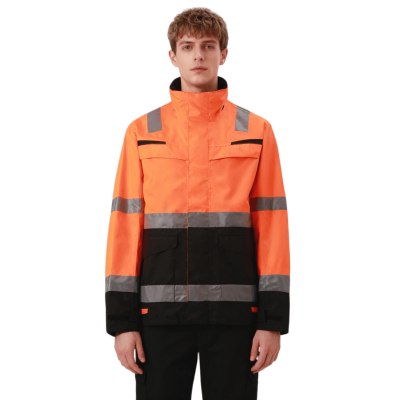
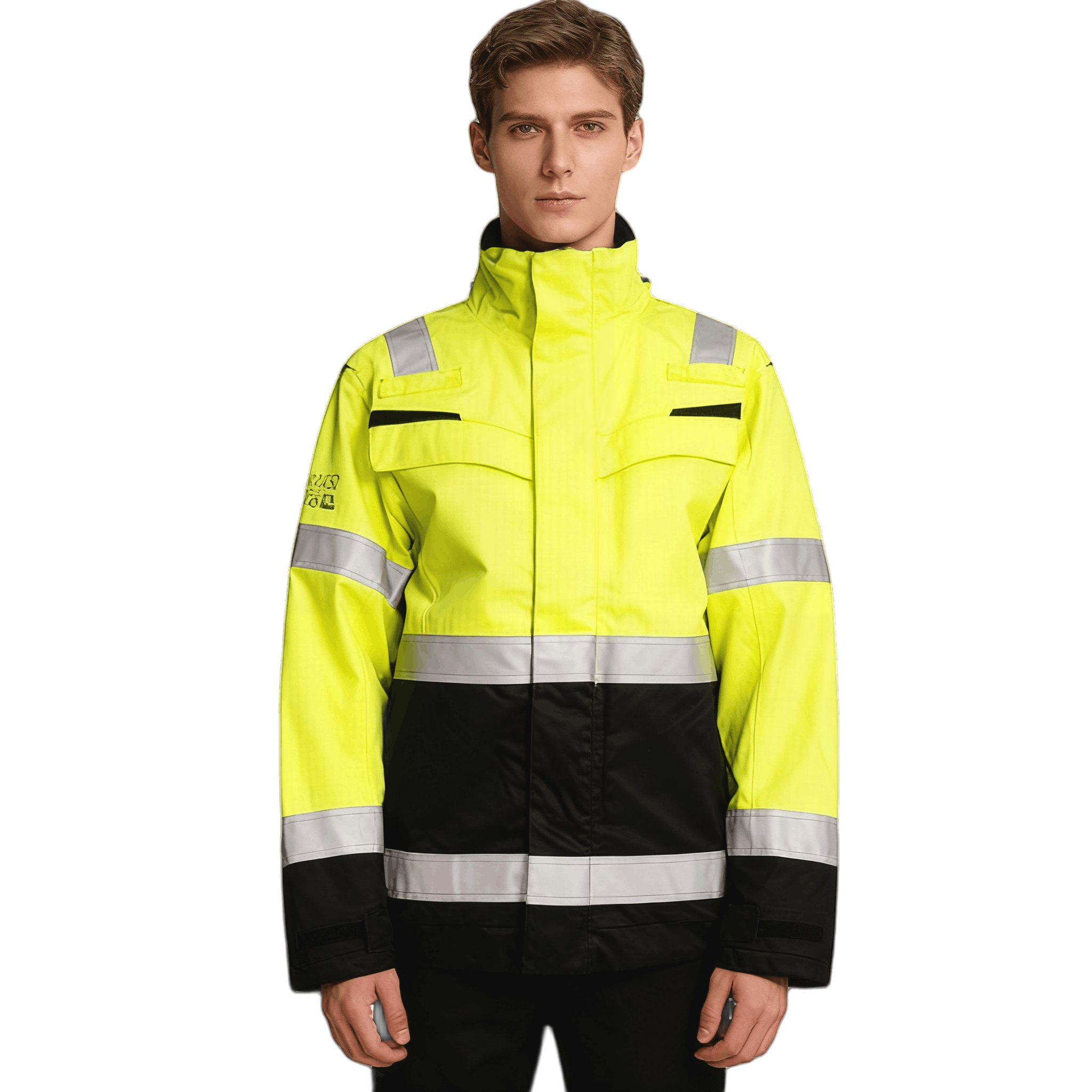
High visibility combines two different technologies for two different light conditions. Fluorescent background material (yellow-green, orange-red, or red) converts invisible UV light into visible light, making the wearer conspicuous in daylight - the material literally glows brighter than its surroundings under daylight illumination. Retroreflective tape solves nighttime: its surface contains either glass beads or microprisms that return light directly to its source, so headlights bounce straight back to the driver. Without retroreflective elements, a "hi-vis" garment is nearly invisible at night.
This dual mechanism explains the standards' structure: every class specifies minimum areas of fluorescent background material and retroreflective material separately. Compliance is a geometry problem - enough of each material, positioned on the garment where the human body moves.
Add photo here: high visibility jacket with fluorescent background and retroreflective tape under day and night lighting comparison
EN ISO 20471: The European System
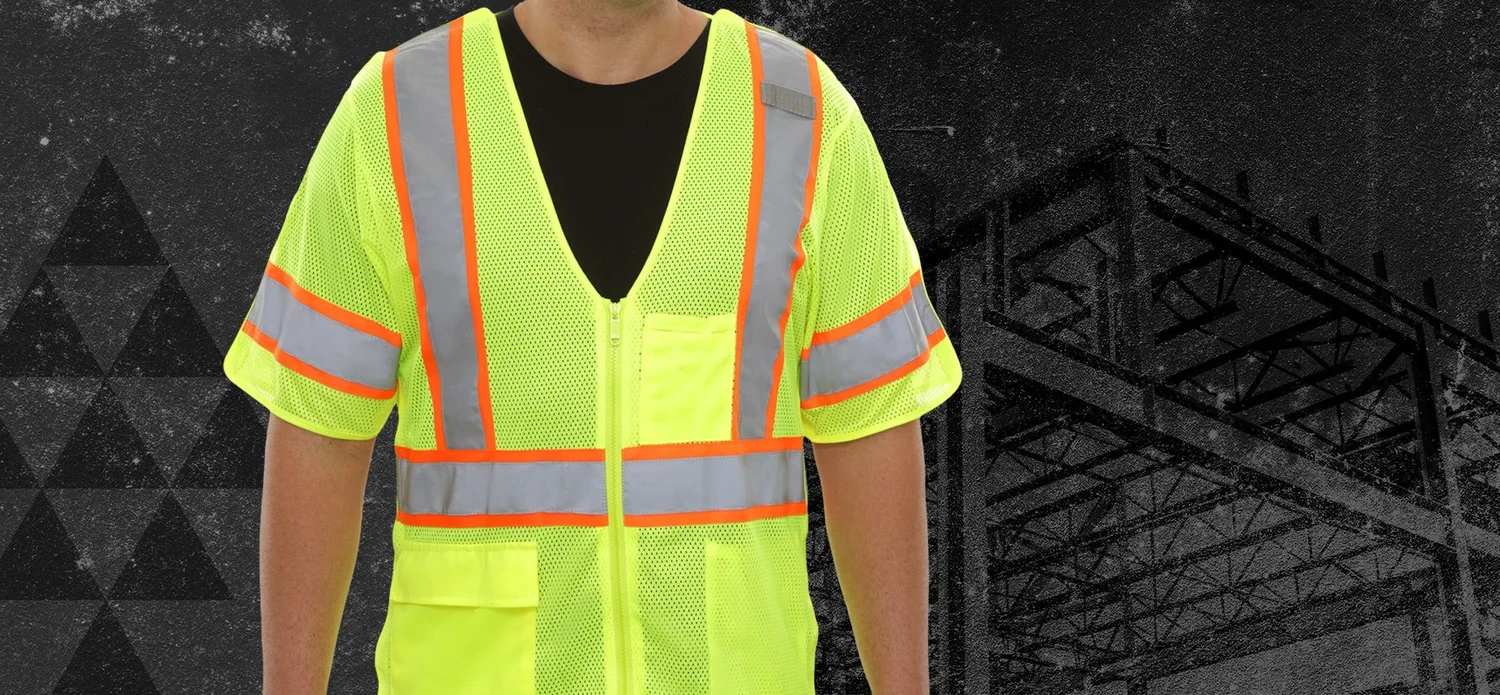
EN ISO 20471 (which superseded EN 471) classifies garments into three classes by total visible material area. The garment's class equals the lowest class achieved by either material type - a jacket with ample fluorescent area but minimum tape is capped by the tape.
- Class 3 (highest): minimum 0.80 m2 fluorescent background and 0.20 m2 retroreflective material. Required for high-risk environments: motorways, railways, airports, vehicle inspection roles.
- Class 2: minimum 0.50 m2 background and 0.13 m2 retroreflective. The common construction and road-work level.
- Class 1: minimum 0.14 m2 background and 0.10 m2 retroreflective. Low-risk environments - parking attendants, warehouse staff away from traffic.
Note the design consequence: a sleeveless Class 2 vest cannot reach Class 3, because sleeves contribute the required area - full-body coverage (jacket plus trouser, or a coverall) is how Class 3 is typically achieved. The standard also specifies tape placement around the torso and limbs so the moving human silhouette reads clearly at distance.
ANSI/ISEA 107: The American System
The US standard (ANSI/ISEA 107) differs structurally: it classifies by occupational exposure type as well as performance class. Type O (off-road) covers workers away from traffic - warehousing; Type R (roadway) covers exposure to traffic and temporary traffic control; Type P (public safety) covers emergency responders with higher visibility requirements for faster recognition.
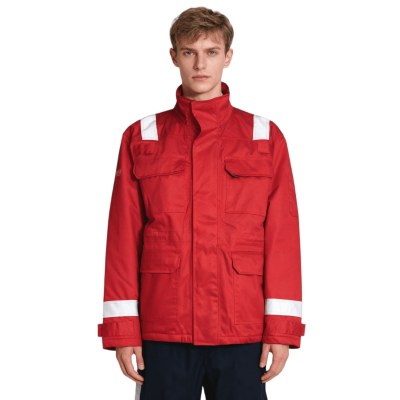
Within each type, performance Classes 1-3 mirror the area-based logic of the European system, with Type R Class 2 and Class 3 dominating road and construction work. ANSI 107 also introduces performance classes for supplementary items and, importantly, pairs with ANSI/ISEA 107's companion standard for public safety vests and the ANSI 107 Annex for rainwear - retroreflective performance must be maintained when wet, which cheap PVC rainwear routinely fails.
Add photo here: hi-vis reflective tape being retroreflectivity tested with a photometric measuring device
Tape Technology, Care Limits, and Dual Standards
Not all reflective tape is equal. Glass bead tape (the older technology) is economical; microprismatic tape (like 3M Scotchlite prismatic series) returns more light at wider entrance angles - critical for workers seen from the side. Standards specify minimum retroreflective performance (RA values in cd/lx/m2) at multiple observation angles; cheap tape passes at dead-on angles and fails at the angles that matter in real traffic geometry.
Wash cycles are the hidden expiry: retroreflective performance degrades with laundering, and certified garments carry maximum wash cycle counts (often 25-50 domestic cycles; industrial laundering requires tape specifically certified for it). Track wash counts or retire on schedule - a faded jacket with dead tape provides the confidence of visibility without the performance.
Dual-standard garments solve real problems: hi-vis + FR for utility crews near both traffic and electrical hazards (the tape itself must be FR-rated - see our FR guide), and hi-vis + waterproof for year-round outdoor crews (the waterproof laminate must maintain retroreflective performance when wet). Multi-standard garments test to each standard separately - certification lists all applicable standards.
Common Compliance Errors and Verification
- Insufficient tape area. Decorative tape placement that looks compliant but measures below class minimums.
- Wrong class for the risk. Class 1 vests on motorway sites - a regulatory violation and safety gap.
- Expired wash performance. Garments washed past certification limits still in service.
- Unverified certificates. Supplier declarations without accredited lab reports behind them.
- Covering the garment. Tool belts, backpacks, and outer layers obscuring required material areas - the standard contemplates how the garment is worn.
Verification: request the type-examination certificate and lab test reports for the exact product, check the standard edition and class claims match the label, and confirm the certifying body is accredited. Documentation requirements are covered in our certifications guide.
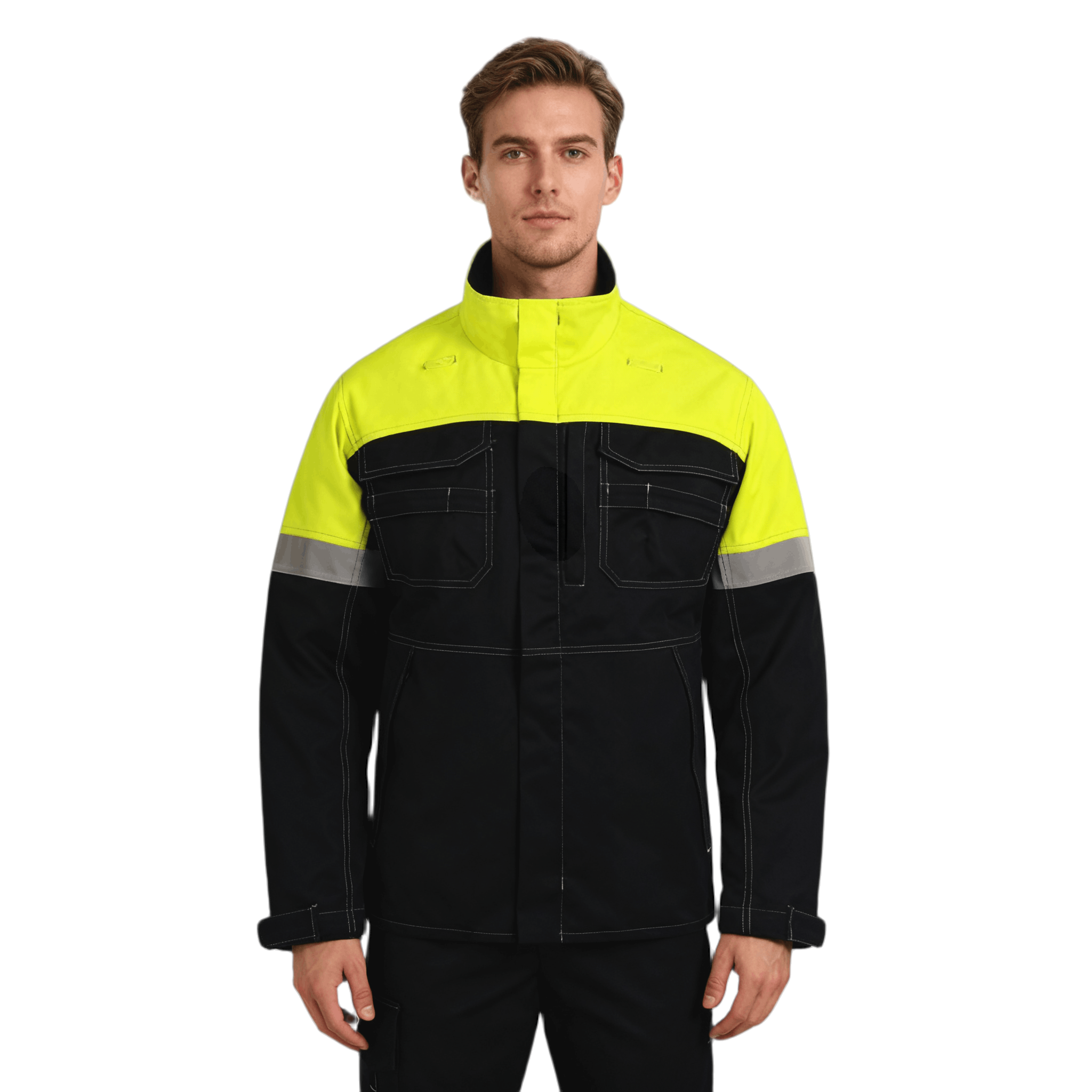
UniOuter manufactures custom hi-vis programs - hi-vis jackets, waterproof hi-vis combinations, and hi-vis + FR dual-standard garments with certified materials and third-party testing. Browse the product catalog, read about our factory on the about page, or send an inquiry with your applicable standards. The purchasing guide covers commercial terms, and the design page shows development capability.
Shop High-Visibility Workwear


Frequently Asked Questions
No - the systems are similar in spirit but not interchangeable. EN ISO 20471 classes are area-based only; ANSI/ISEA 107 adds occupational Types (O, R, P) with different minimum areas per type. A garment certified to one system does not automatically comply with the other - dual-certified garments carry both marks.
Retroreflective tape degrades with laundering - abrasion and detergent gradually destroy the bead or prismatic structure. Certification tests tape performance after a defined number of wash cycles, so the garment's certificate only covers that count. Track washes or replace on schedule.
Yes - dual-standard garments combine FR fabric with FR-rated retroreflective tape, certified separately to both EN ISO 20471 and the relevant FR standard (e.g., EN ISO 11612, or arc-rated per ASTM F1506). The tape must pass flame testing itself; standard tape melts. This is an established category for utility and rail workers.
By risk assessment, not preference. Fluorescent yellow-green offers the highest contrast in most backgrounds; orange-red is mandated or preferred in many road and rail applications and stands out where yellow-green vegetation dominates. Both EN ISO 20471 and ANSI 107 define the permitted fluorescent color families.
Ask for the certificate and the underlying lab report. Check: correct standard and edition, class matches the label, accredited testing lab, and ideally batch-level testing on your production run. Labels themselves are printed by the factory - the paperwork behind them is the real certification.