UniOuter at the 140th Canton Fair: What Buyers Asked at Booth 3.1K18
UniOuter exhibited at the 140th session of the China Import and Export Fair in Guangzhou, showing the technical outdoor and workwear lines at booth 3.1K18 in the clothing halls of Phase 3, under the Zhejiang Hualilai Imp & Exp banner. The fair ran its usual two-week rhythm, and the clothing phase is where almost every conversation that matters to an outerwear brand actually happens.
This is a short report rather than a press release: what we put on the wall, the three questions buyers kept asking, and what the halls suggest about 2027 programmes. If you are planning a sourcing trip of your own, our outdoor clothing purchasing guide covers the preparation work that makes a fair visit productive.
What the 140th Canton Fair Actually Is
The Canton Fair, formally the China Import and Export Fair, is held twice a year in Guangzhou and remains the largest single meeting point between Chinese manufacturers and international buyers. It runs in three phases, and the third one is the apparel and textile phase: garments, fabrics, accessories, footwear and fashion cases all sit in the same halls for a few days.
For an outerwear brand this is a specific kind of efficiency. Instead of booking a tour of factories across three provinces, a buyer can walk a single hall and compare a dozen suppliers on the same afternoon - fabric hand, seam construction, hardware, price band and, increasingly, paperwork. The fair does not replace a factory audit, but it compresses the first round of a sourcing search into a few days.
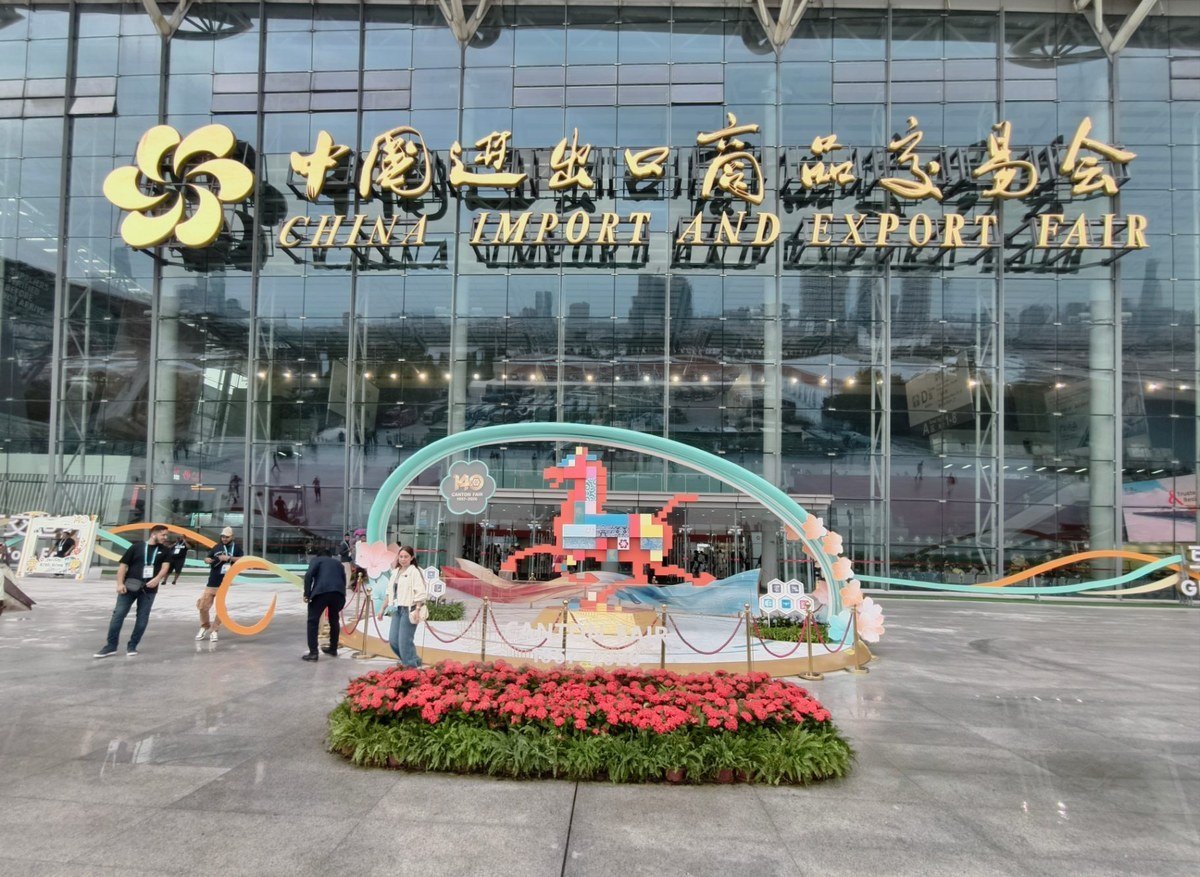
The Pazhou complex dressed for the 140th session.
What UniOuter Showed at Booth 3.1K18
The booth was built as a cross-section of the production line rather than a highlight reel, because that is how buyers actually evaluate a factory: can you make the whole programme, or only the hero style?
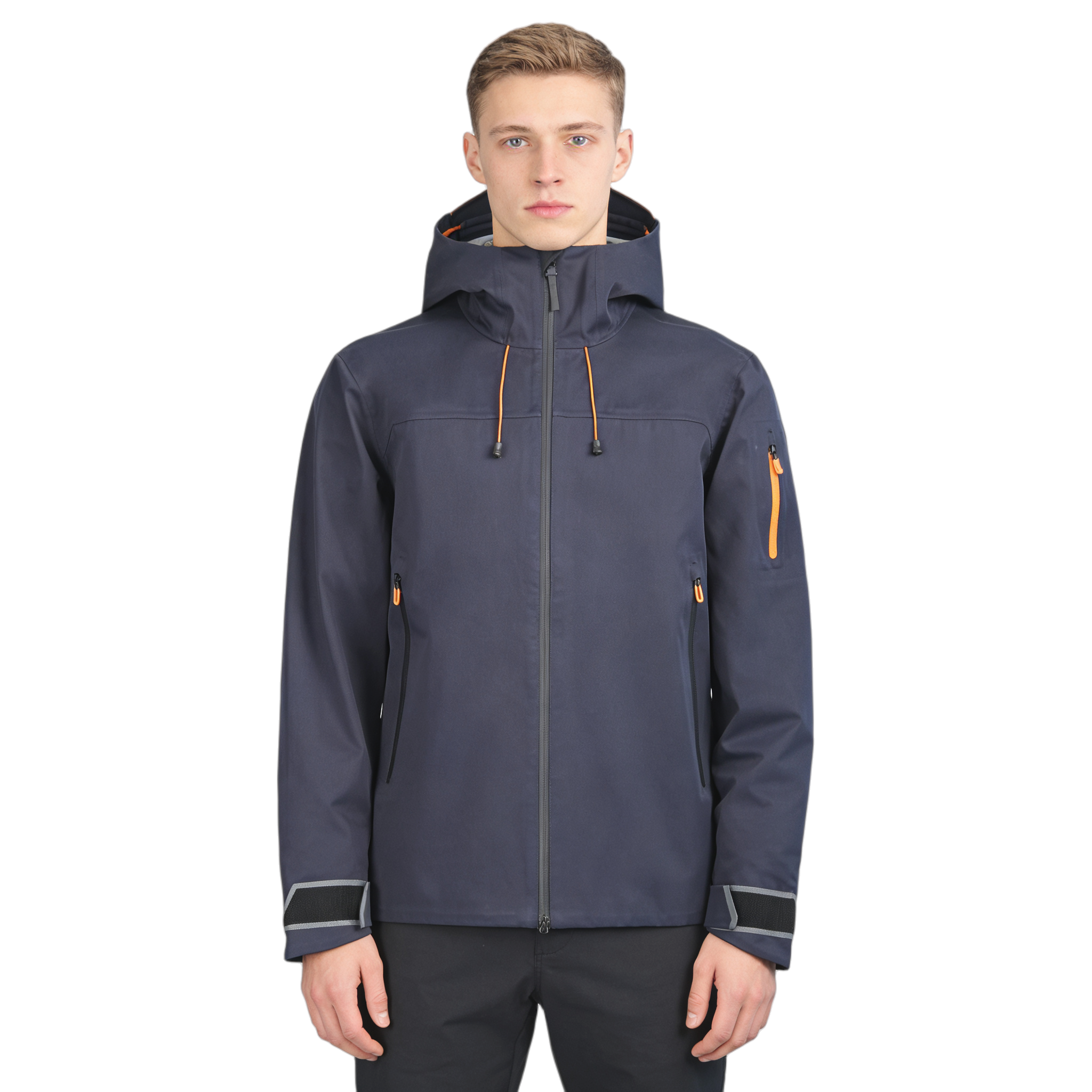
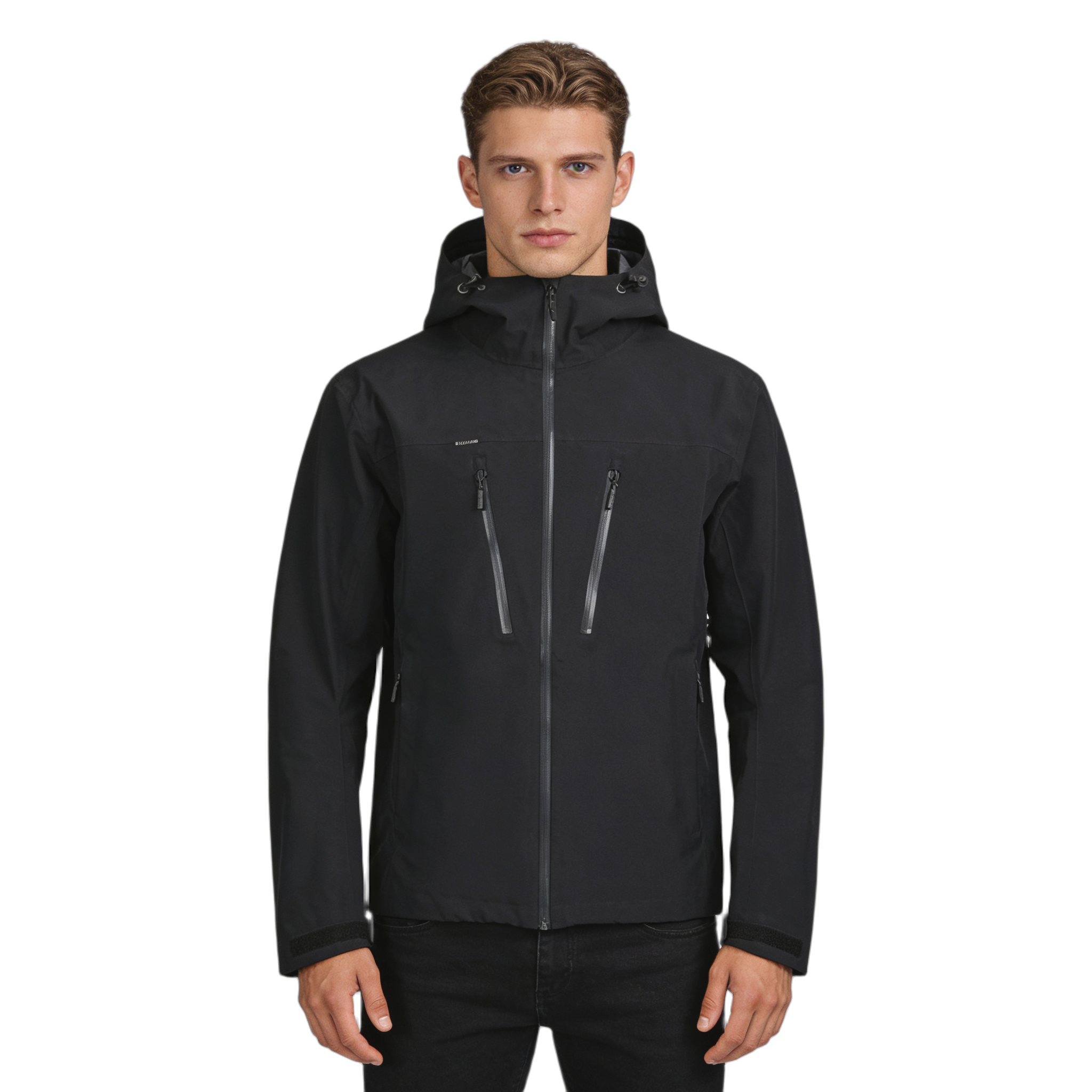
- Waterproof hiking shellsTwo, two-and-a-half and three-layer constructions with stitched-and-taped seams, in the muted colour programmes Nordic and DACH buyers now ask for.
- Softshell and fleece mid layersThe pieces that carry a layering system: grid fleece, bonded softshell, sleeve and hood geometry that works under a shell instead of fighting it.
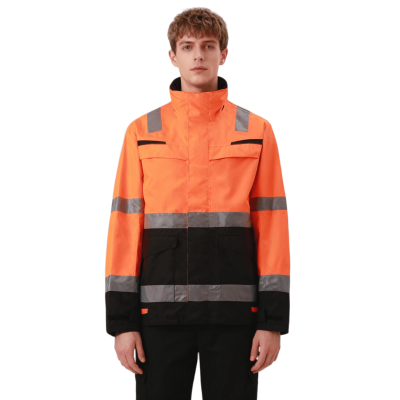
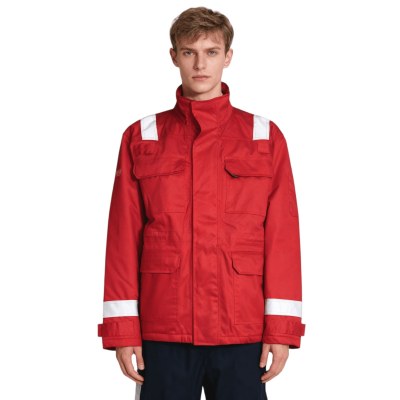
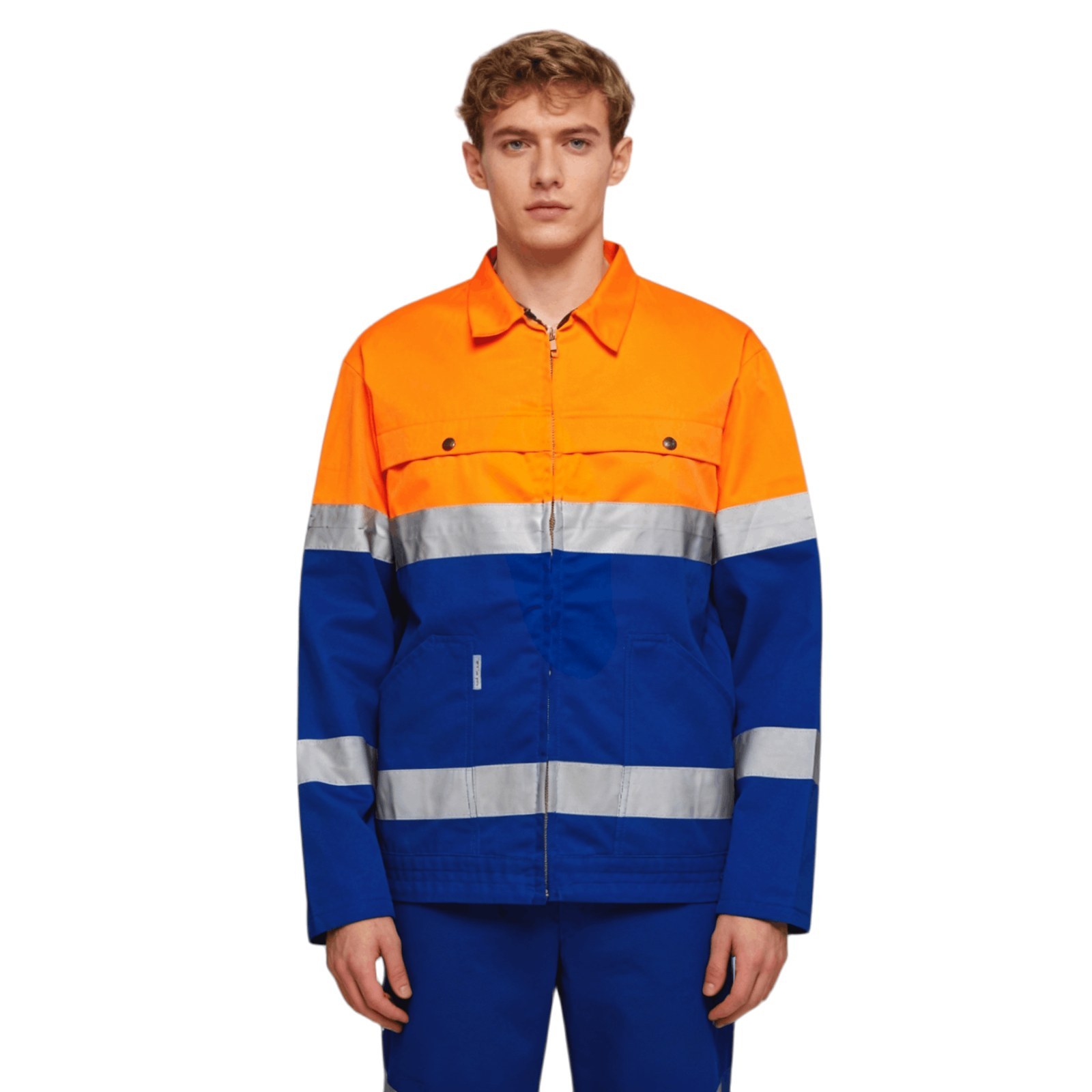
- Class 3 hi-vis workwearReflective rain jackets and work jackets for buyers sourcing field, municipal and agricultural programmes alongside their outdoor line.
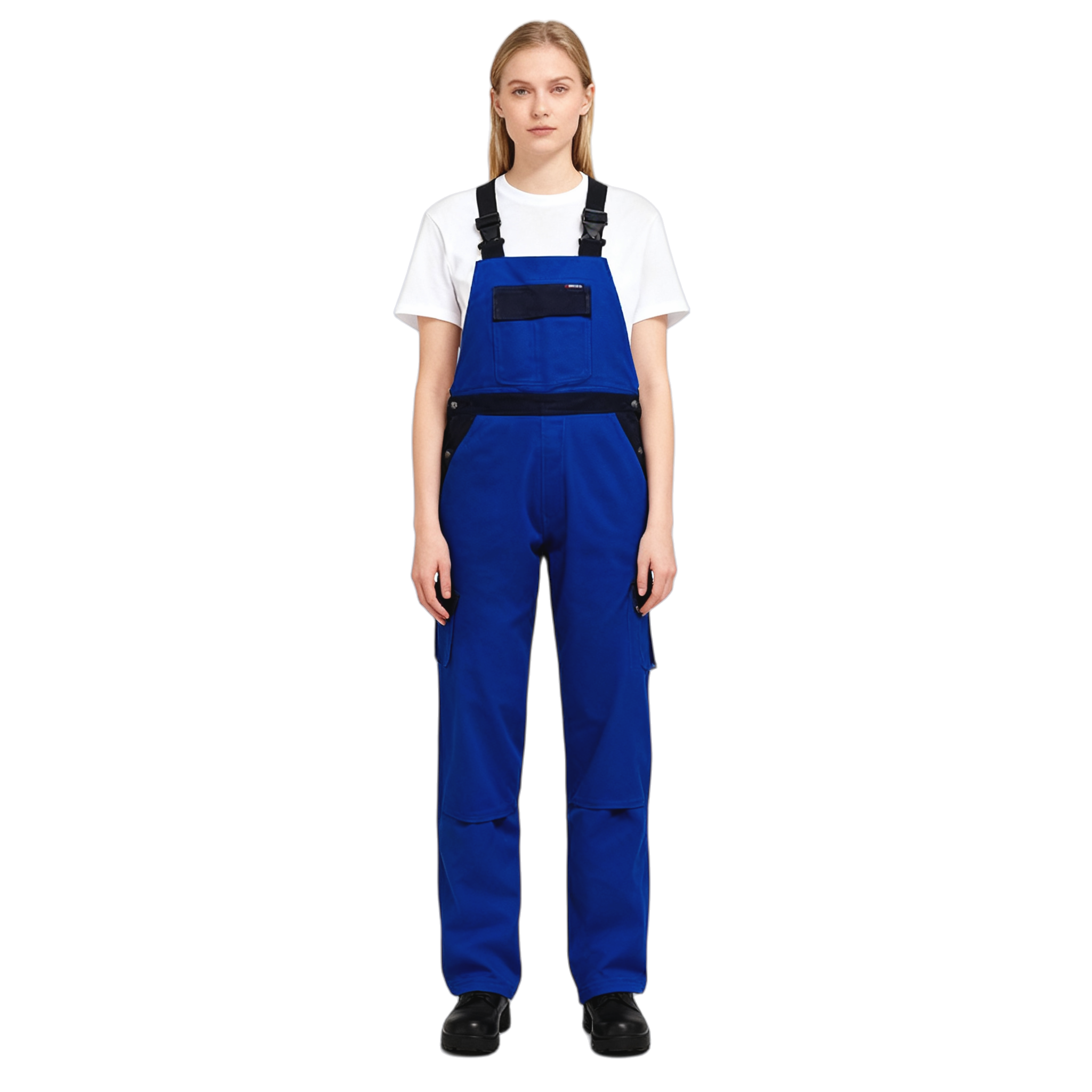
- Trousers and field overallsReinforced knee and seat panels, utility pockets, fabrics chosen for abrasion rather than for hand feel in a showroom.
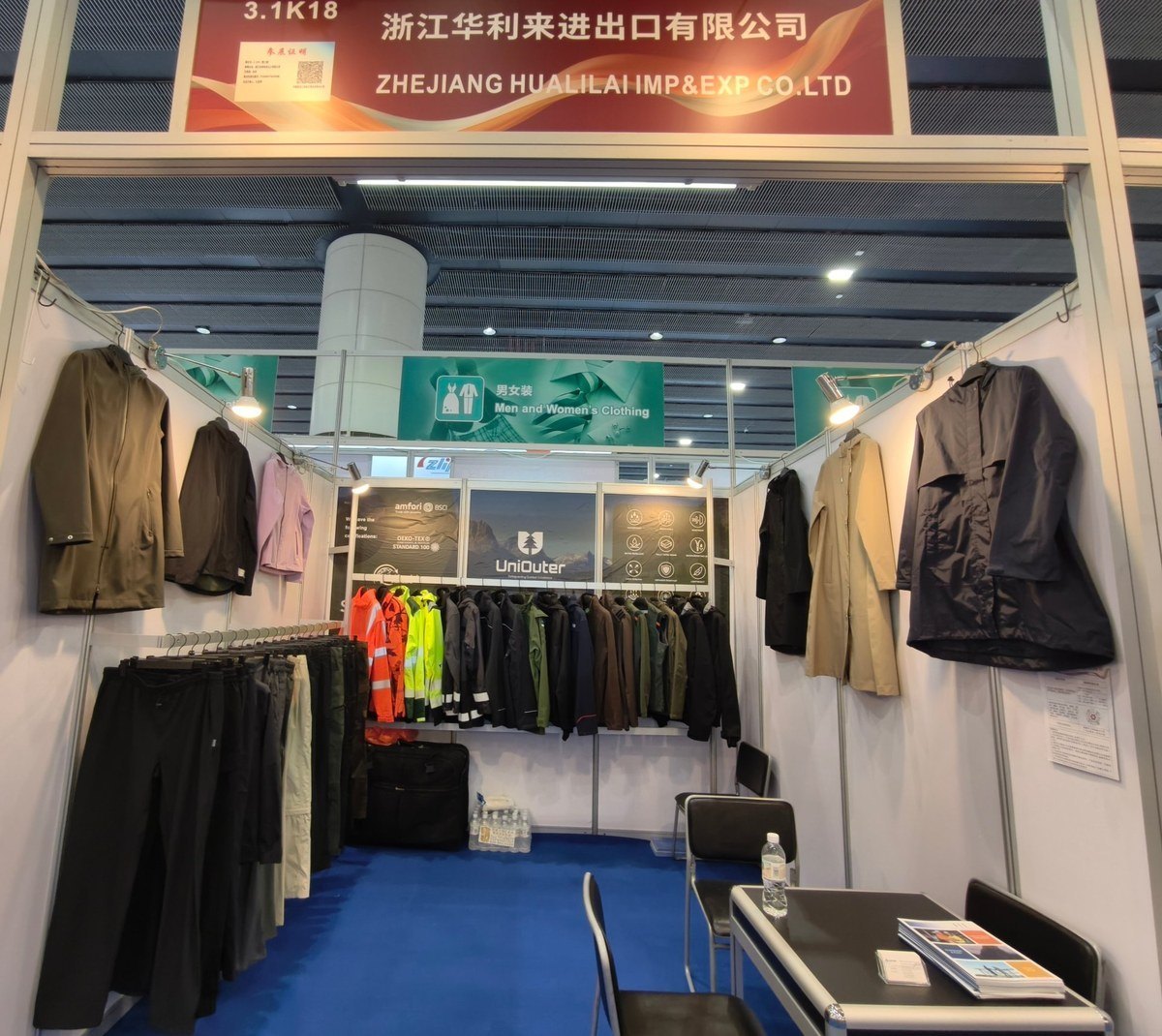
Booth 3.1K18: outdoor shells and hi-vis workwear side by side.
The wall also carried our amfori BSCI credentials next to the UniOuter brand story, because the first question in the clothing halls is rarely about price any more. Buyers want to know who made the garment, under what audit, and with what documentation - and they want to see it before they invest an hour in the conversation.
The Three Questions Buyers Asked Most
Across the phase, three questions came up again and again, and they mapped almost exactly onto what we have been writing about all season.
- Is the waterproofing PFAS-free, and can you prove the wash durability?European buyers led on this one. Fluorine-free DWR is no longer a nice-to-have option; they want a finish that still beads after the wash cycles their own lab will run. Our guide to fluorine-free DWR covers the chemistry and the test methods.
- Can we start smaller and replenish?First orders have been shrinking for two seasons while repeat runs get more frequent. Buyers asked directly whether a 300 to 500 piece opening order was realistic, which is exactly the shift we described in our read on the smaller first buy.
- What certification comes with the hi-vis and the workwear?Field, municipal and agricultural buyers brought their own specifications, and they wanted Class 3 conspicuity, antistatic options and documentation tied to the article number. We covered the reasoning in why farm clothing is becoming technical gear.
What the Clothing Halls Say About 2027
Traffic was steady rather than frantic, and the conversations ran longer than the footfall would suggest. The useful signal is not how many people walked past a booth but the order in which they asked their questions: certification first, compliance second, price third. For a technical factory that sequence is comfortable, because the first two are exactly the parts that cannot be improvised.
Two sourcing patterns were visible side by side. US buyers talked about landed cost, tariff classification and forced-labour documentation, which is the same checklist we set out in our US market sourcing playbook. European buyers came with regulation dates in hand - ecodesign, digital product passports, chemical restrictions - and asked what data we could hand over now, not in 2028. That is the market we described in our reading of the European market.
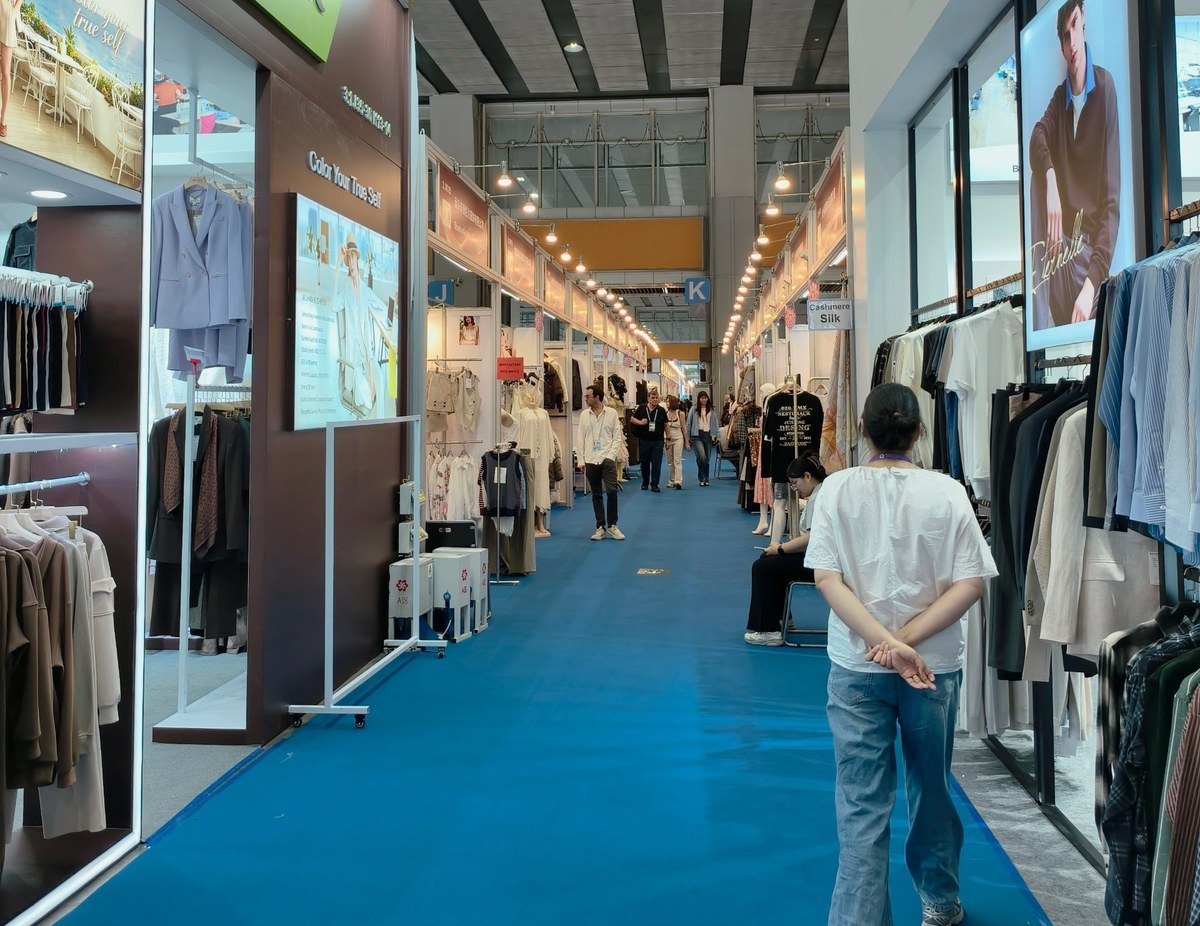
The clothing halls: steady traffic, longer conversations.
The practical conclusion for a brand planning 2027 is unglamorous but useful. Suppliers who can answer a compliance question with a document, and who can run a small first order without treating it as an insult, are the ones leaving the fair with follow-up meetings rather than business cards. Everything else is negotiable later.
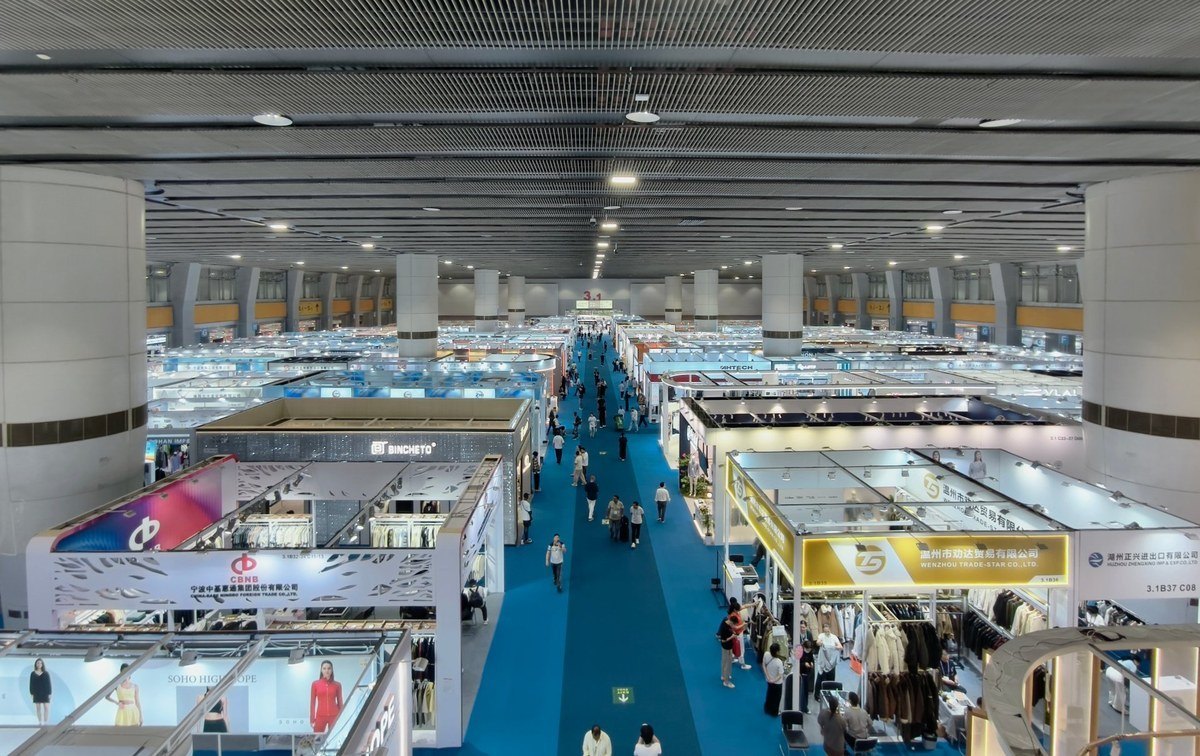
Phase 3 from above - the scale of the meeting point.
How to Continue the Conversation
If we met at the booth, thank you for the time and the questions - samples and quotations for the styles on display are already going out. If you missed the fair but the wall we built looks like what your programme needs, the same collection is available year-round rather than only in October.
Send a style list, a tech pack or reference samples and you will get fabric options, a price and a sampling plan back within days. You can also browse the full product catalogue, read more about UniOuter, or send us an inquiry directly.
Shop the Lines We Showed
Frequently Asked Questions
Phase 3 is the apparel and textile phase, which is when the clothing halls open and when technical outerwear, workwear and accessories buyers do most of their walking. If you plan a sourcing trip, build your agenda around that phase rather than the earlier industrial phases.
Booth 3.1K18 in the clothing hall, exhibiting under the Zhejiang Hualilai Imp & Exp banner with the UniOuter brand line. The booth carried waterproof shells, fleece and softshell mid layers, Class 3 hi-vis rain jackets and durable trousers and overalls.
Yes. The line shown in Guangzhou is our standing production range, not a fair-only display. Send your style list, tech pack or reference samples and we will come back with fabric options, a quotation and a sampling plan within days rather than weeks.
Most programs start at roughly 300 to 500 pieces per style and colour, depending on fabric availability and construction. Replenishment runs are smaller once a fabric and pattern are already on file, which is why more buyers now open with a tight first order and scale on repeat.
Yes. We run fluorine-free DWR options alongside conventional finishes, and we supply wash-durability evidence with the specification so your compliance team can defend the choice to EU or US customers rather than take it on trust.
The hi-vis styles are specified to Class 3 full-body conspicuity with reflective banding. Test reports and certificates are issued for the specific style and fabric you order, so ask for the documentation against the exact article number rather than a generic claim.