Recycled and Bio-Based Fibres in Workwear: Building a Traceable Fabric Programme for EU Tenders
A recycled content claim used to be a nice line in a brochure. In a tender it is now a number that carries weight, and like every scored criterion it has to be defensible.
This guide covers what recycled and bio-based fibres can and cannot do in workwear, how the two dominant certification systems provide chain of custody, and how to build a fabric programme that produces tender-ready evidence rather than a claim that dies in an audit. It follows our earlier work on recycled fabrics in outdoor apparel and the GRS certification guide.
Why Tenders Now Score Fibre Choice
Institutional and corporate buyers are under their own reporting pressure. Sustainability criteria are increasingly weighted in contract award, and the questions asked of suppliers have shifted from intent to evidence: what percentage of recycled content, certified by whom, traceable to which mill. The direction is set out in the EU Strategy for Sustainable and Circular Textiles, and the machinery that will eventually enforce this is the Ecodesign for Sustainable Products Regulation, Regulation (EU) 2024/1781.
For a workwear manufacturer the practical consequence is that fibre sourcing decisions taken today become tender eligibility in two years. A programme that cannot document recycled content is quietly excluded from the segment where margins are best.
How Chain of Custody Actually Works
Certification has two distinct layers, and buyers routinely confuse them. The first is the standard itself, which defines what counts as recycled content. The second is chain of custody, which tracks that content through every processing step so the claim on the finished garment relates to real material.
The Global Recycled Standard and the Recycled Claim Standard are owned by Textile Exchange, and the transaction certificate is the document that closes the loop between a recycled input and a delivered garment. For bio-based and organic fibre content, the equivalent framework is the Global Organic Textile Standard, administered through Global Standard. In both cases the certificate is only meaningful if it names the specific production batch.
| Document | What it proves | Where it fails |
|---|---|---|
| Standard certificate | The facility is certified to process compliant material | Does not prove any specific order contained recycled content |
| Transaction certificate | The specific shipment or order contains certified recycled material | Must be requested per order; often skipped in routine purchasing |
| Mill declaration | Fibre composition, weight and origin for the batch | Self-declared unless backed by a certificate |
| Finished garment test report | Restricted substance and performance compliance | Does not evidence fibre origin or recycled percentage |
The audit question that catches programmes out. 'Show me the transaction certificate for the fabric in this shipment.' A facility certificate is not an answer. Programmes that cannot produce per-order certificates discover their claim is unverifiable at exactly the moment it is being scored.
What Recycled Fibres Do Well and Where They Need Help
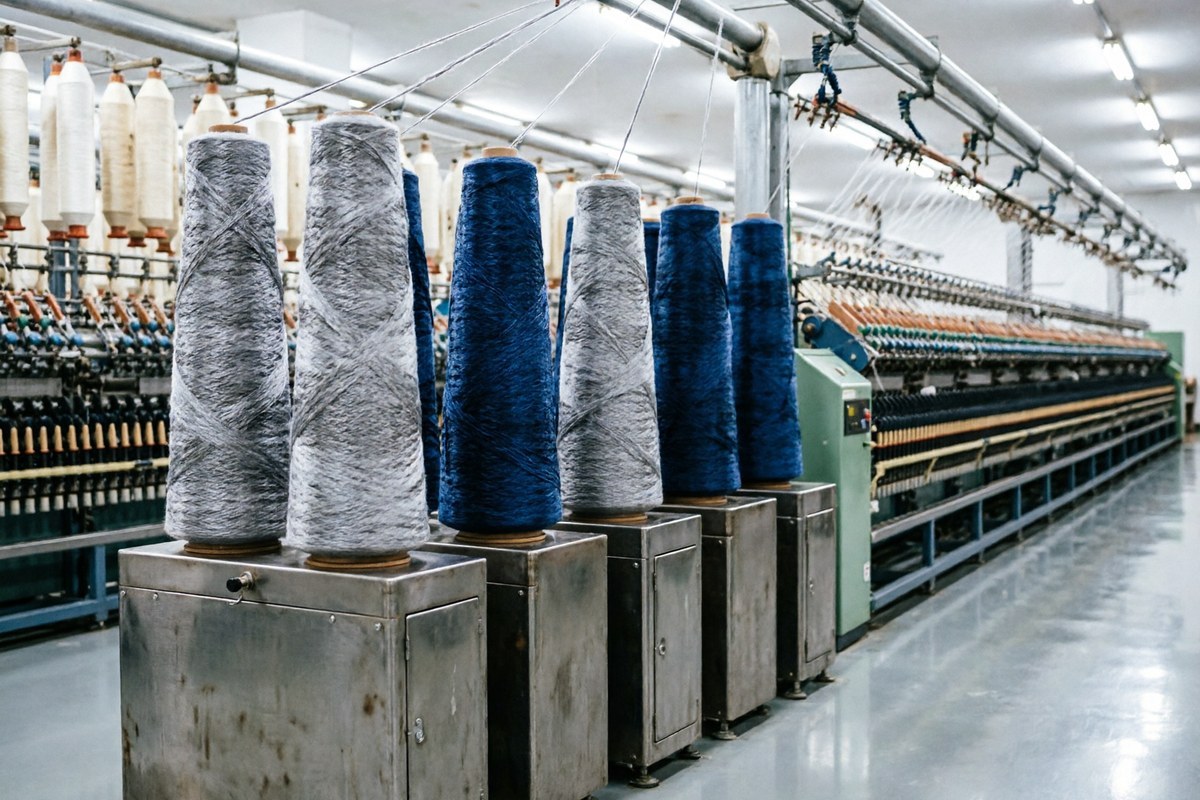
Recycled polyester is the most mature option in workwear and behaves predictably when blended. Recycled cotton and mechanically recycled cellulosics are improving but still vary more in fibre length and consistency, which changes how a fabric handles and how it ages.
Bio-based fibres, whether from plant-derived polyester feedstock or from agricultural residues, help the sourcing narrative and can reduce reliance on virgin fossil feedstock. They do not automatically improve functional performance. Judge them on the same test protocol as conventional fibre, and be explicit with the buyer about which part of the garment is bio-based.
Building the Programme: Six Steps

Where UniOuter Fits
We source certified recycled and bio-based fabrics through mills with documented chain of custody, and we file the transaction certificate with the order rather than treating it as an afterthought. Where a tender scores circularity, we can propose a construction that supports end-of-life recycling while keeping the durability that industrial laundering demands. Our sustainable workwear materials review covers the wider material landscape. Send your tender requirement through our inquiry page and we will map the certified options against it.
Shop Recycled & Durable Workwear
Frequently Asked Questions
No. A facility certificate only proves the site is certified to process compliant material. A transaction certificate, issued per order, is what links the certified material to the fabric in your shipment. Programmes that hold only facility certificates cannot evidence the claim under audit.
Fifty percent or more recycled polyester is routinely achieved in blends without changing garment construction. Higher levels are possible but should be evaluated against abrasion resistance, colourfastness and dimensional stability for the specific end use.
Performance depends on the specific fibre and blend, not on the bio-based origin. Test bio-based candidates on the same protocol as conventional fabric and be explicit with the buyer about which components are bio-based so the claim is precise.
Recycled feedstock changes absorbency and dye uptake, which affects how deeply a shade penetrates and how it holds. Dark shades are the most sensitive, so re-verify colourfastness on the recycled construction rather than carrying forward test data from the virgin equivalent.