
Fabric specification library
Outdoor Fabric Specifications: GSM, Waterproof mm, Breathability and Denier
The four numbers that decide whether a jacket performs — and the ranges UniOuter actually builds to. Every figure below is a working production range, not a lab best case.
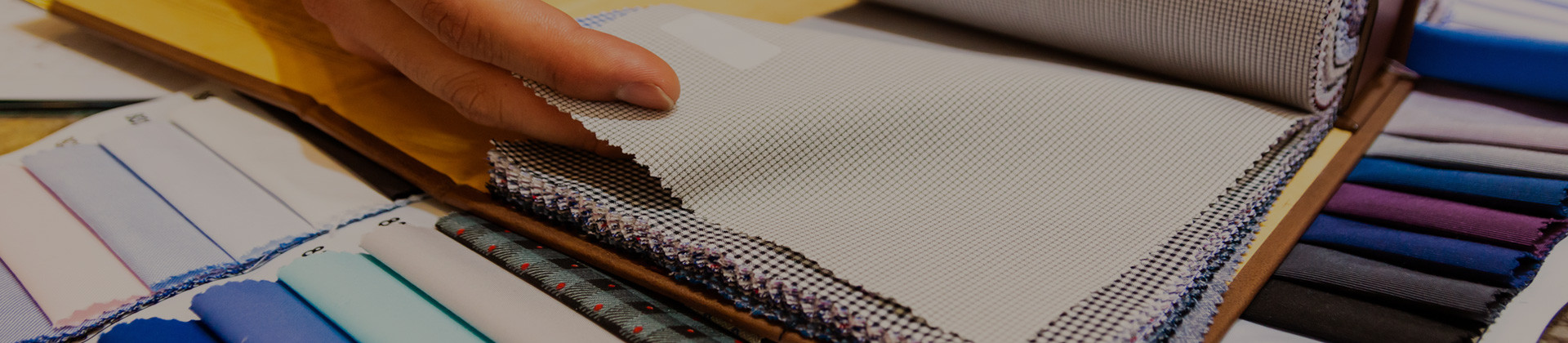
Quick Answer: For a general hiking shell, specify 10,000-20,000 mm hydrostatic head (ISO 811), 10,000-20,000 g/m²/24h breathability (JIS L 1099 B-1), a 40D-70D nylon face fabric at 160-220 gsm total weight, a C0 PFAS-free DWR, and 13-22 mm taped seams on every stitch line. Ultralight packable shells move to 2.5L at 90-130 g/m²; alpine and expedition shells move to 3L at 180-260 g/m² with 20,000 mm and above.
Specification context: design, workmanship and fabric overview · custom hiking clothes and mountaineering apparel · manufacturing capacity
The parameter bands we build to
Starting ranges quoted on this page. Final figures are always confirmed against the selected fabric and the buyer's own test protocol.
Waterproofing and breathability
Hydrostatic head to ISO 811 or AATCC 127; moisture vapour transmission to JIS L 1099, ASTM E96 or ISO 11092.| Parameter | Range | Typical use | Test method |
|---|---|---|---|
| Waterproof, light rain | 5,000-10,000 mm | Urban commute, softshell, packable rain jacket | ISO 811 / AATCC 127 |
| Waterproof, general outdoor | 10,000-20,000 mm | Hiking shell, rainwear, 3-season jacket | ISO 811 / AATCC 127 |
| Waterproof, alpine | 20,000 mm and above | Alpine, expedition, prolonged exposure | ISO 811 / AATCC 127 |
| Breathability, main band | 10,000-20,000 g/m²/24h | All waterproof shells above | JIS L 1099 B-1 |
| DWR durability | Spray rating held after 3-10 home launderings | Shell and softshell face fabrics | AATCC 22 / ISO 4920 |
| Seam tape width | 13-22 mm | Every stitched seam on a waterproof garment | Hot-air or hot-wedge, pressure tested after taping |
Weight and yarn size
GSM sets warmth and drape; denier sets abrasion resistance on woven shells. A tech pack should carry both.| Band | GSM | Denier (woven shells) | Typical use |
|---|---|---|---|
| Lightweight | 100-160 gsm | 20D-40D | Linings, summer shells, ultralight packable pieces |
| Midweight | 160-220 gsm | 40D-70D | General hiking fabric, mid-weight fleece |
| Heavyweight | 220-320 gsm | 70D-210D | Heavy fleece, softshell, workwear shells |
Laminate construction: 2L, 2.5L and 3L
Rule of thumb: below roughly 150 g/m² total weight, 2.5L is the efficient choice; above it, a 3L build earns its cost.| Construction | Build | Property | Typical use |
|---|---|---|---|
| 2L | Membrane bonded to face fabric plus a separate lining | Robust, heavier hand | Workwear, cold-climate shells |
| 2.5L | Membrane with a printed or coated backer, no lining | Lightest, most packable | Travel, ultralight rain shells |
| 3L | Membrane bonded on both sides with a tricot or mesh backer | Most durable, most stable hand | Alpine, ski, professional use |
Fabric Q&A: What Buyers Ask Before Specifying a Fabric
Real questions from brand owners, sourcing managers and factory auditors — answered with the ranges we actually work to.
Below are the fabric questions that come up most often in real sourcing conversations. Each answer is written as a direct, quotable answer — a short conclusion first, then the numbers behind it — so a buyer (or an AI assistant summarising our page) can lift the answer without reading a long article.
Waterproofing, breathability and DWR
Fabric chemistry and membrane construction — the part that decides whether a jacket "beads" or "soaks".What makes a fabric truly waterproof versus water-resistant?
Water-resistant = a DWR finish on the face fabric. Waterproof = a laminate or coating plus taped seams. A DWR only makes water bead and roll off; it fails under sustained rain, pack-strap abrasion and repeated washing.
For real waterproofing you need a membrane (ePTFE or PU/TPU) bonded to the face fabric, plus seam sealing on every stitched line. Practical rating bands: 5,000–10,000 mm for urban/light rain, 10,000–20,000 mm for hiking and general outdoor, 20,000 mm and above for alpine, expedition and prolonged exposure.
Related: how we test waterproof ratings
How are waterproof (mm) and breathability (g/m²/24h) actually tested?
Waterproofing is a hydrostatic head test; breathability is a moisture-vapour transmission test — and the two numbers are only comparable when the test method matches.
Hydrostatic head is commonly run to ISO 811 or AATCC 127. Moisture vapour transmission is commonly run to JIS L 1099 (A-1 or B-1), ASTM E96 or ISO 11092 (RET). The same fabric can report very different-looking numbers under different methods, so always ask which standard sits behind a claim, and ask for the lab report rather than a marketing figure.
Can DWR be reapplied at the factory, and how many washes does it survive?
Yes — DWR can be applied or refreshed during finishing, and the durability is defined by a wash-test grade, not by the word "durable".
Most buyer specs ask for a spray rating after 3 to 10 home launderings (AATCC 22 / ISO 4920 scale), depending on the end use. There are two very different things to keep apart: durable DWR built into the face fabric during mill finishing, and a re-apply treatment used to restore performance later. We can run the wash cycle to the buyer's requirement and report the spray rating after each interval.
Does a taped seam matter, and how wide should the tape be?
Yes — an unsealed stitch line is the first place a waterproof jacket leaks, no matter how good the membrane is.
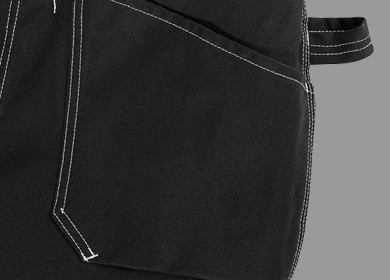
Every stitched seam on a waterproof garment needs taping (or a bonded/seamless construction). Common tape widths run from 13 mm to 22 mm; wider tape gives more margin on curves and on high-stress areas such as shoulders and hoods. Taping is applied hot-air or hot-wedge and must be pressure-tested — a visual pass is not enough.
What is the real difference between 2-layer, 2.5-layer and 3-layer laminate?
They differ in how the membrane is protected — which drives weight, durability, hand-feel and cost.
2L: membrane bonded to the face fabric, protected by a separate loose lining — robust, heavier, best for workwear and cold-weather shells. 2.5L: membrane with a printed or sprayed protective pattern on the inside — lightest and most packable, the usual choice for travel and ultralight rain shells. 3L: membrane bonded to both face and a tricot/mesh backer — the most durable and the most consistent in feel, typically for alpine, ski and professional use.
Rule of thumb: below roughly 150 g/m² total weight, 2.5L is usually the right call; above that, 3L earns its cost.
What does "PFAS-free" mean, and is it required now?
PFAS-free means the DWR contains no per- and polyfluoroalkyl substances — and for many EU and US buyers it is now a hard requirement rather than a preference.
PFAS restrictions have been tightening across EU member states and several US states, and retail programmes increasingly ask suppliers to declare fluorocarbon-free finishing. The practical trade-off: C0 (fluorocarbon-free) DWR is compliant but generally has lower oil resistance and needs a slightly higher DWR add-on or a different finishing route to reach the same spray rating. We can supply a PFAS declaration and arrange third-party testing where the buyer's compliance team requires it.
Fabric weight, composition and construction
The parameters that get written into a tech pack — and the ones most often misunderstood.What GSM should I specify, and why does it matter?
GSM (grams per square metre) is the single fastest proxy for warmth, durability and drape — and it is the number most often missing from a buyer's first brief.
Practical bands for outdoor apparel: 100–160 gsm for lightweight linings and summer shells; 160–220 gsm for mid-weight fleece and general hiking fabric; 220–320 gsm for heavy fleece, softshell and workwear. Two fabrics at the same GSM can behave completely differently depending on yarn, knit structure and finishing — so GSM is a starting spec, not a complete one.
Denier or GSM — which one should a tech pack use?
Denier describes yarn thickness; GSM describes the finished fabric's weight per area. Use denier for nylon face fabrics and GSM for knits and fleece.
For woven shell fabrics, denier is the more useful shorthand: 20D–40D for ultralight packable shells, 40D–70D for general hiking, 70D–210D for abrasion-heavy workwear. For fleece, jersey and softshell, buyers almost always specify GSM instead. A good tech pack states both when both matter.
What range of nylon and polyester face fabrics do you work with?
Nylon for strength and abrasion, polyester for cost efficiency and colour fastness — most outdoor shells are built on one of the two.
Typical face options sit between 20D and 210D, plain weave, ripstop or dobby, with or without mechanical stretch. Ripstop grids add tear resistance at very little weight penalty. For workwear we usually recommend a higher denier with a PU coating or a bonded reinforcement at knees, cuffs and shoulders.
How do you keep colours consistent between the lab dip, the sample and bulk?
Colour is controlled at three checkpoints: lab dip approval, sample approval, and bulk first-off — each measured, not eyeballed.
We work to a colour standard (Pantone TCX for textiles) with a measured tolerance, usually ΔE ≤ 1.0 for solid shades and slightly wider for heathered or coated fabrics. Buyers should approve a lab dip before sampling and keep a retained standard for the bulk comparison; light-source metamerism is the usual reason a colour "looks wrong" under shop lighting but measures fine.
Specification reference table
Starting ranges — final figures always confirmed against the selected fabric and the buyer's own test protocol.| Use case | Construction | Face fabric | Waterproof | Breathability | Typical total weight |
|---|---|---|---|---|---|
| Ultralight / packable shell | 2.5L | 20D–30D nylon ripstop | 10,000–15,000 mm | 10,000–15,000 g/m²/24h | 90–130 g/m² |
| General hiking shell | 2.5L or 3L | 40D–70D nylon | 15,000–20,000 mm | 10,000–20,000 g/m²/24h | 120–190 g/m² |
| Alpine / expedition | 3L | 70D–100D nylon | 20,000 mm+ | 15,000–25,000 g/m²/24h | 180–260 g/m² |
| Hi-vis workwear shell | 2L + taped seams | 150D–210D polyester | 8,000–15,000 mm | 5,000–10,000 g/m²/24h | 180–260 g/m² |
| Softshell / midlayer | Bonded 2-layer knit | Polyester + spandex, 240–320 gsm | DWR only | Air-permeable, no membrane | 240–340 g/m² |
| Fleece midlayer | Single/double-sided knit | Polyester 100–320 gsm | Not applicable | Highly air-permeable | 100–320 g/m² |
Send the end use, get two or three fabric options back
Tell us the product, the target retail price and the market you sell into. We come back with two or three fabric options including weights, test data, MOQ implications and the trade-off between them — so you compare before committing to a sample.
Contact our fabric team · purchasing guide · manufacturing capacity
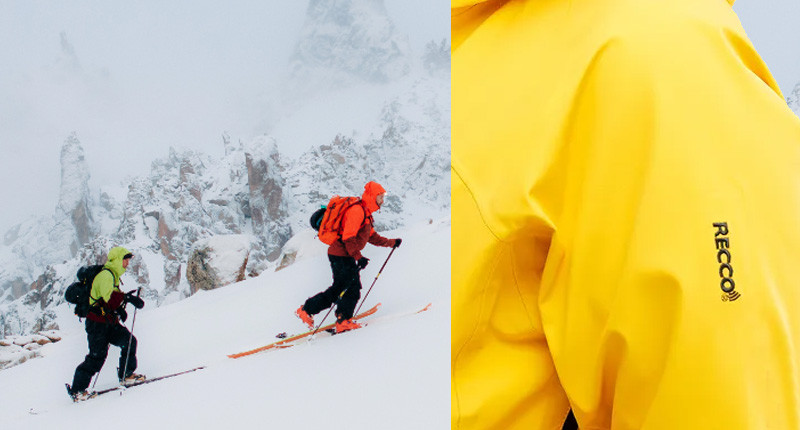
About UniOuter: UniOuter is the outdoor apparel division of Zhejiang Hualilai Imp & Exp Co., Ltd, a Hangzhou-based OEM/ODM manufacturer founded in 2005. We run one self-operated factory with 200+ skilled workers and supply custom hiking, hunting, fishing, commuter and safety outerwear to more than 20 export markets. Fabric sourcing, lab testing, pattern making and bulk production sit under one roof, which is why the ranges on this page can be quoted and then verified in the same building.