
Custom Construction and Industrial Workwear
Custom Construction and Industrial Workwear Engineered Trade by Trade
UniOuter manufactures custom construction workwear and industrial workwear for contractors, plant operators and workwear brands: hi-vis site jackets for road and night crews, flame retardant boilersuits for welders and hot-work trades, heavy duck-canvas garments for high-abrasion trades, and anti-static workwear for plants handling powders, solvents or electronics.
Our programmes dress mixed workforces — general builders, road crews, steel fixers, welders and workshop teams — in one consistent order, with fabric grade, reinforcement map, hi-vis class and pocket layout specified per trade. MOQ 300–500 pcs, sampling in 7–10 days, bulk production in 30–50 days, with OEM/ODM service from design to delivery.
Challenges Commonly Faced by Workers
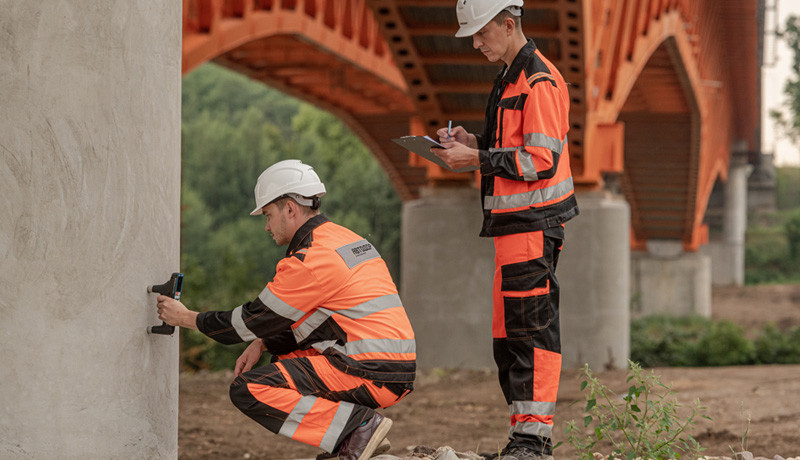
Construction and industrial work combines three conditions that a single generic garment cannot answer at once — and each one drives a different part of the specification:

Weather and Climate Exposure
Site work runs through heat, frost, wind and rain, often in one shift. Layering-ready cuts, waterproof shells and insulated options keep crews working without overheating indoors or freezing on an exposed deck.
Mechanical and Cut Hazards
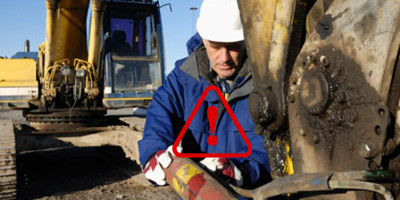
Rebar, tie wire, formwork edges and machinery all take their turn on a sleeve or forearm. Tight-weave fabrics, reinforced wear panels and cuffs that close over gloves reduce the damage ordinary workwear absorbs first.
Dust, Static and Snag Points
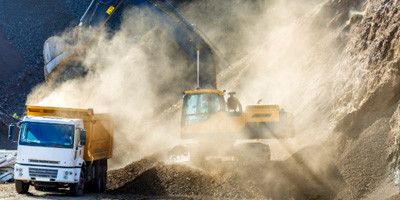
Dust-heavy trades, static-sensitive plants and rotating machinery each set their own rules. Anti-static fabric options, dust-repellent finishes and snag-free detailing keep the garment from becoming part of the hazard.
Workwear Requirements Across Construction Trades
A construction site does not hand out one job description. The same programme may dress a labourer hauling blocks at sunrise, a road crew working under traffic at midnight, and a welder grinding seams in a fabrication shed. Each trade wears its jacket out differently, so we specify workwear trade by trade — fabric grade, reinforcement map and pocket layout follow the hazard the wearer actually meets.
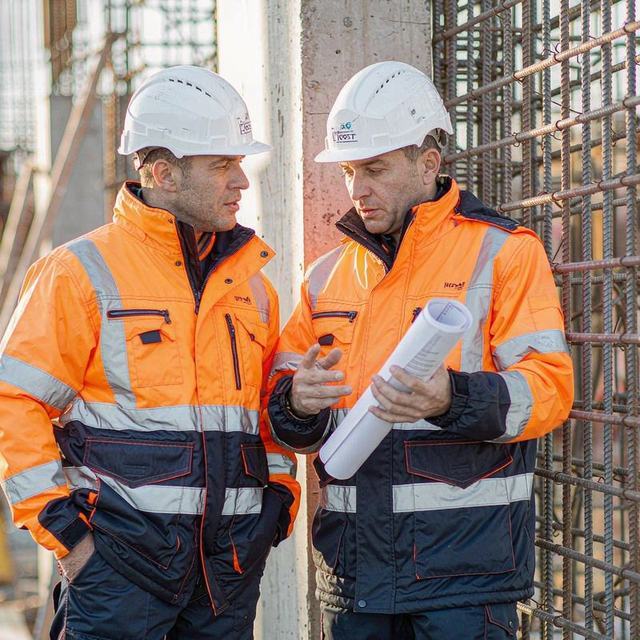
Site Labourers and Builders
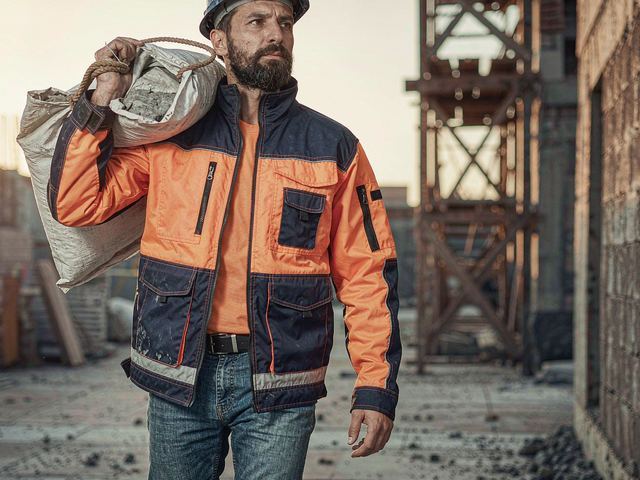
All-day abrasion is the baseline — carrying blocks, brushing formwork, kneeling on screed. Heavy poly-cotton twill or duck canvas with double-layer shoulder and elbow panels, plus room to layer a fleece underneath when the morning starts cold.
Road Crews and Night Works
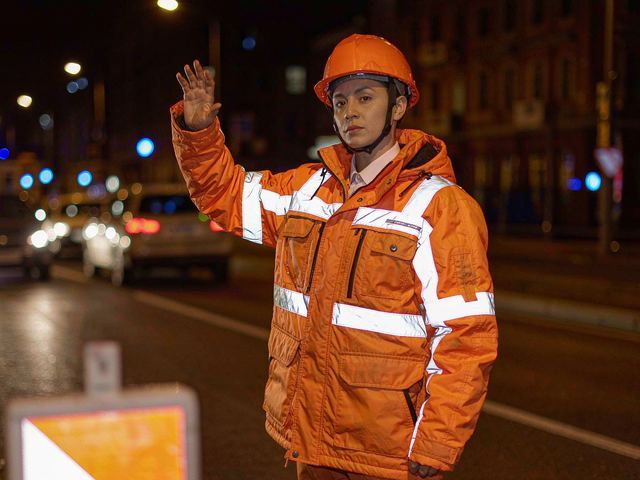
Working beside live traffic, being seen is the job. Class 2 and Class 3 hi-vis constructions with retro-reflective tape placed for 360° detection, in fluorescent fabrics that hold their colour through repeated industrial laundering.
Steel Fixers and Formwork Crews
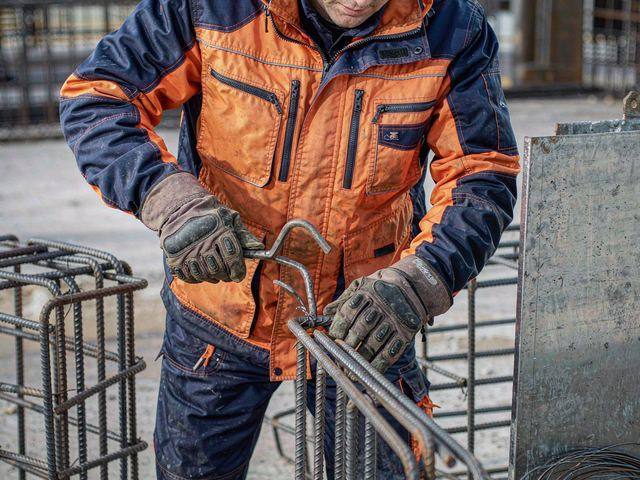
Rebar edges, tie wire and formwork corners chew through ordinary sleeves. Tight-weave fabrics with reinforced forearms, bar-tacked pocket mouths and cuffs that adjust over gloves — so nothing loose can catch on a rotating part.
Welders and Hot-Work Trades
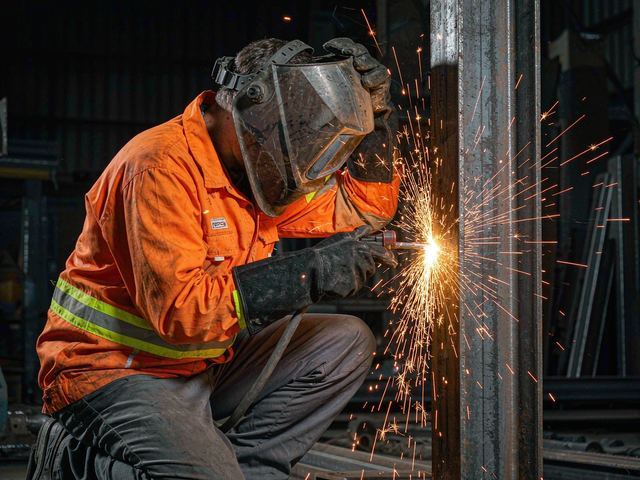
Sparks and spatter demand cloth and hardware that will not melt. Flame retardant jackets and boilersuits with covered zips, no-melt buttons, spark-shedding fabric and an overlap front that keeps molten droplets away from the collar.
How UniOuter Builds Construction and Industrial Workwear Contracts
Engineering Decisions Before Any Garment Is Cut
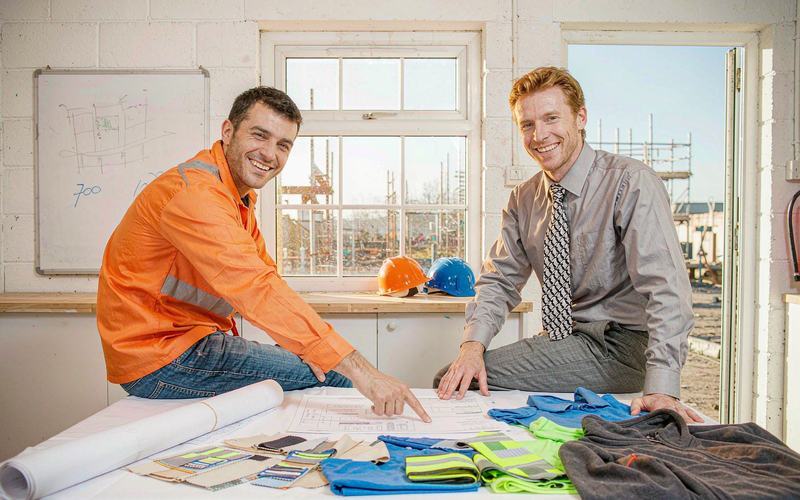
Every contract starts with the same question: what will this garment actually be put through? The answer decides the fabric, the reinforcement and the pack. A site foreman and our engineer work through the specification together — trades, hazards, season, laundering routine and visibility class — then confirm it on a sealed sample before bulk production.
As an experienced construction and industrial workwear manufacturer, we supply contractors, distributors and workwear brands with OEM/ODM programmes from design and sampling to volume production. About UniOuter · Customization Service
Task and Hazard Review
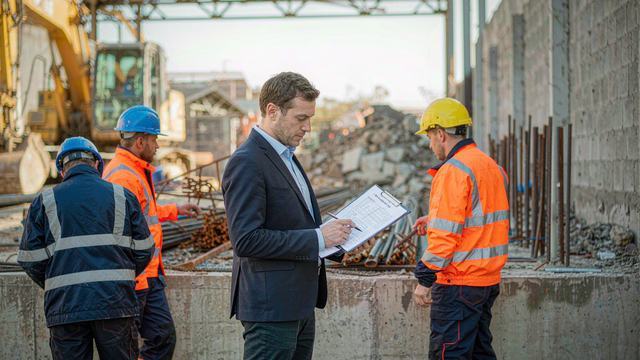
We map each role first — labourer, road crew, steel fixer, welder — and list what the garment must survive: abrasion, cuts, sparks, weather, machinery contact and repeated industrial washing. Loose fits, long drawcords and open pockets are flagged out at this stage, before any fabric is chosen.
Fabric and Construction Specification
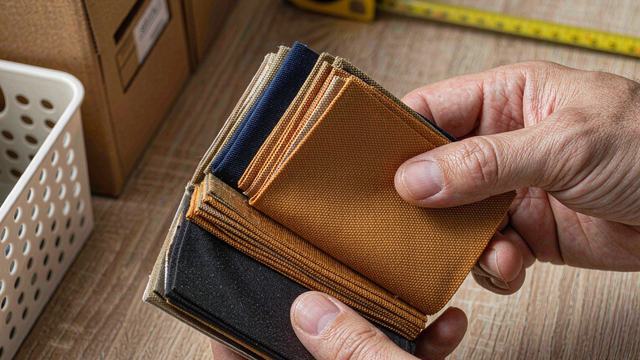
Fabric is matched to the role: heavy duck canvas and high-GSM poly-cotton twill for high-abrasion trades, flame retardant blends for hot work, anti-static options for plants handling powders or electronics. Weight, weave, colour fastness and reflective tape grade are written into the spec sheet per style.
Reinforcement and Tool Systems
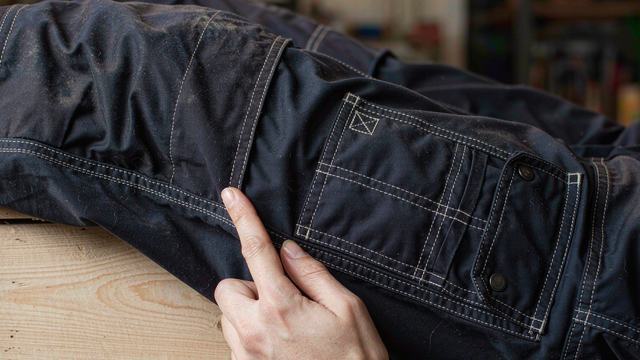
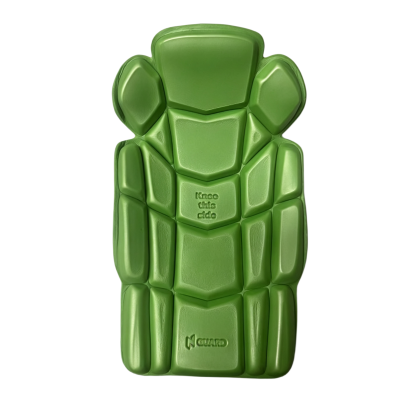
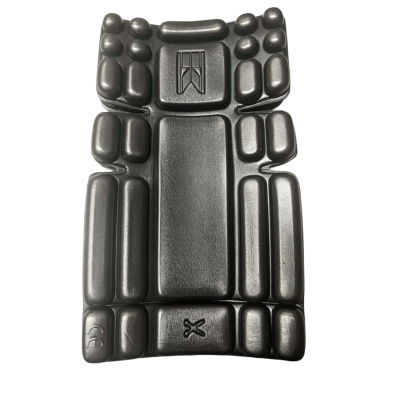
Wear points get doubled before they fail: double-layer knee and elbow panels, triple-needle stitched seams, bar-tacked pocket mouths and reinforced tool anchors. Hammer loops, rule pockets and thigh utility pockets are placed per trade, and cuffs adjust over gloves without leaving snag points near machinery.
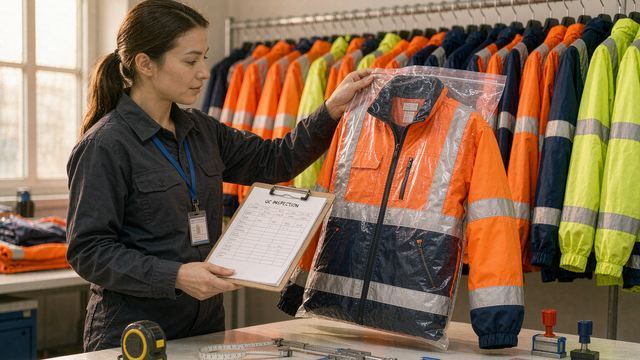
Sample Sign-Off and Bulk Quality Control
The full specification is confirmed on a sealed sample — measurement, stitching, tape placement and labelling. In-line checks during cutting, sewing and taping are followed by a final inspection against that sealed sample, so the 500th jacket matches the one your team signed.
MOQ 300–500 pcs · Sampling 7–10 days · Bulk production 30–50 days
Products of Construction and Industrial Workwear
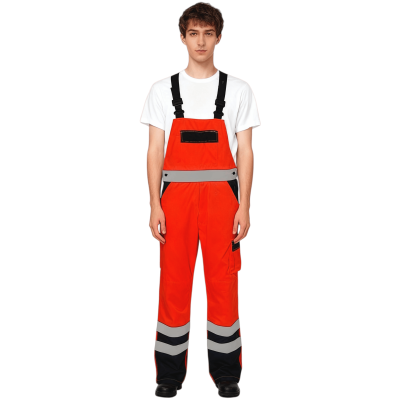
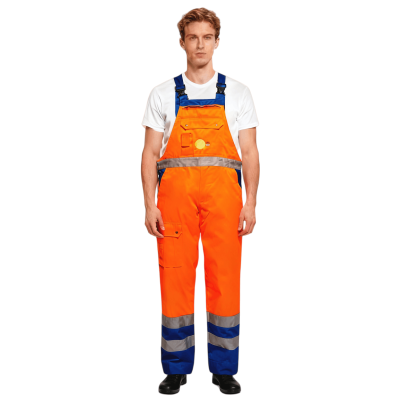
Our construction and industrial range covers the trades described above: a hi-vis reflective jacket for road construction with lapel collar and taped bands, a flame retardant boilersuit for welders in hi-vis orange-black, and an anti-static Class 3 waterproof rain jacket for wet-weather and static-sensitive sites. Fabrics, colours and pocket layouts are made to order.
Running several programmes across a plant? Our boundary collections cover the rest of the workforce: see custom hi-vis and flame retardant safety workwear for rescue and emergency crews, custom maintenance and logistics workwear for technicians and warehouse teams, or custom agricultural workwear for field and farm roles.
- Quick Selection
- Jacket Type
- Outdoor & hiking jackets
- Shell jackets
- Rain jackets
- Winter & Down jackets
- Work jackets
- Parka
- Vest
- T-shirt and shirt
- Pants Type
- Outdoor & hiking pants
- Shell pants
- Winter & down pants
- Work Pants
- Shorts
- Overalls
- Function
- Waterproof
- Breathable
- Tape seams
- Welded seams
- Windproof
- Recycle
- Zipper waterproof
- Membrane 2.5 layers
- Membrane 3 layers
- Safety
- Anti-static
- Flame and heat resistant
- Electric arc against
- Liquid chemical protection
- Bionic-finish ECO
- Eco repel
- Primaloft
- Meida high tech THERMO insulation
- Sorona
- Industry wash
- New Arrivals
- Workwear New
- Outdoor Apparel New
- Men's New Arrivals
- Women's New Arrivals
Custom Construction and Industrial Workwear
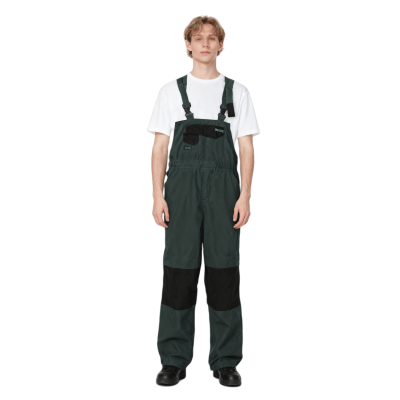
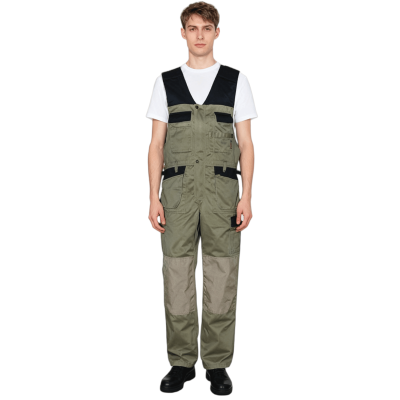
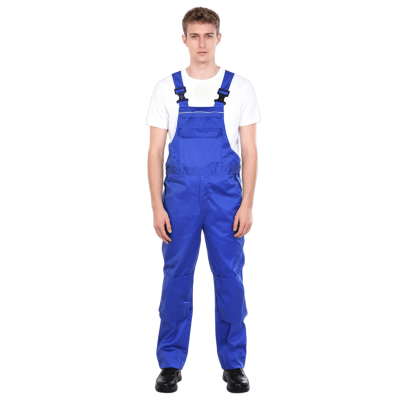
Custom Construction and Industrial Workwear
How Our Apparel Performs on the Job Site
Two environments show how a construction and industrial workwear programme is specified in practice — one outdoors under weather and traffic, one indoors under static and machinery.
Construction Site
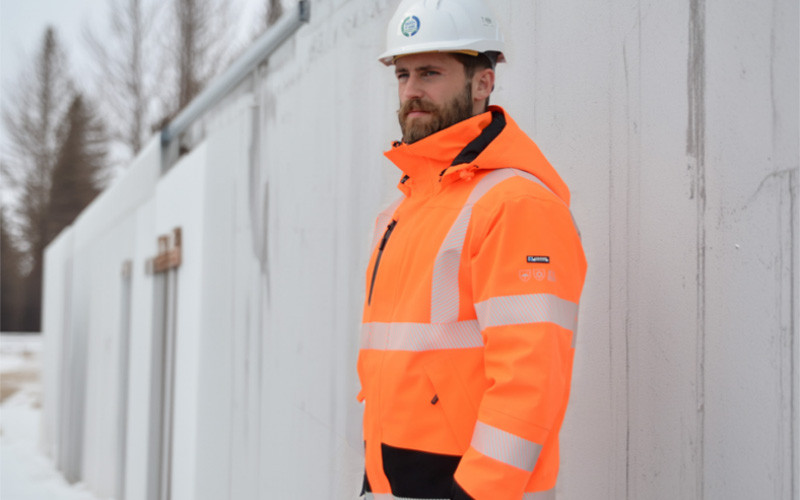
On site, garments meet abrasion, weather and constant movement. High-abrasion fabrics with reinforced knees and elbows hold their shape through kneeling, hauling and climbing, while retro-reflective tape on hi-vis jackets keeps crews visible to plant operators, delivery drivers and passing traffic on low-light shifts. Roomy armholes and layering-ready cuts let the same jacket work in a frost-started morning and a warm afternoon, and pocket layouts stay reachable while gloves are on.
Heavy Industrial Manufacturing Workshops
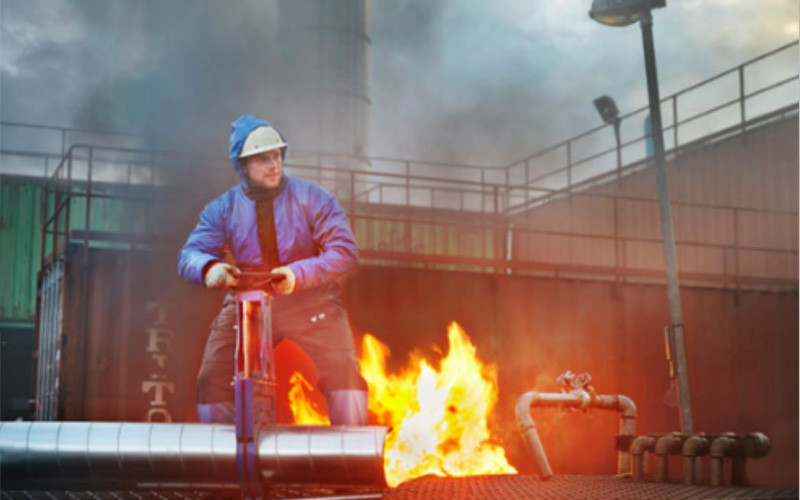
Inside production halls the priorities change. Where powders, solvents or electronic assemblies are handled, anti-static workwear keeps static discharge away from the process; near conveyors, presses and rotating shafts, snag-free detailing matters more than hi-vis coverage. Breathable fabrics and moisture-wicking linings keep a workshop team comfortable through a full indoor shift, and reinforced tool anchors carry the weight of the tools a fitter actually uses.
Tailor-Made Construction and Industrial Workwear Programmes
Every programme is specified around your trades, site conditions and laundering routine — fabric grade, reinforcement map, hi-vis class, logo placement and packaging confirmed on a sample before bulk. A typical specification runs: requirement review and fabric proposal, sample in 7–10 days, then bulk production in 30–50 days at MOQ 300–500 pcs, with OEM/ODM service from design to delivery. Customization Service · Contact Us
Frequently Asked Questions
Minimum order quantity starts at 300–500 pieces per style and colour. Programme orders that combine several trades in one production run are quoted as a single order, so a mixed workforce does not need a separate minimum per role.
Sampling takes 7–10 days after the specification is confirmed; bulk production runs 30–50 days depending on fabric sourcing and order volume. Both are counted from the approved sealed sample, not from first enquiry.
General builders and site labourers, road crews and night works, steel fixers and formwork crews, and welders and hot-work trades are the four core profiles. Each gets its own fabric grade, reinforcement map and pocket layout rather than one shared pattern.
Yes, and most contractors do. Hi-vis jackets for road and night crews ship in the same order as plain industrial styles for workshop roles, in one colour system and with one logo application standard, so the whole workforce still reads as one company.
Poly-cotton twill for all-round site use, heavy duck canvas for high-abrasion trades, flame retardant blends for hot work, anti-static options for plants handling powders or electronics, and waterproof breathable shells for wet-weather sites. Weight and weave are matched to the role and written into the spec sheet.
The class follows how much fluorescent background material and retro-reflective tape the garment carries and where the tape sits. We build Class 2 or Class 3 constructions to suit your tender specification, and place tape for 360° detection rather than front-and-back only.
Double-layer knee, elbow and shoulder panels, triple-needle stitched seams at load points, bar-tacked pocket mouths and reinforced forearms. Hammer loops, rule pockets and cuffs that close over gloves are placed per trade, with no loose detail left near rotating machinery.
Colour-fast, shrink-resistant fabrics with reinforced stitching and securely attached reflective tape keep garments in service through frequent hot laundering. We confirm the care routine against your laundry process at the specification stage, so tape and fabric performance are not lost in the first wash cycles.
Yes. OEM/ODM covers Pantone colour matching, logo embroidery or printing, size grading and custom packaging — including private label for distributors with your own labels and hangtags.
Fabric and reflective tape test reports from our suppliers, together with our own in-line and final inspection records against the sealed sample, can be supplied for tender and QA files. Specific certification requirements are reviewed at the specification stage so the correct documentation is agreed before production.
- Quick Quotation
- Full Name
- *Phone
Contact us now and you will receive our free solution consultation and comprehensive product information. we look forward to starting a journey of cooperation with you!
- Name
- *Phone
- *Title
- *Content