What Makes Outdoor Clothing Waterproof? The Complete Waterproofing Technology Guide
Waterproofing is the single most important function in outdoor apparel. A jacket that leaks is not a jacket, it is a sponge. This guide explains the full technology stack that makes a garment waterproof, from membrane to seam tape, so buyers can specify performance instead of trusting marketing labels.
For a quick numeric reference, pair this with our waterproof rating comparison (5K/10K/20K mm).
Why Waterproofing Is the #1 Function
Every other feature in an outdoor jacket, breathability, mobility, insulation, exists to support a waterproof shell. If the shell leaks, comfort and warmth collapse together. That is why waterproofing is engineered as a system, not a single coating, and why a failure at any layer (membrane, DWR, or seam) compromises the whole garment.
Waterproof Membranes & DWR
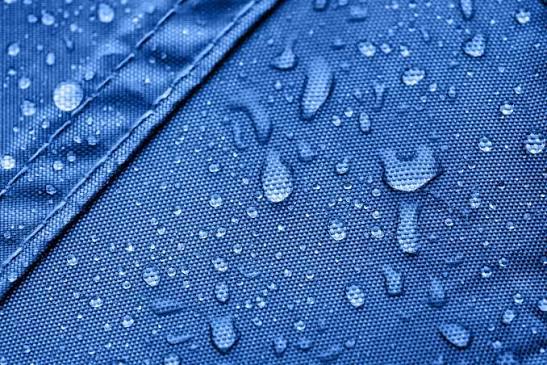
The membrane is the core barrier. Gore-Tex uses expanded PTFE (ePTFE), a microporous structure whose pores are large enough for water vapor to escape but too small for liquid water to enter. eVent uses a direct-venting ePTFE that removes the protective PU layer, improving breathability. Proprietary polyurethane (PU) membranes are hydrophilic, moving moisture through a molecular chain, and offer a lower-cost alternative.
Durable Water Repellent (DWR) is the surface treatment that makes water bead and roll off. Without DWR, water saturates the face fabric (wetting out), which blocks breathability and makes the jacket feel cold. Traditional DWR used fluorocarbons (PFCs); the industry is shifting to fluorine-free alternatives under regulatory pressure, covered in our PFAS ban guide.
Seam Sealing & Construction Methods
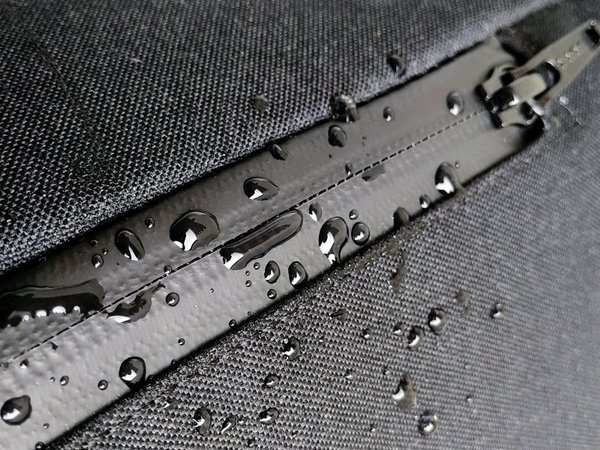
Stitching creates needle holes, and needle holes are water pathways. Every seam on a waterproof garment must be sealed, typically with heat-activated tape applied on a pneumatic flat press. Sew-free bonding (ultrasonic or hot-melt adhesive) eliminates stitching entirely on critical seams. Construction type determines how layers are combined:
| Construction | Structure | Best for |
|---|---|---|
| 2-layer | Face fabric + membrane, separate hanging liner | Durability, insulated jackets |
| 2.5-layer | Face fabric + membrane + printed protective half-layer | Lightweight, packable shells |
| 3-layer | Face fabric + membrane + bonded backer, single fabric | Hardcore use, best durability-to-weight |
Waterproof Ratings & Breathability
Waterproofness is measured by hydrostatic head (mmH2O): the height of a water column the fabric resists before leaking. Higher numbers mean more waterproof. A practical scale: 5,000mm is shower-resistant; 10,000mm handles steady rain; 20,000mm+ is for sustained storms. Breathability is measured by Moisture Vapor Transmission Rate (MVTR) or Evaporative Resistance (RET), lower RET means better breathability.
The paradox is that waterproofness and breathability pull against each other. The same barrier that blocks liquid water must let water vapor through. Quality membranes solve this with pore-size engineering; cheap coatings solve it by not breathing at all. See our shell-type comparison for how this plays out across product types.
Care, Testing & Common Failures
DWR wears off with use and washing. Reactivation (a warm dryer cycle or iron on low) restores beading; re-treatment (spray-on or wash-in fluorine-free DWR) is needed periodically. Membranes degrade at flex points over years. The most common failure points are seam tape delamination at corners, DWR wear on shoulders and cuffs, and membrane contamination from dirt and oils.
Testing methods include the hydrostatic pressure test (measures mmH2O), the rain shower test (simulates real rain), and WVT testing (measures breathability). Reputable manufacturers provide test reports. Our 3-layer hardshell craft breakdown shows how we test at the production level.
Innovation & UniOuter's Waterproof Manufacturing
Innovation is moving toward bio-based membranes, recycled waterproof fabrics, and PFC-free treatments that close the performance gap with fluorocarbon DWR. UniOuter's waterproof production uses a pneumatic flat press for seam tape, sew-free bonding on critical seams, and a three-tier QC system that tests waterproofness at raw material, in-process, and finished-garment stages. To specify a waterproof program, send an inquiry or browse our waterproof jackets. More on our manufacturing background and design capabilities.
Shop Waterproof Jackets
Frequently Asked Questions
For general hiking in changeable weather, 10,000mm hydrostatic head is a solid baseline. For sustained storms or mountain use, 20,000mm+ is safer. Pair the rating with good DWR and sealed seams; a high membrane rating with leaking seams still gets you wet.
DWR typically lasts 20-50 wash cycles depending on quality and care. You can reactivate it with heat (a warm dryer or iron on low). Once reactivation stops restoring beading, re-treat with a fluorine-free spray-on or wash-in DWR.
Not always. 3-layer (face + membrane + bonded backer) is more durable and packs better, suiting hardcore use. 2-layer (face + membrane with a separate hanging liner) is tougher for insulated jackets and is often cheaper. The right choice depends on the product, not just the layer count.
Seam tape is the weak point. Tape can delaminate at corners, lift after repeated washing, or fail if applied at the wrong temperature. A leaking seam usually means the tape needs reapplication or the garment has reached end-of-life at the seams.