The Seam Is Where Waterproofing Dies: Seam Sealing for 2027 Shells
Mills sell hydrostatic head. Factories sell garments. The gap between the two is a stitched seam - and it is where most waterproof claims quietly fail, not in the lab, but in the third hour of wind-driven rain on an exposed shoulder. This briefing covers how seams fail, which construction to specify, and what belongs in a 2027 shell tech pack.
Quick Answer: A hydrostatic-head figure describes flat, unstitched fabric. Every stitch line is a row of needle holes punched through the membrane, so on a finished shell the seam - not the panel - usually sets real waterproof performance. Above 10,000 mm, specify fully taped seams rather than critically taped, tape width of 18-22 mm matched to the laminate backing, an adhesive system compatible with the membrane chemistry, and seam peel retention of at least 80% after 40 domestic washes. Validate on finished garments with a seam hydrostatic test or an EN 14360 rain-tower run, and never treat a fabric-only report as proof that a garment is waterproof.
For production-ready programmes, see UniOuter's custom hiking and mountaineering apparel line, or read about our factory's seam-sealing, waterproof testing and production capability.
Every autumn the same document lands on a factory desk: a fabric test report showing 20,000 mm hydrostatic head, a lab name, a date, and a signature. It is a real report. It is also, strictly speaking, a report about a flat piece of cloth that has never been sewn. The moment that cloth becomes a jacket - panels joined, hood attached, pockets set in, sleeves closed - someone runs a needle through the barrier several thousand times, and the number on the report stops describing the product. What follows is the part of shell development that spec sheets habitually skip: the join.
Why a 20,000 mm fabric becomes a 6,000 mm jacket
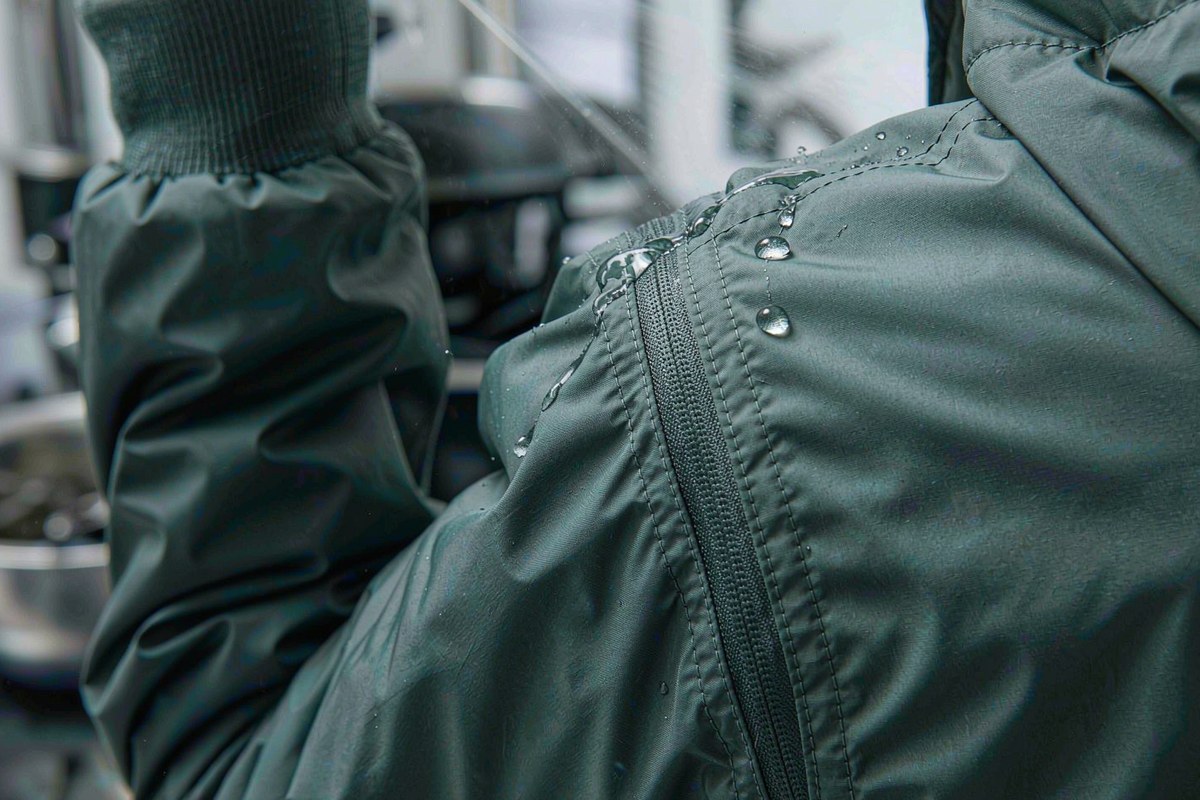
Water does not need a hole to be dramatic. It needs a gap narrow enough for capillary action and a pressure difference big enough to push. A stitched seam supplies both: the needle channel is measured in fractions of a millimetre, and wind-driven rain against a shoulder or chest creates exactly the pressure differential that turns a static leak into a pump. Gravity decides where the water comes out - usually the shoulder yoke, the hood brim seam or the top of a chest pocket - but the entry point is almost always a stitch line.
This is why field failures cluster at the same three places across brands and price points. The panel did not fail. The construction did. A garment can carry a 20,000 mm laminate and still wet out at the shoulder in twenty minutes if the yoke seam is untaped or the tape lifted at a crossover. Buyers who read only the fabric column of a spec sheet are buying a number, not a jacket.
Three ways to close a seam, and what each one buys
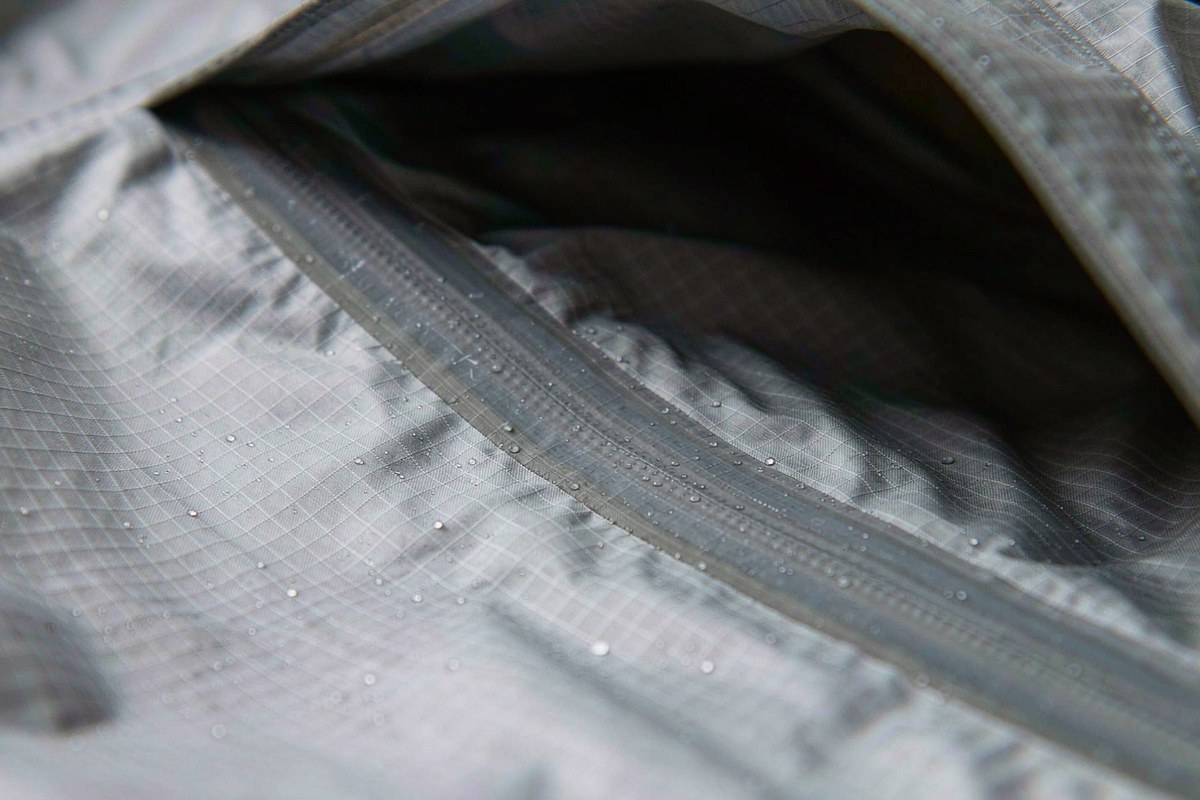
Seam sealing is not one process with options; it is three different constructions with different failure modes, different equipment and different cost. The choice should follow the performance claim, not the target price.
| Construction | What is sealed | Typical claim band | Where it fails |
|---|---|---|---|
| Non-taped | Nothing - stitch holes remain open | 1,500-5,000 mm, casual and urban rainwear | Shoulder yoke and hood first, within minutes of sustained rain |
| Critically taped | High-exposure seams only: shoulders, hood, upper chest | 5,000-10,000 mm, commuting and light hiking | Any seam outside the exposure map - cuffs, side panels, pocket bags |
| Fully taped | Every sewn seam in the garment | 10,000 mm and above, technical shells and skiwear | Crossover bulk, tape lift after washing, abrasion under pack straps |
| Welded / stitchless | No needle holes - panels fused | Premium, 15,000 mm and above | Equipment cost, narrow fabric compatibility, edge stiffness |
The practical rule that survives most programme reviews: above 10,000 mm, specify fully taped. Between 5,000 and 10,000 mm, critical taping is defensible only if someone has written down the exposure map and the garment's use case actually matches it. Below 5,000 mm, position the product as casual or urban rainwear and avoid performance language altogether - a jacket that leaks at the shoulder and is marketed as waterproof costs more in returns and reviews than the tape would have.
Tape is a system: four variables that decide whether it holds
A seam tape is a film with an adhesive backing, and the failure is rarely the film. It is the bond, the coverage, or the substrate. Four variables account for most of the difference between a tape that survives forty washes and one that lifts in the first.
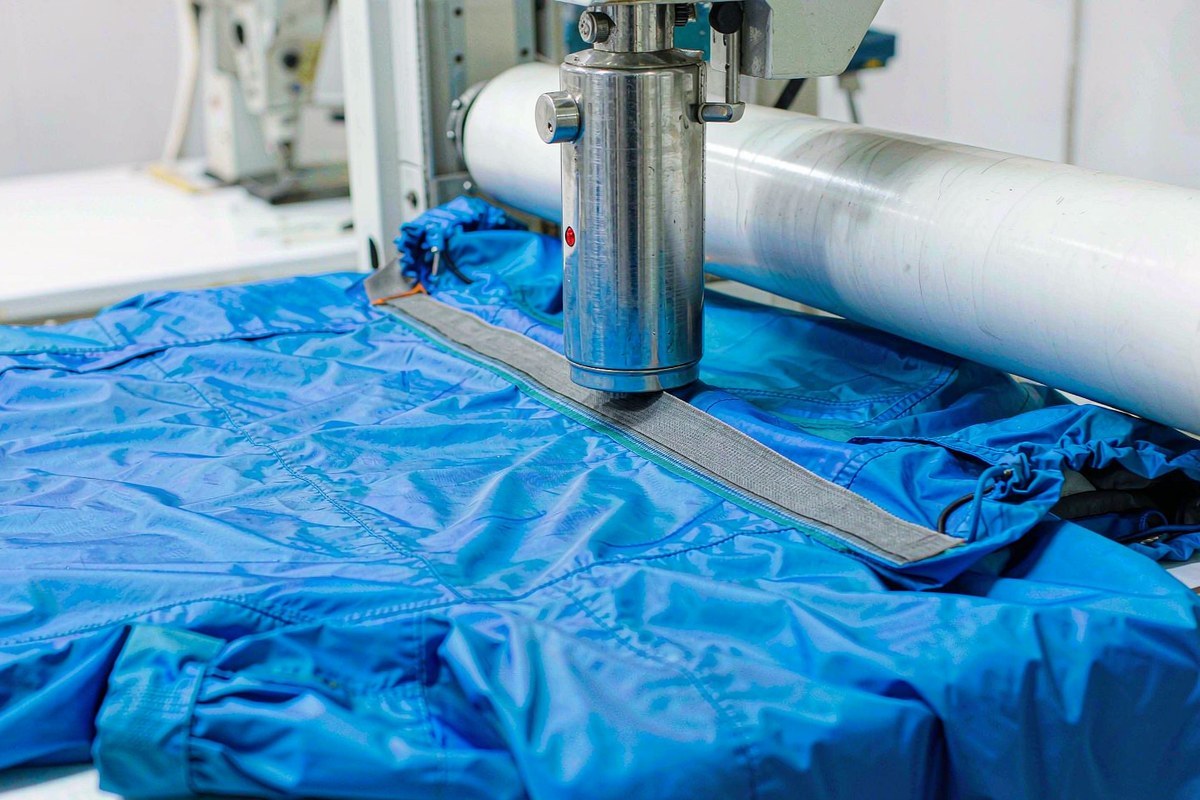
Two factories running the same tape on the same laminate can produce different results, because the variables that matter live on the machine: nozzle temperature drift across a shift, roller pressure at a curved seam, seam bulk at the hood attachment, and moisture in a tape roll that was opened the week before. A tape that has absorbed ambient humidity can foam or bond weakly even inside its nominal temperature window. This is why the useful audit question is not which tape you buy, but what your line records - temperature, pressure, speed, operator, roll lot - for each seam type, and whether anyone re-checks peel strength at the start and end of a run.
The fabric number is a promise. The seam is where the factory either keeps it or quietly renegotiates it.
UniOuter technical notes, waterproof construction, autumn 2026The tests that predict field failure
A fabric test report is necessary and insufficient. The tests worth paying for are the ones that measure the join, ideally after the abuse a garment will actually see.
- Seam hydrostatic resistance - run the hydrostatic test on the sealed seam itself, not on a panel. This is the single number that predicts whether the garment holds under pressure, and it is routinely missing from supplier documentation.
- Coated-fabric hydrostatic methods - ASTM D751 covers hydrostatic resistance procedures for coated fabrics and is often the reference a US buyer expects to see quoted alongside ISO 811 results.
- Peel adhesion - ASTM D1876 (T-peel) quantifies how hard it is to lift the tape. Ask for the value before washing and after 5, 10, 20 and 40 cycles; a reasonable acceptance criterion is retaining at least 80% of initial peel after 40 domestic washes.
- Wash durability - ISO 6330 procedures at the temperature and cycle the end market actually uses. A tape that passes at 30 °C gentle may fail at 40 °C with a commercial detergent.
- Finished-garment rain test - EN 14360 puts a complete garment under high-energy droplets from above. It is the only test that sees the hood, the yoke, the pocket openings and the seam crossovers as a system.
- Cold flex - adhesives stiffen below freezing, and alpine or Nordic programmes should specify a flex check at the lowest expected use temperature rather than assuming room-temperature results transfer.
For workwear tenders, the rain standard reads the garment, not the cloth
Where the shell is sold as protective clothing rather than outdoor equipment, the reference is usually EN 343, which classifies water penetration (X1-X3, measured by hydrostatic pressure) and breathability (Y1-Y3, by water-vapour resistance) and explicitly assesses the garment's construction - seams, closures, pockets - rather than the fabric alone. A jacket labelled EN 343 3:3 is claiming the top band on both axes, and that claim is only achievable if the seams behave like the panel. It is a useful discipline for non-PPE programmes too: if a design cannot survive that question, it should not carry a waterproof claim.
What to write into a 2027 shell tech pack
The most common cause of a leaking production run is a tech pack that left the seam to the factory default. These are the lines worth writing explicitly - they cost nothing to specify and are difficult to argue with later.
- Seam type stated in words: non-taped, critically taped (with the exposure map attached) or fully taped - never left blank.
- Tape width and material named: typically 18-22 mm, PU or TPU hot-melt, matched to the laminate chemistry and backing.
- Coverage rule for crossovers: how many layers of tape at the hood, yoke and pocket junctions, and who inspects them.
- Peel acceptance value plus the wash sequence at which it must still pass - 0, 5, 10, 20 and 40 cycles.
- Seam hydrostatic target quoted separately from the fabric target; the two numbers should not be the same figure on paper.
- Finished-garment validation method: EN 14360 rain tower, seam spray, or a documented in-house protocol with photos.
- In-line records: temperature, pressure, line speed, operator and tape lot per seam type, retained for traceability.
- Repair and re-seal instruction for the end user, since a lifted tape at year three is a warranty conversation, not a factory one.
Two regulatory threads now touch the seam line
Seam choice is no longer purely a performance decision. PFAS restrictions on water-repellent finishes have pushed brands toward PFAS-free DWR systems, and those finishes change the surface energy of the face fabric - which changes how tape wets out and how contamination at the seam has to be controlled. A tape that bonded perfectly to a C8 finish may need a different primer or a tighter process window on a fluorine-free one. The verification approach is set out in our PFHxA restriction guide for waterproof jackets, and the fabric side is covered in the waterproof and breathable fabric selection guide.
The second thread is documentation. Under the EU textile digital product passport timeline, a shell will eventually need a record behind it that includes material composition, supplier identity and batch-level traceability - and seam tape is a component with a lot number like any other. Factories that already log tape lots per run will populate that record without new work; factories that do not will start from zero. The timeline and the data fields are set out in our DPP readiness briefing. Neither thread changes what makes a seam waterproof. Both change what a buyer has to be able to prove about it.
UniOuter builds taped and welded shells to spec - fully taped technical jackets, critically taped commuter pieces and 3-layer mountaineering shells - with seam hydrostatic and peel testing recorded per lot, and wash-durability runs matched to the destination market. The jacket line building guide shows how the shell sits inside a full range, and the shoulder-season shell briefing covers the lighter construction where critical taping is a legitimate choice.
Yes. The hydrostatic figure is measured on flat, unstitched fabric, so it says nothing about the sewn garment. Above roughly 10,000 mm, fully taped seams are the construction standard that keeps the finished shell anywhere near the panel's rating; critically taped seams leave the cuff, side and pocket seams open to pressure.
18-22 mm is the working range for shell seams, because the tape must cover the stitch line plus several millimetres of intact fabric on each side of it. Narrower tape saves weight but tends to bridge rather than bond at bulky crossovers such as the hood attachment, which is where lifting usually starts.
It can be, between about 5,000 and 10,000 mm, for commuter and light hiking shells - but only if the exposure map is written into the tech pack and the product claim matches the intended use. It is not appropriate for alpine, marine or multi-hour rain use, where every seam is exposed at some point.
Test the seam, not the panel: seam hydrostatic resistance plus peel adhesion per ASTM D1876 before washing and after 5, 10, 20 and 40 domestic wash cycles to ISO 6330. A common acceptance criterion is retaining at least 80% of initial peel after 40 washes, followed by a finished-garment rain test such as EN 14360.
It can. Fluorine-free finishes change the surface energy of the face fabric, which affects how the tape adhesive wets out and how carefully the seam must be kept free of contamination before taping. Ask the mill and the tape supplier for a compatibility statement, and re-run peel and seam hydrostatic tests on the new finish rather than assuming the old process window still holds.