PFAS-Free DWR in Outdoor Jacket Development: C0 Chemistry, Real Performance and Re-Testing
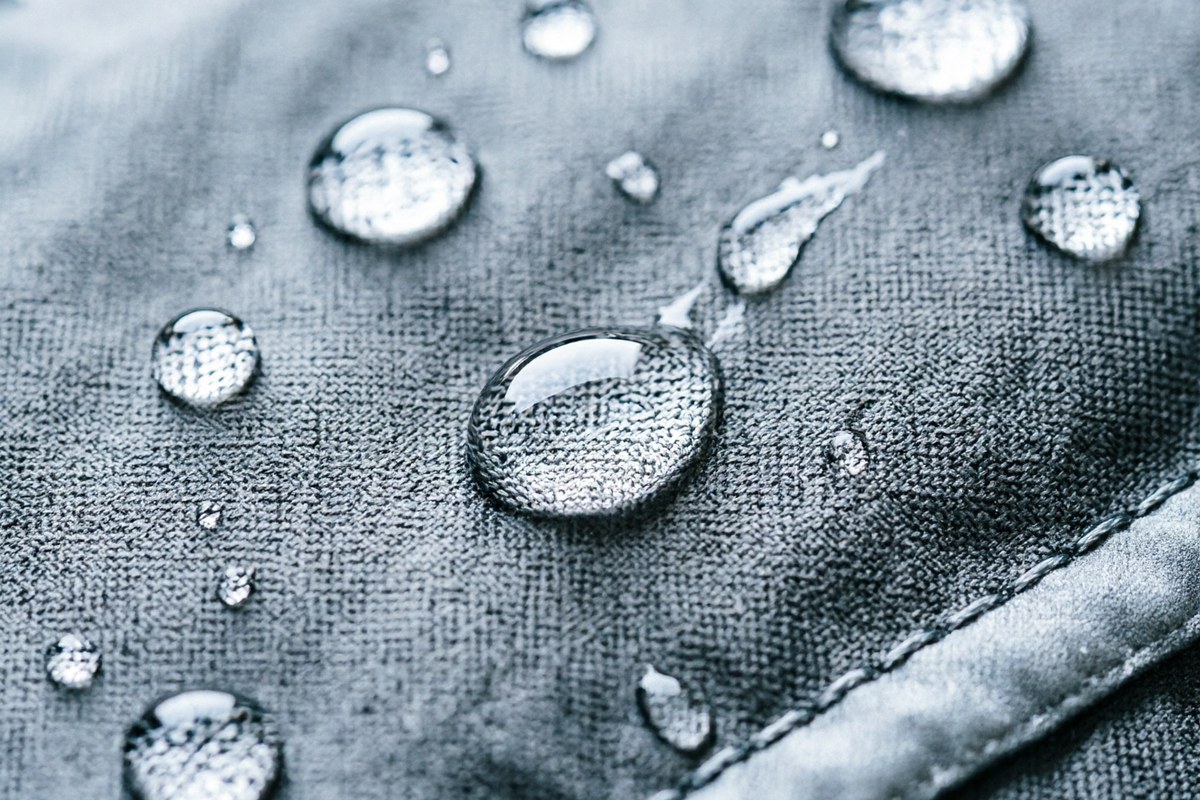
The finish that makes a shell bead water is changing chemistry. Fluorine-free DWR is now the default for most outdoor programmes, and the brands that switched early with a proper test protocol are the ones without field complaints.
This guide is written for product developers and technical buyers. It covers what C0 and bio-based finishes are, how their performance differs from the fluorinated chemistry they replaced, the design changes that compensate for the difference, and the re-testing protocol that should run after any finish change. At UniOuter we develop and manufacture waterproof, breathable outdoor jackets, so the testing notes below come from production runs rather than laboratory theory.
Why PFAS Is Leaving the Specification
Per- and polyfluoroalkyl substances, commonly called PFAS, were the backbone of durable water repellency for decades because they repel both water and oil extremely well and survive repeated washing. Their persistence is the problem. Restriction work in Europe and several US states has been tightening around the whole substance class, and the direction of travel is clear enough that buyers now write PFAS status into the specification rather than treating it as a preference.
The regulatory framework that drives this sits in REACH, Regulation (EC) 1907/2006, with additional national measures stacking on top. Alongside the chemical rules, the EU Strategy for Sustainable and Circular Textiles pushes durability and chemical transparency into the same conversation, which means a finish that fails after ten washes is a compliance issue as well as a quality issue.
What C0 and Bio-Based DWR Actually Are
C0 DWR is the umbrella term for fluorine-free water repellents. Instead of fluorinated polymers, these finishes use hydrocarbon or silicone-based chemistry, often described as dendritic or hyper-branched polymers that mimic the water-shedding microstructure of a leaf surface. Bio-based versions use plant-derived feedstock for the same chemistry, which is why they attract the sustainability narrative even though the performance mechanism is similar.
Two industry systems make the chemical story verifiable. OEKO-TEX STANDARD 100 covers restricted substances at the finished-garment level, while bluesign works at the input-chemistry level, approving the individual components used in a finishing recipe. For a brand replacing a finish, an input-level approval is often the faster route to confidence.
Performance: Where PFAS-Free Wins and Where It Does Not
| Property | Fluorinated DWR (legacy) | PFAS-Free C0 DWR |
|---|---|---|
| Water repellency | Excellent, high initial spray rating | Comparable when properly applied and cured |
| Oil and stain repellency | Excellent | Meaningfully weaker; oily contamination penetrates faster |
| Wash durability | High, resists repeated laundering | Lower on first-generation recipes; improved with modern boosters and re-application |
| Hand feel | Can feel slightly slick | Generally softer, slightly more natural hand |
| Application control | Forgiving across fabric types | More sensitive to fabric preparation, pH and curing temperature |
The one difference buyers underestimate. Oil repellency. A PFAS-free finish sheds rain well but will let oil-based grime, sunscreen and chain lubricant into the face fabric. For urban and general hiking use that is acceptable. For garments used around machinery, food handling or heavy sunscreen exposure, the design needs a wipe-clean face fabric or a laminated barrier rather than relying on the DWR alone.
The Re-Testing Protocol After Switching Chemistry
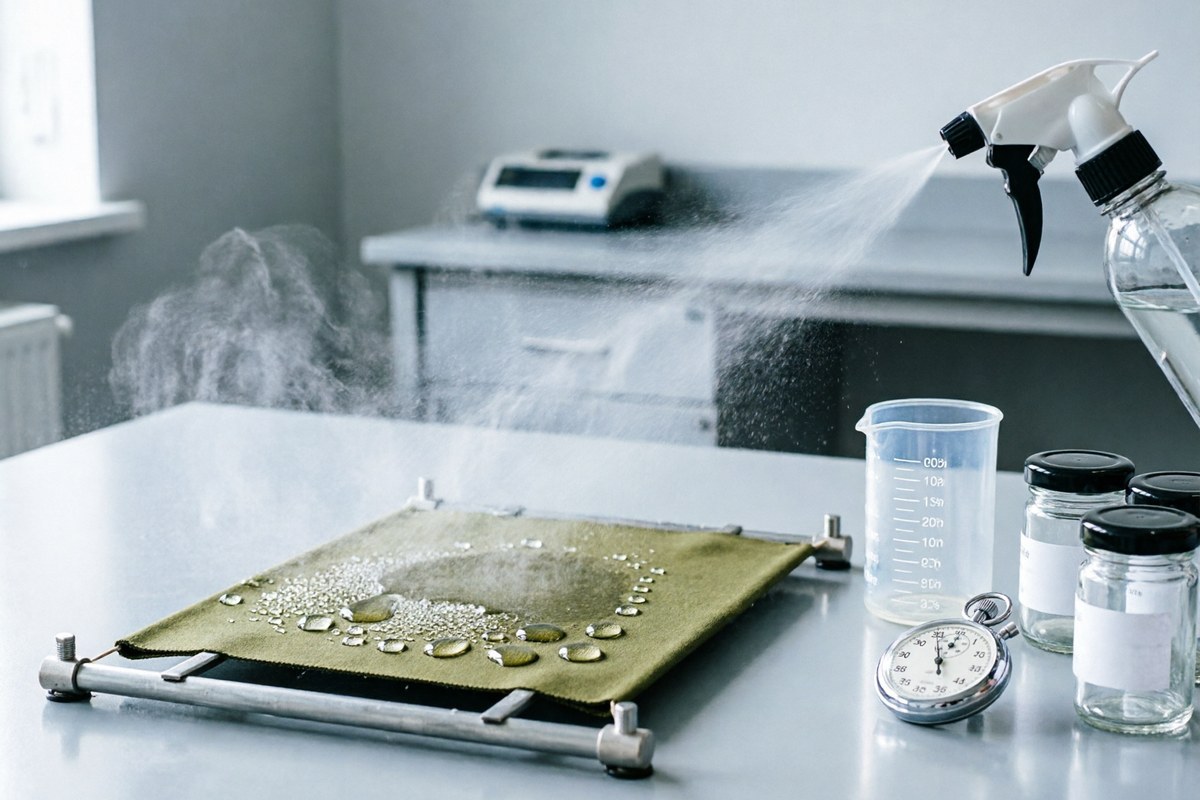
Changing finish chemistry invalidates the performance data you already hold. The fabric may be the same, but the surface behaviour is not, so the test file must be rebuilt for the new recipe.
Design Changes That Compensate
- 1. Raise the face fabric spec. A slightly denser weave or a ripstop grid improves mechanical repellency and reduces reliance on chemistry.
- 2. Specify re-application. Give the end consumer a clear re-proofing recommendation and, if you can, a compatible aftercare product. Repellency is a consumable property.
- 3. Protect contact points. Reinforce shoulder and pack-contact panels so abrasion removes face fabric before it removes finish.
- 4. Keep oil-sensitive use out of scope. If the garment will meet oils or grease, specify a wipe-clean face or a laminated barrier rather than promising oil repellency the chemistry cannot deliver.
- 5. Re-check seam sealing. Finish chemistry changes can alter surface energy, which affects how well the seam tape bonds. Re-verify the seal, not just the fabric.
Cost and Lead-Time Impact
PFAS-free finishing is no longer a novelty premium, but it is not free either. Expect a modest per-metre increase compared with legacy chemistry, and treat the re-testing cycle as a real project cost. The bigger hidden cost is schedule: a finish change usually requires a fresh development sample and a round of testing before bulk, which adds weeks to a product development calendar. Brands that build the re-test into the timeline avoid the trap of approving a finish change late and shipping untested performance.
Where UniOuter Fits
We develop waterproof and breathable shells with PFAS-free finishes as standard, and we hold the test data per fabric and per batch: spray ratings, hydrostatic head before and after wash, breathability and seam-seal checks. If you are changing finish chemistry on an existing style, our team can rebuild the test file rather than starting the style from zero, and pair it with the fabric selection work covered in our waterproof rating guide. To develop a PFAS-free shell for your next range, send your specification through our inquiry page.
Shop Waterproof & Breathable Jackets

Frequently Asked Questions
Water repellency is generally comparable now when the finish is properly applied and cured. Oil repellency is weaker, and wash durability varies by recipe. Test the finish against your own contamination and laundering conditions before switching a production specification.
Yes. Surface chemistry affects spray rating, hydrostatic head after washing, breathability and seam-tape bonding. Existing test reports are invalidated by a finish change even when the base fabric is identical.
It depends on the use case, so define the acceptance threshold before testing. Record the wash cycle at which repellency falls below your limit and set aftercare guidance around that number rather than promising an unlimited wash life.
Bio-based feedstock improves the sourcing story but does not automatically improve performance. Judge both on the same test protocol, and use input-level chemical approvals such as bluesign to verify what is actually in the finishing recipe.