How to Negotiate MOQ with Outdoor Clothing Manufacturers: A Buyer's Playbook
Minimum order quantity (MOQ) is the single biggest barrier between your brand idea and a production run. Whether you're launching your first outdoor clothing collection or expanding an existing product line, the factory's MOQ number can make or break your cash flow. This playbook breaks down exactly how MOQ works, why factories set the numbers they do, and how to negotiate terms that work for both sides.
At UniOuter, we've worked with hundreds of emerging outdoor brands who faced this exact challenge. Our experience with flexible MOQ starting at 300–500 pieces has taught us that negotiation isn't about pushing factories to their limit — it's about understanding their constraints and finding mutually beneficial solutions. For a broader overview of our sourcing capabilities, check our complete purchasing guide.

What Is MOQ and Why Does It Matter?
MOQ is the minimum number of units a factory will accept for a single production order. For outdoor clothing, typical MOQs range from 500 to 2,000 pieces per style, depending on fabric complexity, customization level, and the manufacturer's scale. Understanding how factories calculate this number is the foundation of any successful negotiation.
Manufacturers set MOQ based on three primary factors: fabric minimums, cutting efficiency, and setup costs. Fabric suppliers often require minimum rolls of 500–1,000 meters, which directly dictates how many garments can be produced. Cutting and sewing setup time is fixed regardless of order size, so smaller orders have a higher per-unit cost. Quality control processes also require a minimum batch to be economically viable.
For new brands, tying up $20,000–50,000 in inventory before validating market demand is risky. Low MOQ allows you to test products, gather customer feedback, and iterate on design without overcommitting capital. It also reduces warehousing costs and the risk of dead stock. If you're just starting out, our guide on how to start your own outdoor clothing brand covers the full launch process.
5 Proven Strategies to Negotiate Lower MOQ
- Consolidate styles and colors: Instead of ordering 300 pieces each of 5 different styles, propose 500 pieces across 2 styles with shared fabric. This reduces the factory's setup time and fabric minimums while giving you product variety.
- Offer flexible delivery schedules: Commit to a larger total order split across 2–3 deliveries over 6–12 months. The factory gets volume certainty; you get smaller initial shipments and better cash flow.
- Accept stock fabrics: Ask the factory which fabrics they already hold in inventory. Using stock materials eliminates fabric minimums entirely, often reducing MOQ to 200–300 pieces.
- Share tooling costs: If custom molds, zippers, or hardware are required, offer to pay the tooling cost upfront. This removes the factory's risk and can reduce MOQ by 30–50%.
- Build a multi-season partnership: Commit to placing orders across 2+ seasons. Factories prioritize long-term partners and will often offer lower MOQ terms to secure recurring business. Learn more about our 19+ years of OEM expertise.
Understanding MOQ Tiers and Pricing Impact
Most outdoor clothing manufacturers operate on tiered pricing. Understanding these tiers helps you find the sweet spot between order size and unit cost. The table below shows typical MOQ tiers and their impact on pricing:
| MOQ Tier | Typical Range | Price Impact | Best For |
|---|---|---|---|
| Micro Batch | 100–300 pcs | +25–40% premium | Market testing, samples |
| Small Batch | 300–500 pcs | +10–20% premium | Brand launch, limited drops |
| Standard | 500–1,000 pcs | Base price | Established brands |
| Volume | 1,000–3,000 pcs | −5–15% discount | Scaling brands, seasonal orders |
| Bulk | 3,000+ pcs | −15–25% discount | Large retailers, chain stores |
We offer starting MOQs of 300–500 pieces for most outdoor jacket styles, with fabric consolidation options that can bring effective MOQ down to 200 pieces for stock-fabric models. Contact our team or send an inquiry to discuss your specific requirements.
Common Mistakes and Real-World Negotiation Scenarios
- Leading with price pressure: Demanding lower prices AND lower MOQ simultaneously signals an adversarial approach. Focus on volume commitment instead.
- Ignoring fabric constraints: If you insist on a custom-printed fabric at 200-piece MOQ, the factory simply cannot do it — the fabric mill won't produce less than 500 meters. Always ask about stock alternatives.
- Underestimating sample costs: Prototyping and sampling cost $200–800 per style regardless of final MOQ. Budget for 2–3 rounds of samples before production.
- Skipping the tech pack: A detailed tech pack reduces factory risk and can unlock lower MOQ terms. Our custom OEM design team can help you prepare professional specifications.
Consider a brand launching their first hiking jacket line. They want 3 styles in 4 colors each, but the factory's standard MOQ is 1,000 pieces per style/color combination — a total of 12,000 pieces, far beyond their budget.
By applying the strategies above, they negotiated: 2 styles with shared shell fabric (reducing fabric minimums), 2 colors per style instead of 4 (halving color-specific setup), and a 2-season commitment with 500-piece initial delivery. Result: 2,000 pieces initial order at only 12% above standard pricing, with a clear path to volume discounts on the second order. For more sourcing strategies, see our China outdoor apparel sourcing guide.
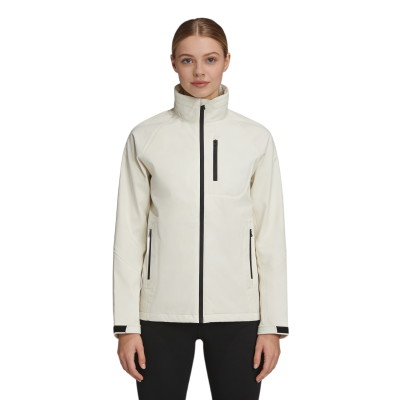
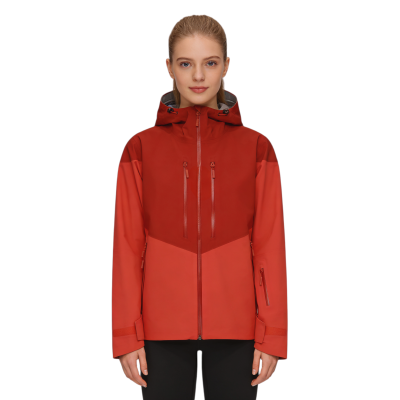
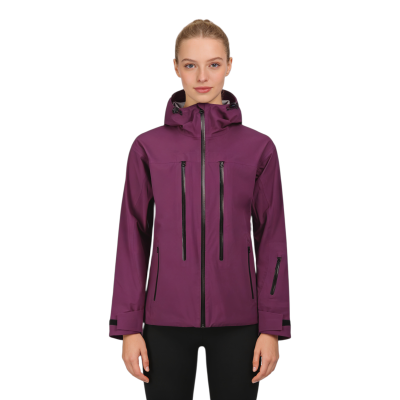
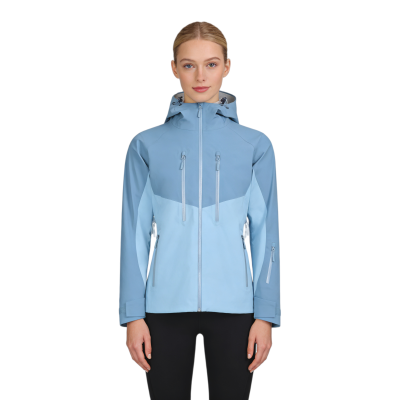
Shop Flexible MOQ Outdoor Jackets
Frequently Asked Questions
Standard MOQ ranges from 500 to 1,000 pieces per style. Flexible manufacturers like UniOuter offer 300–500 piece starting MOQs, especially when using stock fabrics or consolidating styles.
Yes. First orders often qualify for reduced MOQ through fabric consolidation, stock material selection, or multi-season commitments. Expect a 10–25% price premium for micro-batch orders under 300 pieces.
Orders below standard MOQ typically carry a 15–40% premium. As volume increases beyond 1,000 pieces, per-unit costs decrease 5–25%. The optimal price-to-volume ratio is usually at 500–1,000 pieces.
Yes. Our standard MOQ starts at 300–500 pieces depending on style complexity. We also offer fabric consolidation and stock-fabric options for even lower effective MOQ. Browse our product catalog or send an inquiry for details.