Ultimate Fabric Weight (GSM) Guide for Outdoor Jackets: How to Choose the Right Thickness
What Is GSM and Why It Matters for Outdoor Jackets
GSM stands for Grams per Square Meter — the standard measurement of fabric weight used across the global textile industry. For outdoor jacket buyers, brand owners, and product developers, GSM is arguably the single most important fabric specification to understand. It directly determines how a jacket feels, performs, and suits different weather conditions and activity levels.
A 100gsm ultralight windbreaker and a 350gsm insulated winter parka are fundamentally different products — and that difference starts with GSM. Whether you're sourcing outdoor jackets for your brand or developing your own product line, understanding fabric weight selection is essential to making informed decisions. At UniOuter, our technical team helps brands select the optimal GSM for every product in their line — from ultralight trail shells to heavy-duty alpine jackets.
Quick Reference: GSM measures fabric density, not thickness. Two fabrics can have the same thickness but different GSM because one uses denser, heavier yarns. For technical outdoor fabrics, GSM typically ranges from 80gsm (ultralight) to 400+gsm (heavy insulated). For related reading, see our waterproof vs water-resistant guide.
GSM Categories: A Complete Weight Class Breakdown
| Weight Class | GSM Range | Typical Use | Best Season | Packability |
|---|---|---|---|---|
| Ultralight | 80 — 150 | Wind shells, emergency layers, trail running | Spring / Summer | Packs into palm-sized pouch |
| Lightweight | 150 — 220 | Hiking shells, softshells, commuting jackets | 3-Season | Folds compactly into backpack |
| Midweight | 220 — 300 | 3-in-1 outer shells, technical hardshells, insulated softshells | Fall / Winter / Alpine | Bulky but packable |
| Heavyweight | 300 — 450 | Insulated parkas, ski jackets, extreme cold weather gear | Deep Winter | Requires dedicated bag space |

Matching GSM to Activity & Performance Requirements
For 3-season hiking, the sweet spot is 180-200gsm. At this weight, you get enough durability to resist abrasion from backpack straps and trailside brush while maintaining breathability for uphill climbs. A 2-layer or 2.5-layer waterproof-breathable construction at 180gsm with fully taped seams delivers reliable rain protection without overheating.
Alpine environments punish lightweight fabrics. Wind speeds above 40mph, abrasive rock surfaces, and temperatures well below freezing demand 280-350gsm fabrics with reinforced high-wear zones. At this weight class, you're typically looking at 3-layer waterproof-breathable constructions with a durable face fabric — often 70D to 100D nylon or polyester.
The fastest-growing outdoor apparel segment demands a different balance. Urban outdoor jackets at 130-180gsm prioritize clean aesthetics, packability, and all-day comfort over extreme durability. A 150gsm softshell with DWR finish handles the commute in light rain and transitions to the office without looking technical.
Trail running, fastpacking, summer alpine: 80-130gsm
Prioritize breathability (MVTR 10,000+) and packability over waterproof ratings above 10,000mm.
Winter camping, ice fishing, spectator sports: 300-450gsm
Insulation fill power matters as much as shell GSM. Pair 350gsm shell with 200g+ synthetic or 700FP down.
A common misconception is that heavier fabric equals better waterproofing. In fact, waterproof rating depends on the membrane or coating, not the fabric weight. A 150gsm 3-layer jacket can achieve a 20,000mm waterproof rating — the same as a 300gsm jacket. For more on waterproofing, read our waterproof vs water-resistant comparison. Breathability generally decreases as GSM increases, and durability (denier) relates to yarn thickness rather than fabric weight directly. For outdoor jacket face fabrics: 20D-30D for ultralight shells, 40D-70D for standard hiking jackets, and 100D+ for heavy-duty alpine and workwear applications.
B2B Buyer Selection Framework & OEM Manufacturing Insights
| If Your Customer Needs… | Spec This GSM Range | Recommended Fabric Construction |
|---|---|---|
| A packable emergency rain layer | 100 — 140 | 2.5L, 20D ripstop nylon, PU membrane |
| A daily commuting rain jacket | 150 — 180 | 2L or 2.5L, 40D nylon, DWR finish |
| A 3-season hiking hardshell | 180 — 220 | 3L, 40D-70D face, PU or ePTFE membrane |
| A winter alpine shell | 250 — 320 | 3L, 70D-100D face, reinforced shoulders/elbows |
| An insulated winter parka | 320 — 450 | 2L or 3L shell + synthetic or down fill |
- "What GSM options do you stock for 3-layer waterproof fabrics?"
- "Can you provide lab test reports for waterproof rating and MVTR at this GSM?"
- "What's the GSM tolerance in your production QC?"
- "Do you offer custom GSM development if stock options don't match?"
- Quoting GSM without specifying face fabric only vs total laminate
- Claiming all GSM weights are "no problem" without development samples
- GSM variance exceeding ±5% across production lots
- Unable to provide independent lab test data at the quoted GSM
Choosing the right fabric partner is as important as choosing the right GSM. Learn about UniOuter's manufacturing approach and how we help brands navigate fabric selection. For a broader view of the sourcing process, see our comprehensive purchasing guide.
For brands developing sustainable outdoor apparel, GSM selection also intersects with recycled material use. Our GRS certification guide explains how recycled polyester fabrics at various GSM weights meet certification standards without compromising performance. Similarly, understanding PFAS-free fabric options is increasingly important — read our PFAS-free outdoor gear guide for details. Explore our custom fabric and OEM design services to see how we turn GSM specs into production-ready jackets.
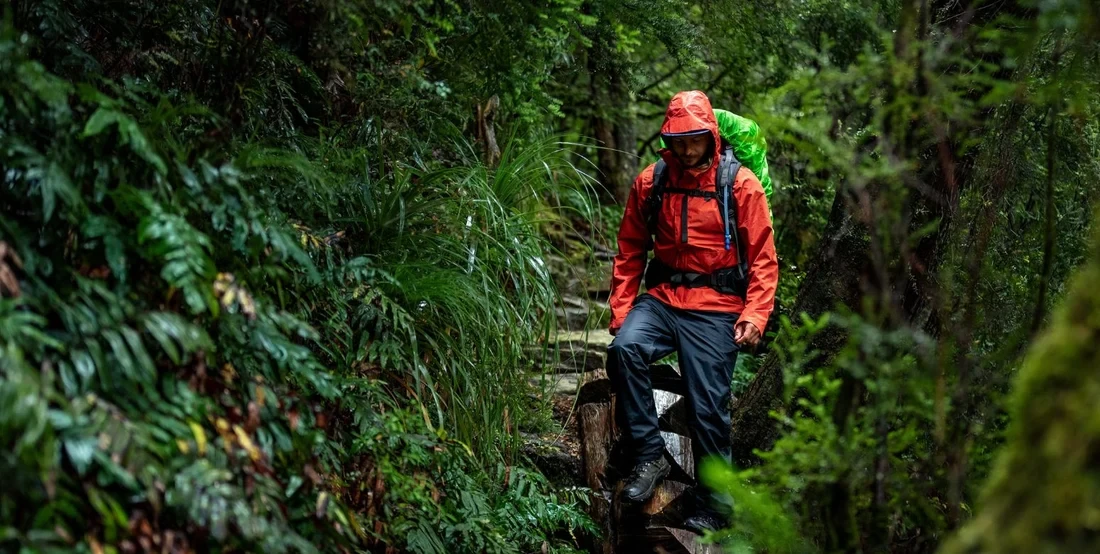
Shop Outdoor Hiking Jackets
Ready to discuss GSM specifications for your next collection? Contact our technical team or send an inquiry with your fabric requirements — we typically respond within 24 hours with detailed GSM recommendations and pricing.
Frequently Asked Questions
No. Higher GSM provides more durability and insulation but adds weight, reduces packability, and typically decreases breathability. The best GSM is the one matched to your specific use case. Choosing the right GSM is about fitness for purpose, not maximum specification.
For a jacket designed to cover spring through fall hiking, commuting, and travel, target 180-220gsm with a 2.5-layer or 3-layer waterproof-breathable construction. This weight range balances weather protection, durability, and packability.
GSM directly impacts fabric cost, which typically represents 40-60% of a jacket's total production cost. A 300gsm fabric uses roughly twice the raw material of a 150gsm fabric. For budget-sensitive product lines, targeting the 150-200gsm range offers the best cost-to-performance ratio.
Absolutely. Many premium outdoor jackets use body-mapped construction: a 250gsm body fabric with 150gsm underarm panels for targeted breathability, or a 200gsm front panel with 120gsm back panel for cycling jackets. This adds complexity and cost but significantly improves real-world comfort.