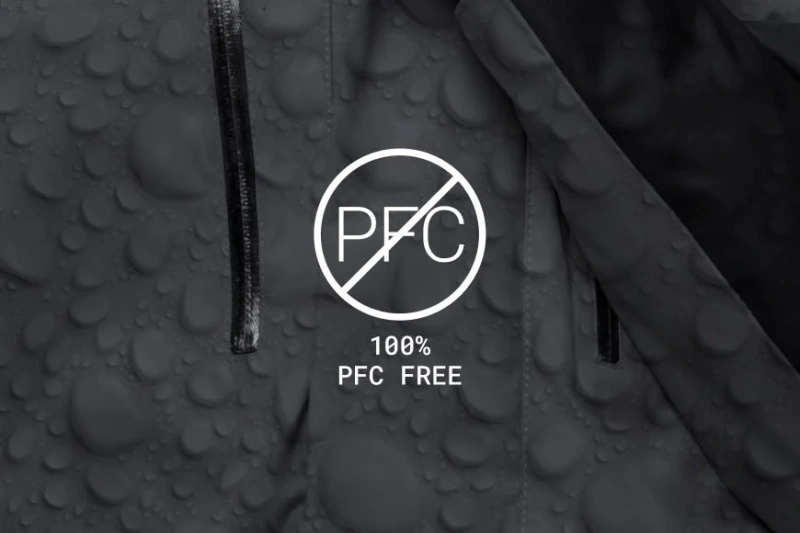
PFAS-Free Outdoor Gear Explained: What 'Forever Chemicals' Mean for Your Brand
The outdoor clothing industry is facing its most significant material transition in decades. PFAS — per- and polyfluoroalkyl substances, commonly called "forever chemicals" — have been the backbone of waterproof outdoor apparel performance for over 50 years. They are the invisible chemistry that makes a hiking jacket shed rain, keeps a climbing coat breathable yet windproof, and allows outdoor garments to resist stains and oil.
But the regulatory landscape is shifting rapidly. The EU's universal PFAS restriction is moving toward full implementation, California's AB 1817 banned PFAS in apparel by 2025, and New York and Maine have passed their own restrictions. For outdoor clothing brands, distributors, and retailers worldwide, understanding PFAS is no longer optional — it's a supply chain imperative.
This guide explains what PFAS are, why they have been essential to waterproof outdoor clothing, the global regulatory timeline, the practical PFAS-free alternatives available today, and what the transition means for your outdoor apparel business. For more industry insights, visit our outdoor apparel blog covering UniOuter's sustainable manufacturing approach.
What Are PFAS and Why Are They in Outdoor Clothing?
PFAS encompass over 12,000 synthetic chemicals defined by one of the strongest bonds in organic chemistry: carbon-fluorine. This bond makes PFAS extraordinarily resistant to heat, water, oil, and degradation — the very properties that made them indispensable in waterproof outdoor clothing for decades. In outdoor apparel specifically, PFAS are used primarily in DWR (Durable Water Repellent) surface treatments applied to the outer fabric of jackets, pants, and technical shells. Without PFAS-based DWR, a waterproof jacket's outer face fabric "wets out" — absorbing water, feeling clammy, losing breathability, and becoming heavy during extended rain exposure.
The C-F bond energy (~485 kJ/mol) exceeds that of the C-H bonds found in ordinary hydrocarbon-based treatments. This molecular stability is why PFAS-treated outdoor clothing maintains water repellency through dozens of wash cycles and why PFAS-based DWR sprays dominated the aftermarket care market. However, this same stability means PFAS molecules persist in the environment for centuries — hence the term "forever chemicals." In outdoor apparel manufacturing, PFAS enter the environment at three stages: factory effluent during fabric coating, consumer micro-fiber shedding during home laundry, and landfill leachate when discarded garments decompose.
Applied to the outermost fabric layer of every waterproof jacket, softshell, and insulated coat manufactured since the 1970s. PFAS-DWR causes water to bead and roll off rather than saturate the face fabric, preserving breathability and thermal comfort during active wear.
Some ePTFE (expanded polytetrafluoroethylene) membranes — notably original Gore-Tex — rely on PTFE, a fluoropolymer that is itself a PFAS compound. These ultra-thin membranes block liquid water while allowing vapor to escape, forming the core of high-performance mountaineering jackets and rain shells.
Beyond the visible face fabric, PFAS treatments have been applied at the yarn and thread level — to zipper tapes, seam threads, drawcord channels, and ventilation mesh panels — ensuring water does not wick through stitching holes in critical areas of outdoor garments.
Health and Environmental Risks of PFAS in Outdoor Apparel
The persistence that made PFAS valuable in outdoor clothing is precisely what makes them dangerous. PFAS compounds do not break down under sunlight, soil bacteria, or water — they accumulate indefinitely in ecosystems and in the human body. For outdoor apparel brands, understanding these risks is essential both for regulatory compliance and for communicating honestly with increasingly informed consumers.
PFAS bioaccumulate in blood, liver, and kidneys. Long-term exposure has been linked to thyroid disease, elevated cholesterol, reduced immune response to vaccines, low birth weight, and certain cancers — including kidney and testicular cancer. Outdoor clothing factory workers face the highest occupational exposure via airborne PFAS during textile coating and curing processes.
PFAS enter waterways through textile factory effluent and home laundry discharge. Once in the environment, they migrate through soil, groundwater, and ocean currents. PFAS have been detected in rainwater at levels exceeding safe drinking water guidelines in every continent including Antarctica. For outdoor apparel brands, this means PFAS from discarded jackets are now part of the global water cycle.
While the direct dermal absorption risk from wearing a PFAS-treated jacket is considered lower than ingestion or inhalation routes, PFAS shed from outdoor clothing during wear contributes to indoor dust contamination, which is a significant exposure pathway — particularly for toddlers and children who have more hand-to-mouth contact in carpeted home environments.
When outdoor clothing reaches landfills, PFAS leach into groundwater. When incinerated, PFAS-treated textiles can release toxic fluorinated gases unless burned at extremely high temperatures. The global second-hand clothing trade also exports PFAS-containing garments to countries without advanced waste management infrastructure, offshoring the pollution burden.
Global PFAS Regulations: What Outdoor Clothing Brands Must Know
The regulatory environment for PFAS in apparel has transformed from scattered proposals to binding legislation in less than five years. For outdoor clothing brands selling into multiple markets, understanding the staggered timeline of these bans is critical — non-compliance can mean blocked shipments, customs rejection, fines, and reputational damage.
| Regulation / Region | Scope | Effective Date | Impact on Outdoor Clothing |
|---|---|---|---|
| EU Universal PFAS Restriction (ECHA) | All PFAS in consumer products | 2026–2028 (phased) | Complete ban on PFAS in outdoor jackets, pants, and accessories sold in EU/EEA. Transition periods for professional/industrial protective clothing only. |
| California AB 1817 | PFAS in textiles and apparel | January 1, 2025 | Prohibits manufacturing, distributing, or selling any textile article containing intentionally added PFAS above 100 ppm total organic fluorine. Outdoor apparel is not exempt. |
| New York State PFAS in Apparel Act | PFAS in apparel | January 1, 2025 | Bans intentionally added PFAS in apparel. Outdoor clothing for severe wet conditions has a limited extension until 2028, after which all outdoor garments must be PFAS-free. |
| Maine PFAS in Products Law | All PFAS in consumer goods | January 1, 2030 | The most sweeping US state ban: all intentionally added PFAS in any product category, with outdoor clothing explicitly included. Reporting requirements began in 2023. |
| France PFAS Law (2025) | PFAS in consumer textiles | January 1, 2026 | Bans PFAS in clothing (including outdoor) and footwear. Protective clothing for safety professionals has a narrow exemption until 2030. |
| China PFAS Regulation (Draft) | Key PFAS in consumer goods | TBD (2026–2027 est.) | Draft regulations targeting PFOA, PFOS, and PFHxS in textiles. Outdoor clothing exporters from China to EU/US should proactively transition to avoid simultaneous compliance gaps. |
PFAS-Free Waterproof Technologies for Outdoor Clothing
The single most common question from outdoor clothing buyers is: "Do PFAS-free jackets actually perform?" The answer has evolved dramatically. Today's PFAS-free waterproof technologies match or exceed the performance of fluorinated treatments in all but the most extreme use cases — and they are improving every season. Here is what works now in outdoor apparel production.
- ePE (Expanded Polyethylene): Gore-Tex's PFAS-free membrane line. Hydrophobic microporous structure — 9 billion pores per square inch — blocks liquid water while venting vapor. Imperceptibly thin (0.01 mm), lighter than ePTFE, and 100% free of fluorinated chemistry. Used in premium mountaineering jackets and ski shells.
- PU (Polyurethane) Membrane: A mature, widely available technology. Non-porous PU films transport moisture through molecular diffusion rather than pore venting. Hydrostatic head ratings reach 15,000–20,000 mm on quality outdoor jackets.
- Bio-Based Membranes: Emerging alternatives derived from castor bean oil and other renewable feedstocks. Early commercial adoption in lifestyle outdoor apparel, with technical performance improving rapidly.
- Silicone-Based DWR: The current market leader for PFAS-free outdoor clothing. Forms a flexible, hydrophobic silicone polymer network on the fabric surface. Provides 80–90% of the water repellency of legacy fluorinated DWR, with excellent durability through 20–30 wash cycles.
- Hydrocarbon-Based DWR: Long-chain alkane polymers that orient perpendicular to the fabric surface — similar mechanism to PFAS-DWR but without fluorine. Moderate durability; the industry is actively improving wash-fastness through cross-linking chemistry.
- Nano-Structured Treatments: An emerging technology class. Instead of chemical repellency, these treatments create microscopic surface roughness patterns that physically repel water droplets through the lotus-leaf effect. Still in early commercialization for outdoor jackets.
Independent testing shows modern PFAS-free outdoor jackets achieve hydrostatic head ratings of 10,000–20,000 mm — enough for heavy rain and snow — and moisture vapor transmission rates (MVTR) of 8,000–15,000 g/m²/24hr. In controlled comparisons, PFAS-free DWR retains roughly 80–85% of its initial spray rating (AATCC 22) after 20 washes versus 90–95% for fluorinated DWR. The performance gap that existed just five years ago has narrowed to near-negligible levels for the vast majority of outdoor clothing applications.
Building a PFAS-Free Outdoor Clothing Line
Transitioning your outdoor clothing range to PFAS-free production is a manageable, phased process — not an overnight disruption. Here are the four steps that matter most.
Begin with full transparency. Request PFAS content declarations (PCDs) from every fabric mill, membrane supplier, DWR chemistry vendor, and trim manufacturer in your supply chain. Be specific: ask for total organic fluorine content (TOF) test results using the CIC combustion ion chromatography method, which detects all PFAS — not just the regulated subset. Many outdoor clothing suppliers will claim they are PFAS-free based on absence of PFOA/PFOS alone, which is misleading and increasingly legally risky.
PFAS-free alternatives currently carry a cost premium at the fabric and DWR treatment level. Silicone-based DWR costs roughly $0.15–$0.25 more per linear meter than fluorinated equivalents, and ePE membranes are approximately 15–20% more expensive than legacy ePTFE. For a typical outdoor waterproof jacket with a FOB price of $35–$50, expect a $2–$5 per-unit cost increase for the initial transition. Most outdoor clothing brands absorb this into margin or pass it as a 3–5% retail price adjustment with sustainability positioning that consumers increasingly accept.
Self-declaration is not enough when PFAS limits are enforced at the 100 ppm level. Partner with accredited textile testing labs — SGS, Intertek, Bureau Veritas, or OEKO-TEX certified facilities — and test every production batch. Test both the finished garment and the component materials (face fabric, membrane, lining, thread, zipper tapes) separately. Cross-contamination in shared dyeing and finishing facilities is one of the most common sources of unintentional PFAS presence in "PFAS-free" outdoor clothing.
PFAS-free is a strong marketing asset in outdoor apparel, but claims must be legally defensible. Avoid vague terms like "eco-friendly waterproof" — use specific, verifiable language: "PFAS-free DWR treatment," "fluorocarbon-free membrane," or "third-party tested PFAS-free per CIC method." If your outdoor jackets carry OEKO-TEX Standard 100 or bluesign certification, note that these standards now include PFAS restrictions, adding credibility to your PFAS-free position. Include care instruction hangtags advising consumers to use PFAS-free aftermarket reproofing sprays to maintain water repellency without reintroducing fluorinated chemistry.
When you are ready to develop your PFAS-free outdoor clothing range, explore UniOuter's technical outerwear collections:
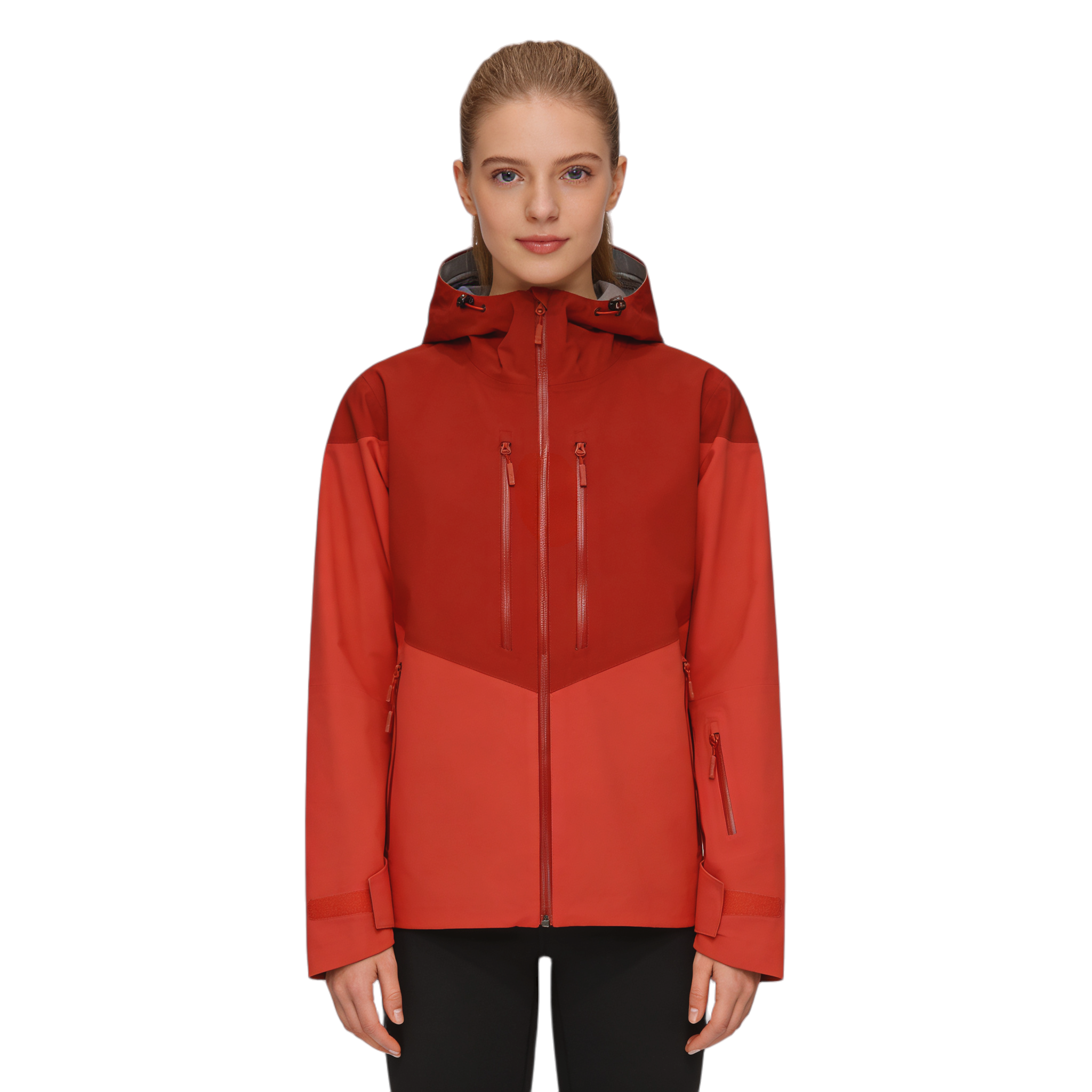
- Custom Women's Waterproof Mountain Climbing Jacket — breathable, fully waterproof construction available with PFAS-free DWR and membrane options
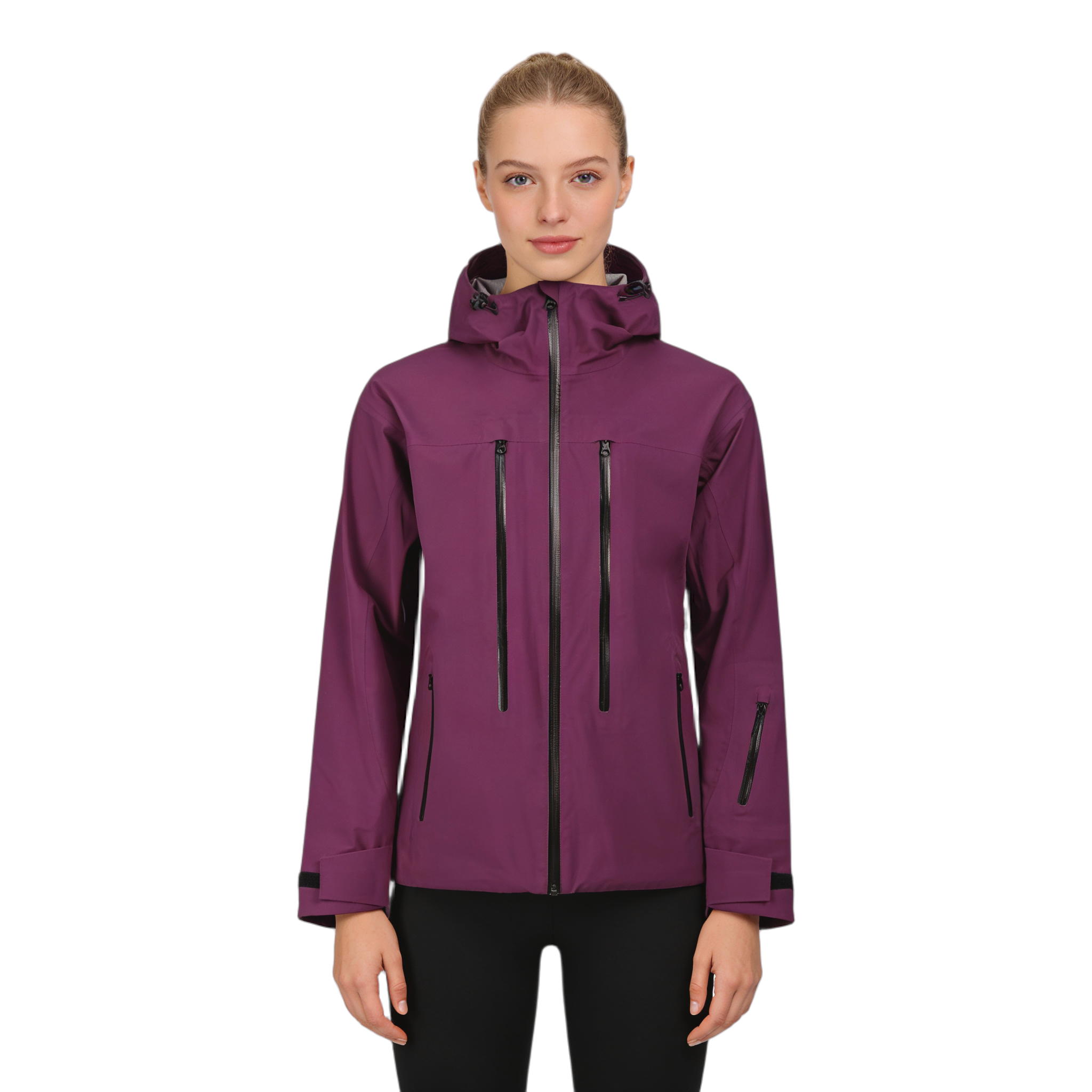
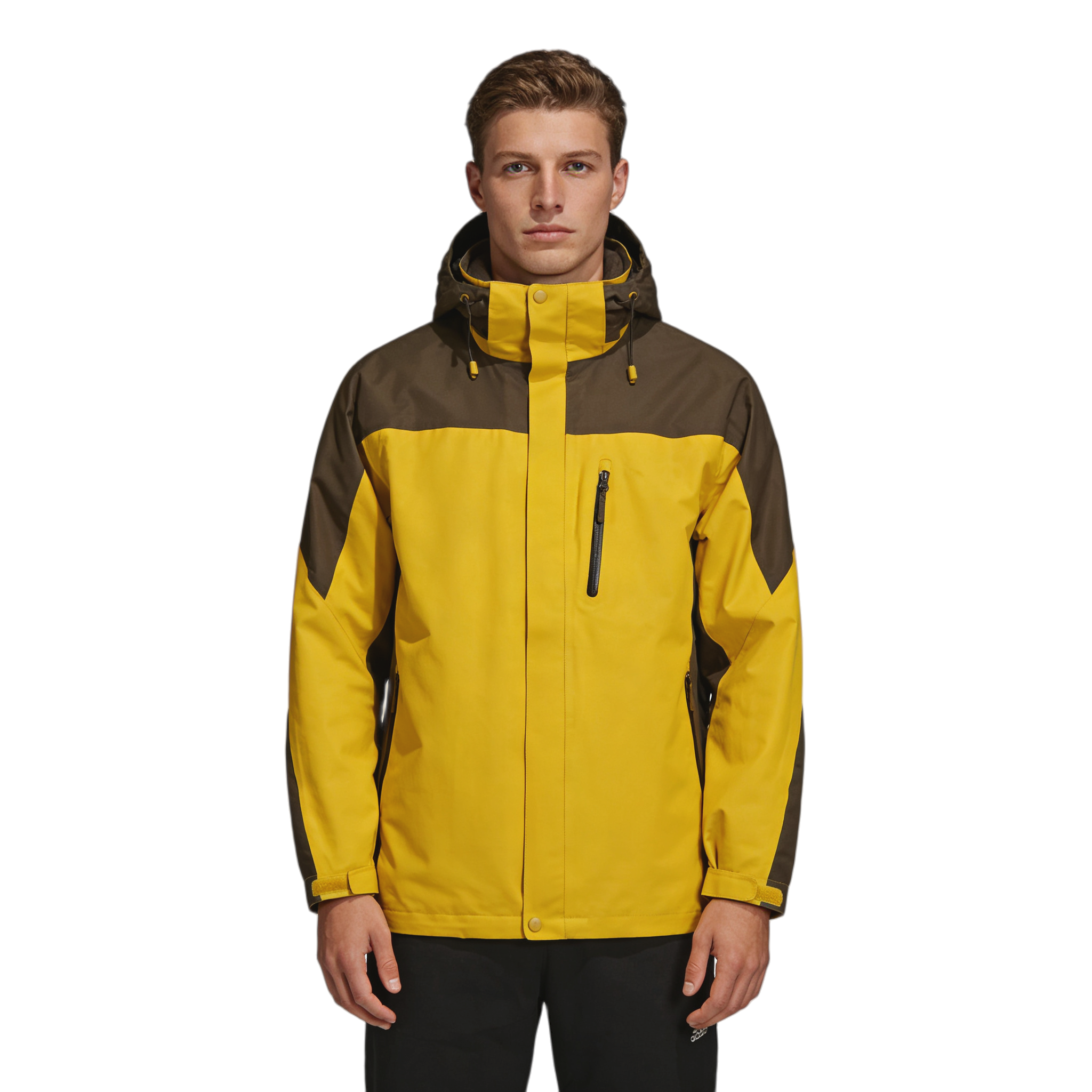
- Custom Technical Mountaineering Jacket — 3-layer design with windproof, waterproof performance and PFAS-free material alternatives
- Custom Women's Waterproof Hiking Jacket with Hood — tailored-fit outdoor jacket with PFAS-free DWR coating available
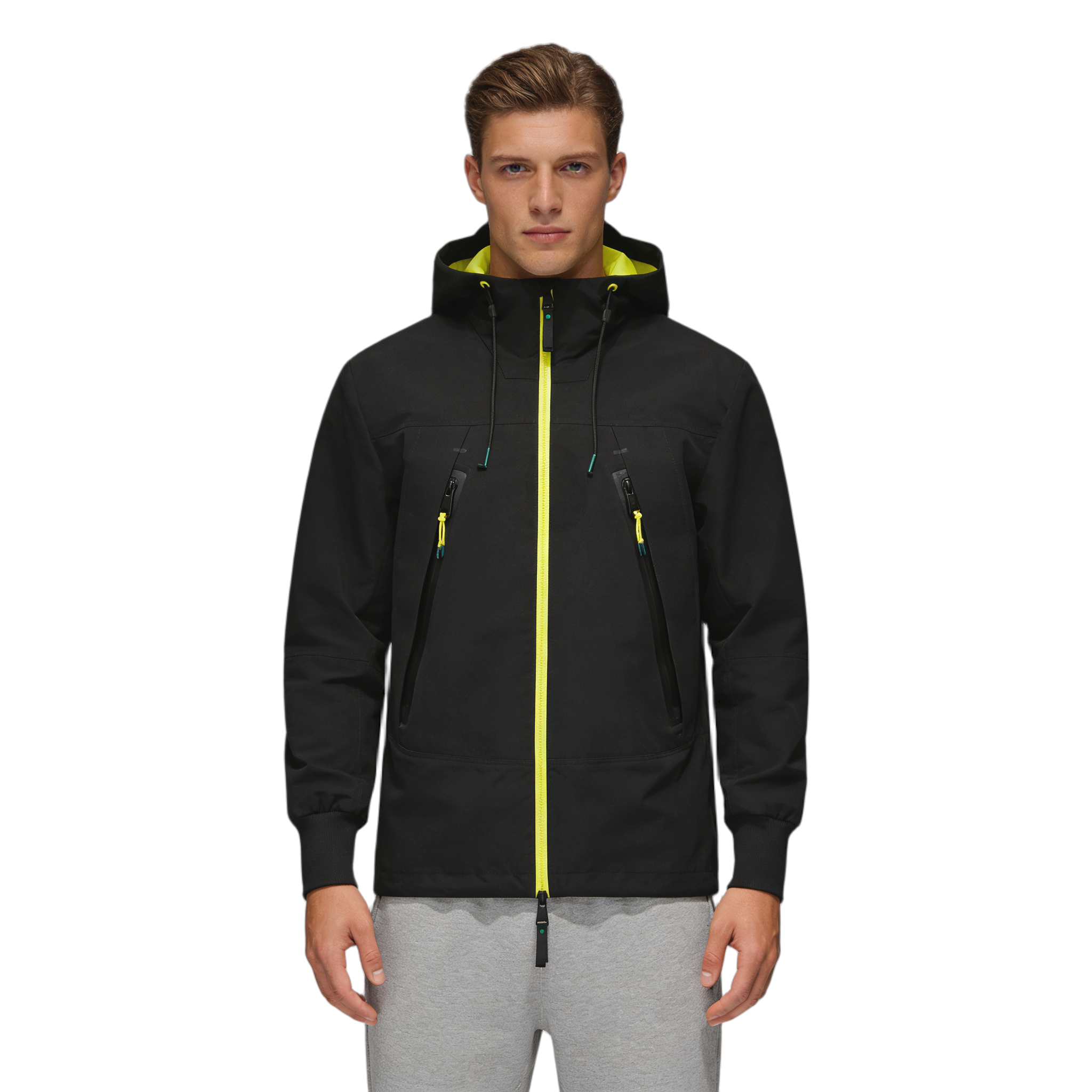
- Custom Windproof Mountain Climbing Coat — fully waterproof with PFAS-free treatment options and detachable hood
Shop PFAS-Free Outdoor Jackets

Custom Women's Waterproof Hiking Jacket, Breathable and Comfortable, Adjustable Hat

Custom Rainproof Hiking Jacket, Breathable and Comfortable, Waterproof Zipper, Hidden Hood

Custom Women's Waterproof Mountain Climbing Jacket, Breathable and Comfortable

Custom Waterproof Hiking Jacket with Hood – Breathable Fabric, Available for Bulk Purchase
Frequently Asked Questions About PFAS in Outdoor Clothing
The primary risk of PFAS in outdoor clothing is not from casual skin contact while wearing — it is from environmental contamination during manufacturing, home laundry release, and end-of-life disposal. However, the cumulative evidence of PFAS toxicity has driven regulators to adopt a precautionary approach, banning them from apparel entirely. For outdoor clothing brands, the question is not "does this jacket hurt the wearer" but "does our manufacturing process harm communities and ecosystems." The answer is increasingly a legal and ethical "yes" if PFAS are involved.
Look beyond marketing claims. Request the manufacturer's total organic fluorine test report using the CIC (Combustion Ion Chromatography) method — the only testing protocol that detects all PFAS rather than a targeted list. OEKO-TEX Standard 100 certification now includes PFAS restrictions; bluesign APPROVED fabrics are PFAS-free as of the 2024 update. For outdoor clothing importers, specify in your purchase contracts that TOF must be below 100 ppm on all component materials, and conduct random third-party testing on received shipments to verify compliance.
For 95% of outdoor clothing use cases — hiking, commuting, skiing, travel, urban rain — yes, PFAS-free jackets deliver equivalent performance. The small remaining gap is in the most extreme conditions: multi-day alpine expeditions where sustained heavy rain, abrasive pack straps, and no access to drying facilities push gear to its absolute limits. Even in these scenarios, PFAS-free performance is improving by roughly 5–10% per model year as DWR chemistry and membrane technology advance. For the vast majority of outdoor apparel applications, the performance difference is imperceptible.
The EU universal restriction is expected to take full effect between 2026 and 2028 with limited transition periods for specialty protective clothing. California and New York have already banned PFAS in most apparel as of January 2025. By 2030, Maine's comprehensive ban will cover all PFAS in all product categories, and other US states are likely to follow. For outdoor clothing brands, the practical deadline is now: lead times for fabric development, testing, and production mean that 2025 is the year to complete your PFAS-free transition if you have not already started.
Yes. UniOuter has completed the transition to PFAS-free outdoor clothing production across our entire manufacturing operation. We use silicone-based DWR treatments, PFAS-free membranes including ePE and PU options, and fluorocarbon-free thread and trim components. Every production batch is third-party lab tested for total organic fluorine content. Our PFAS-free outdoor jackets, hiking coats, and climbing shells meet the performance standards required for international retail markets while complying fully with the EU PFAS restriction, California AB 1817, and New York apparel regulations. Contact our team to discuss PFAS-free outdoor clothing development for your brand.
The Bottom Line: PFAS-Free Outdoor Clothing Is Inevitable — and It Is Better
PFAS are exiting the outdoor clothing industry — not because performance alternatives were better (they were not, until recently), but because society has determined that the environmental and health costs of forever chemicals in apparel are unacceptable. For outdoor apparel brands, this moment is both a compliance challenge and a market opportunity.
The outdoor clothing brands that move fastest on PFAS-free transition are claiming first-mover advantage in a market segment where consumers — particularly younger, environmentally conscious buyers — increasingly check for PFAS-free claims before purchasing a waterproof jacket. By 2028, PFAS-free will be table stakes for selling outdoor clothing in any developed market. By 2030, it will be the global baseline. The brands that start now will own this narrative. Those that wait will own a compliance scramble.
If your outdoor clothing line needs PFAS-free technical jackets, hiking coats, or climbing shells, UniOuter's manufacturing team is fully transitioned and ready to produce. Browse our outdoor clothing product range or submit an inquiry to begin your PFAS-free outdoor apparel development — because the future of waterproof clothing is forever-chemical-free.